


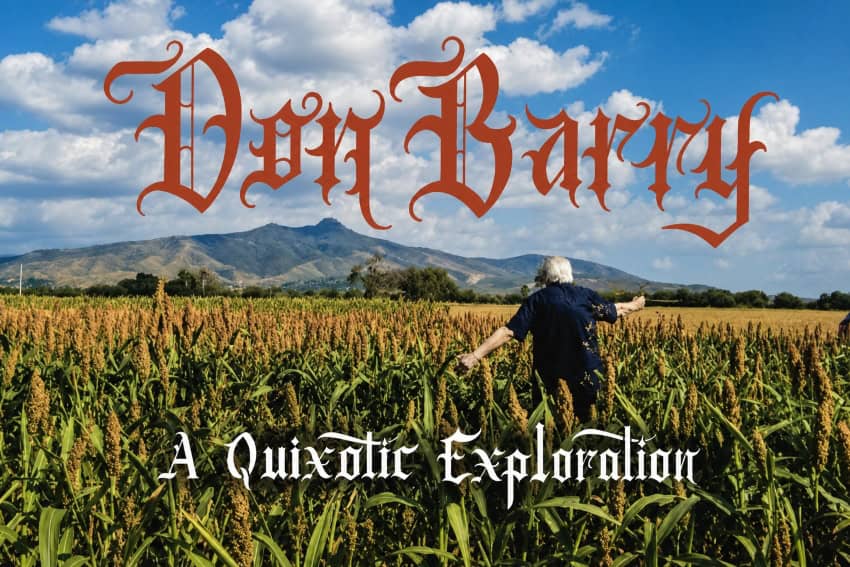
Producing a modern-day film adaptation of the novel “Don Quixote” in Guanajuato is something only an idealist would undertake, especially a newcomer to Mexico with limited Spanish. But that’s exactly what Paul Smart, a filmmaker, writer and radio producer from New York’s Hudson Valley, chose to do when he moved to Guanajuato in 2021 with his wife, Fawn Potash — a photographer and encaustic artist — and their son.
The “Cervantes Capital of the Americas,” Guanajuato has long been considered Don Quixote’s home outside Spain. Its annual international performing arts festival, Cervantino, is the biggest in Latin America, and the city’s Museo Iconográfico del Quijote houses the world’s largest collection of art inspired by the novel.
As Smart got to know Guanajuato, strolling its labyrinthine alleys, he fell in love with the city’s “grand vistas and the layered mixture of old and new, European and Indigenous, beautiful and utilitarian,” he said.
He started reading up on local and national history, becoming so enthralled by the city’s connection to Don Quixote that he produced a 175-episode radio reading series of the novel, punctuated with pieces of music and personal reflections. It aired on listener-supported radio stations in the U.S.
“I failed Don Quixote in college,” he says in the first episode. “I was an English major, and it was in Spanish. I made fun of it.”
Today, Smart sees many parallels between Don Quixote’s quest to reinvent himself and his own midlife musings.
How the film ‘Don Barry: A Quixotic Exploration’ was conceived
After the radio series, Smart was ready for another project — but still haunted by Don Quixote — and began imagining a contemporary version of Cervantes’ classic.

“I felt nicely challenged by the fact that ‘Don Quixote’ is known for killing the ambitions of many a great director,” he said.
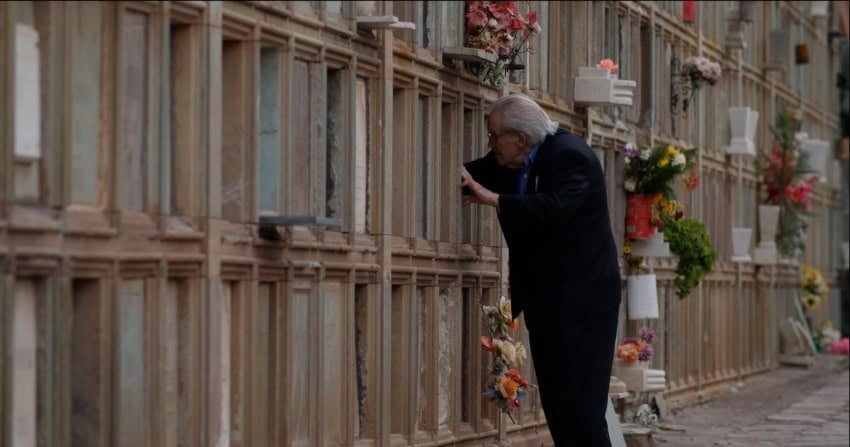
As he played around with a script, the image of an old friend came to mind. Barry Gerson was an 80-year-old experimental filmmaker and, like Quixote, a quirky and impractical idealist. Smart created a composite character, “Don Barry,” by mashing together the two men, one real and one fictional.
He used Cervantes’ own words from the novel’s second book, which deals with mortality and creativity.
In ironic timing, while Smart was noodling ideas, he got a call from Gerson. His friend had been experimenting with color LED therapy lights to cure himself of “the maladies of aging” — diabetes, prostate cancer and the onset of dementia. Gerson had 20 pages of detailed handwritten notes that he thought might be publishable.
Would Smart help him?
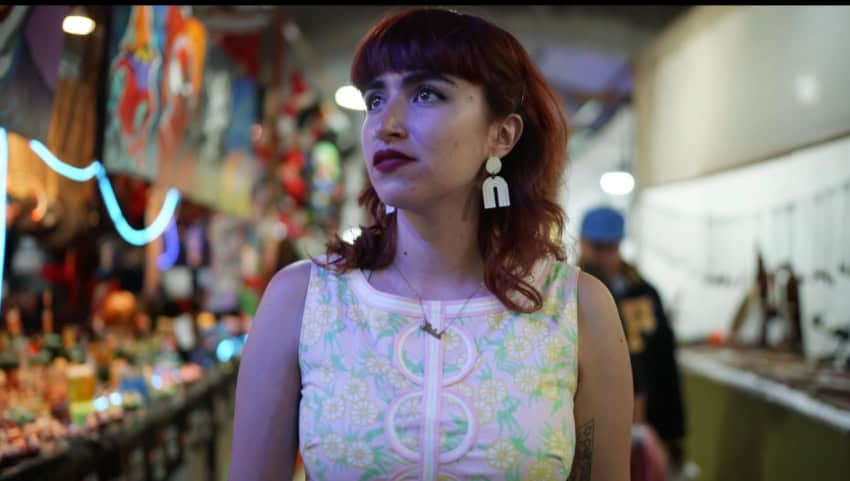
Smart suddenly realized that Gerson’s anti-aging experiments were the exact material for “Don Barry,” and the film began to take shape. Ultimately, Gerson flew to Guanajuato, and Smart shot the film in real crowds, using local dancers and musicians, during the 2023 Cervantino Festival and Day of the Dead. A young Mexican animator and physicist, Genda Monter, played a modern-day Sanchia (based on Sancho Panza), Don Barry’s assistant.
How to produce a film in Mexico without much Spanish
“I speak minimal Spanish. ‘Como un bebé,’” Smart said he tells people. But he knows how to make himself understood.
“The trick is to read a person’s eyes, smile a lot, move your hands and bring in a translator when possible.”
He also avoids places where English is spoken, “to try to activate the language center I still think exists somewhere within me.” He worked on “Don Barry,” for example, in cafés in the working-class city of Irapuato, where his son went to school for two years. You don’t hear much English in Irapuato.
Collaborating with a local producer and local camera people also helped. “We had paperwork explaining what we were doing, including various agreements for people to sign.” People understood. “I paid out a lot of 200- and 500-peso notes for release signatures, which made everyone happy,” he added.
Challenges beyond language
Gerson was not an easy person to work with.
“He didn’t tell me he could barely walk,” Smart said, “and he couldn’t remember lines. And first he had me build him an LED-light rehab studio in his Airbnb.”
A tight budget was another issue, since Smart was largely self-funding the project. Festival fees ran more than US $100. But after he began exhibiting in small cultural centers, “Don Barry” started winning accolades.
The film has been shown in Guanajuato, Mexico City, Austin, Portland, the Hudson Valley and Italy, and is available on Prime Video.
What’s next for Smart
Now, Smart is writing a script for a new film called “Six-Seven: Playing with Magic,” about two girls from the U.S. and two boys from Mexico, ages 5 to 7, who play together over a summer, a period that they remember a few years later in the film.
“Like ‘Don Barry,’ the film is about aging, but seen from childhood instead of old age,” Smart said. His goal is to show the film this winter at festival premieres that have already honored him.
Smart is not only a filmmaker and radio producer, but also the author of the memoir “With Different Eyes: A Covid Waltz in Words and Images.” He has also written a novel: “Overlook: A Rock and Roll Fable.”
He believes that nurturing creativity is much easier in a country like Mexico, where capitalism is less “predatory” than in the U.S., and where not all values are economic.
“One of the first things I saw and appreciated here was the way all elements of life are allowed to coexist … the ugly and beautiful, life and death, rich and poor, dirty and clean. Some call it surrealism, others a wider appreciation of life,” he wrote in an email.
Whichever it is, the rich, heady atmosphere in Mexico provides the oxygen that enables Smart to keep creating.
Louisa Rogers and her husband Barry Evans divide their lives between Guanajuato and Eureka, on California’s North Coast. Louisa writes articles and essays about expat life, Mexico, travel, physical and psychological health, retirement and spirituality. Her recent articles are available on her website, authory.com/LouisaRogers.
