


For over 400 years, English sailor David Ingram’s account of his trek from Mexico to Nova Scotia was considered the wild fantasy of an egregious “travel liar.”
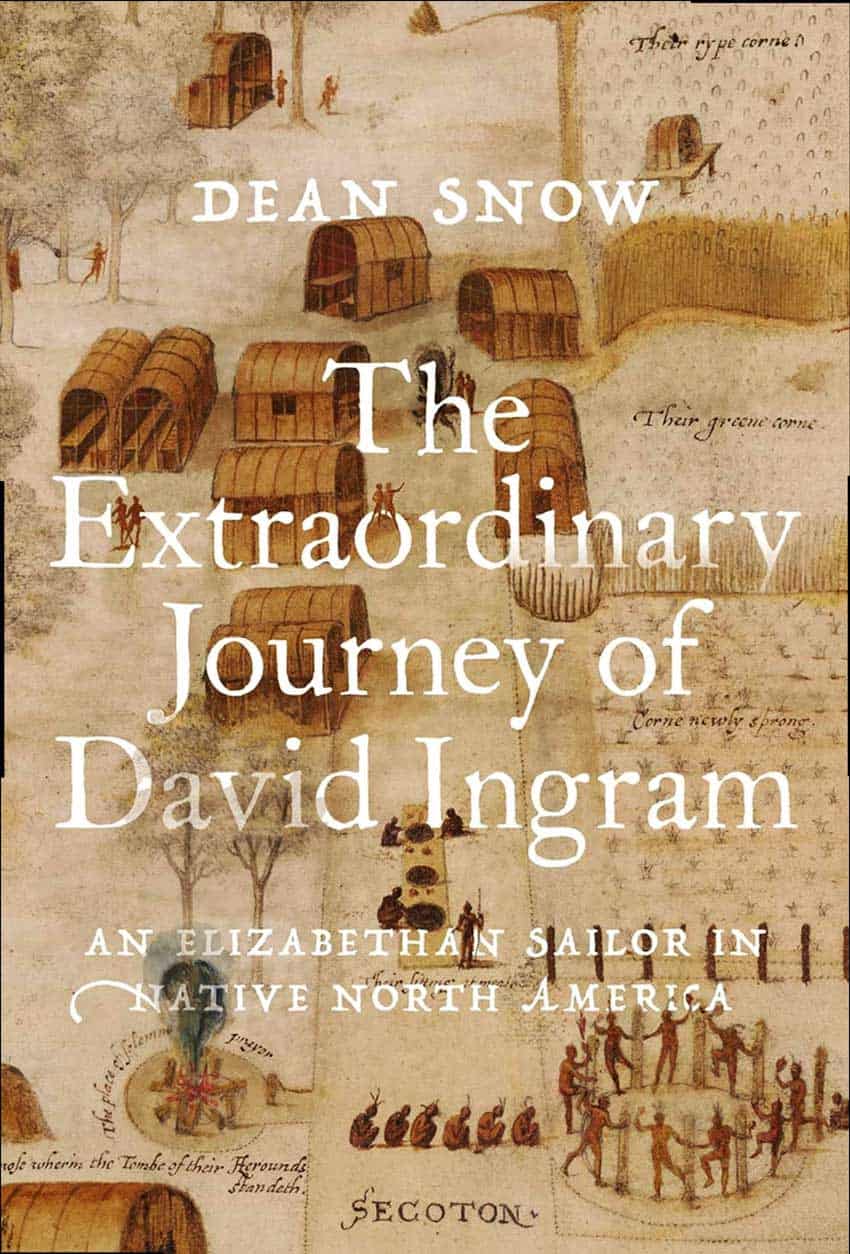
Then, in 2023, respected archaeologist Dean Snow published a 336-page book entitled “The Extraordinary Journey of David Ingram: An Elizabethan Sailor in Native North America.”
Snow reopened Ingram’s case and meticulously investigated transcripts of his interrogation by Francis Walsingham, Queen Elizabeth’s spymaster.
The results of Snow’s research are surprising and fascinating. They suggest that David Ingram and his companions Richard Browne and Richard Twide deserve membership in the exclusive club of hardy European explorers (like Álvaro Núñez Cabeza de Vaca) who traipsed across North America when it was still in the hands of Indigenous peoples.
The perfect hurricane
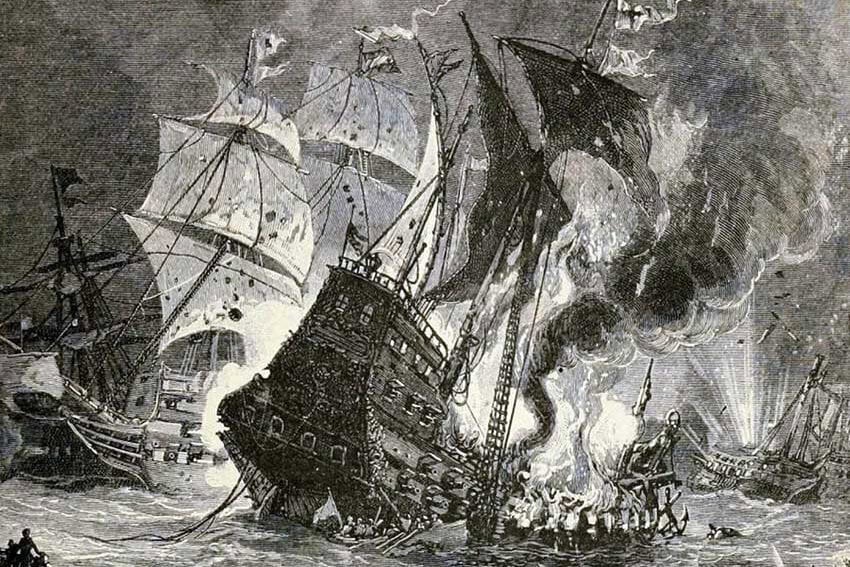
The story of those three sailors begins in September of 1568 with what appeared to be the hurricane of all hurricanes, a tempest “in which lightning and thunder were constant for 24 hours,” ravaging a fleet of eight ships commanded by British admiral Sir John Hawkins, considered a notorious pirate by the Spaniards.
When Acapulco was the center of the world

What was left of the fleet limped into San Juan de Ulúa harbor at Veracruz, on the Mexican coast. The harbor was, of course, controlled by Spain.
A furious battle ensued, and Hawkins was barely able to escape in one ship, the Minion, with 200 men onboard and just enough water and food to get half of them back to England.
Eating rats and cats
“Men were already eating hides, rats, cats, pet monkeys, and any other emergency food they could find,” writes Snow. “(Hawkins) decided to put the key question to his crew. They could go ashore and take their chances, or they could stay aboard the Minion and risk death from starvation on the long voyage home. Which would it be? On Friday, Oct. 8, 1568, with the Mexican shore in sight, Hawkins put the hard choice to the ragged men on the Minion.”
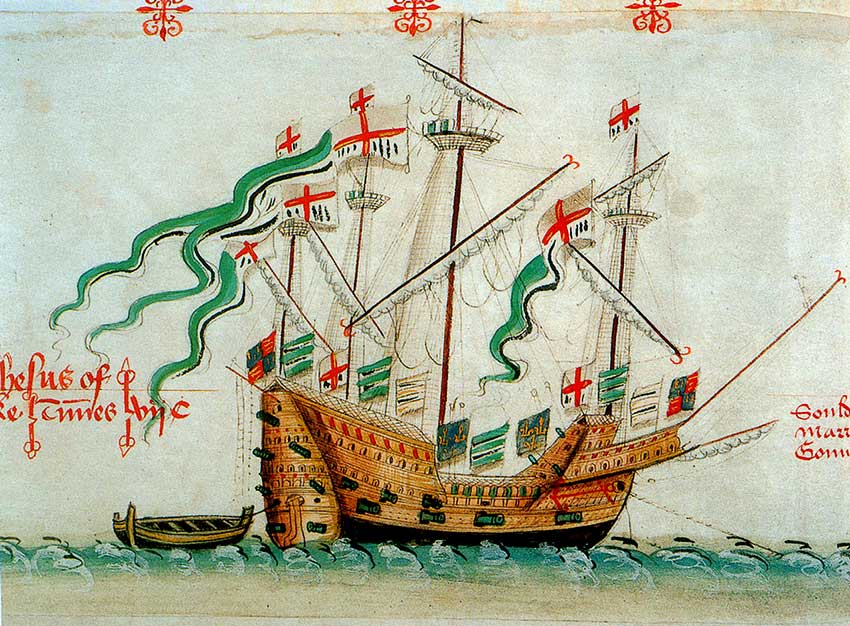
In the end, 100 men opted to take their chances on land. Hawkins gave each a bolt of Rouen cloth — which they could use for trading — and promised he would come back for them in a year … if he made it home.
Chichimecs in the desert
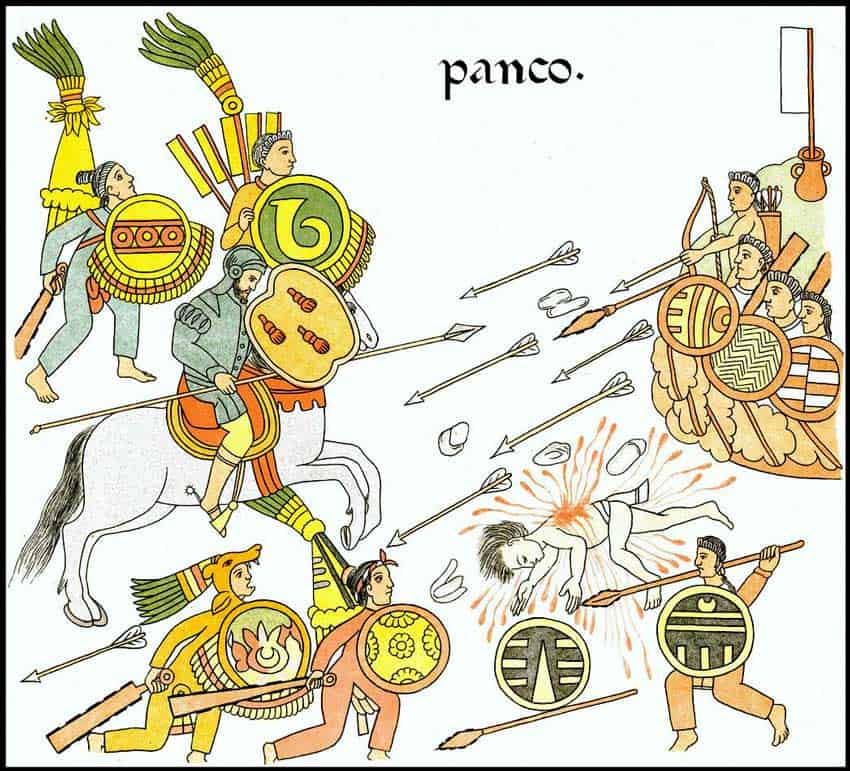
In October of 1568, Ingram and his companions were set on land near the settlement of Tampico on the Pánuco River. They found themselves in scrub desert populated by what the Spaniards called “Chichimec barbarians,” who were typically defensive when confronted by outsiders.
The Chichimecs killed eight of them before they realized this was not a war party out to get them.
“They came to all such as had any coloured clothes amongst us, and those they did strip stark naked, and took their clothes away with them; but they that were apparelled in black they did not meddle withal,” noted Miles Phillips, one of the survivors of the confrontation.
“Finally,” he continued, “they pointed us with their hands which way we should go to come to a town of the Spaniards, which, as we afterwards perceived, was not past ten leagues from thence, using these words: ‘Tampeco, tampeco, Christiano, tampeco, Christiano,’ which is as much (we think) as to say in English, ‘Go that way, and you shall find the Christians.’”
Ingram was lucky. He was wearing black and got to keep both his clothes and his bolt of Rouen cloth.
5,180 kilometers to Canada
Faced with the prospect of a hostile reception in Tampico, the group of sailors now split, some heading south and some north. Both groups quickly splintered, and soon Ingram was a member of a trio that would make its way to Canada after walking at least 5,180 kilometers over the course of 11 months, with the final legs completed by canoe. Their objective was Cape Breton, Nova Scotia, where chances were good of catching a French or English ship home.
To some, such a trek might seem impossible. To prove it could be done, thru-hiker Richard Nathan started walking in August 1999 from Guysboro, Nova Scotia, to Barra del Tordo, Tamaulipas, where he and his dog Ulises arrived nine months later. He walked a total of 3,300 miles or 5,311 kilometers.
Snow’s discovery
Dean Snow’s book is not a retelling of David Ingram’s experiences. Instead, he sticks to the proper job of a good archaeologist-anthropologist-historian, constantly checking facts and seeking the corroboration of other sources.
Ingram was illiterate, and his account comes to us via Richard Hakluyt’s 1589 publication “The Principall Navigations, Voiages and Discoveries of the English Nation.”
Among other extraordinary things, Hakluyt’s book would have us believe that Ingram saw elephants and leopards while walking along the Atlantic coast of North America. No wonder Hakluyt threw Ingram’s narrative out of the second edition of his book and it was considered fiction for centuries.
Snow, instead, decided to go back to the notes of Ingram’s interrogation.
“Manuscripts handwritten in Elizabethan English,” he tells us, “are typically very difficult for modern eyes to read. Formal government and business documents like these were mostly written in ‘secretary hand,’ a script that is variably flamboyant and cryptic to the point of illegibility … and … esoteric enough to provide secretaries with employment security.”
What Snow found, in a nutshell, was that the interrogators had bombarded Ingram with questions such as “What kind of people there be and how they be appareled? What kinds of buildings and houses? What kinds of beasts and cattle?”
Making sense of Ingram’s recitation
Since Ingram was a widely traveled sailor with experience in Africa and the Caribbean, he enthusiastically included all the wonders he had ever encountered throughout his voyages.
Between Columbus and Cortés — How Spain encountered Mexico
Eventually, Snow realized that 48% of everything Ingram told his interrogators pertained to the sailor’s earlier experiences. With that in mind, the task became sorting things out and clearly separating what Ingram said about Africa, the Caribbean, Mexico and points farther north. This reordered narration Snow presents to us as the appendix of his book, with, happily, the language and spelling brought up to date.
All of this having been clarified by Snow’s hard work, you can now peruse Ingram’s story to discover what he has to say about the people he ran into, the flora and fauna he walked through, and the manner in which he managed to stay alive and find his way through the untamed American continent of 1568.
You can buy “The Extraordinary Journey of David Ingram” from Amazon or borrow it through a U.S. library.
John Pint has lived near Guadalajara, Jalisco, for more than 30 years and is the author of “A Guide to West Mexico’s Guachimontones and Surrounding Area” and co-author of “Outdoors in Western Mexico.” More of his writing can be found on his website.
