


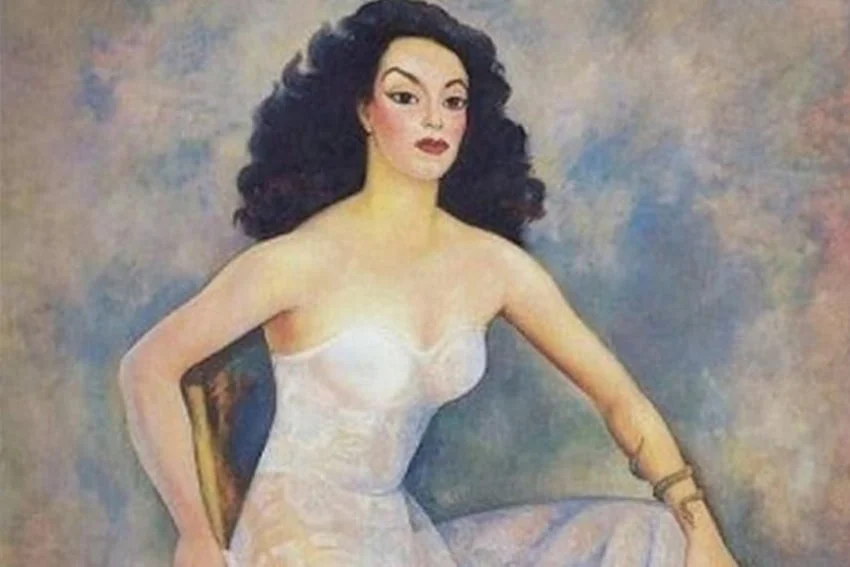
María Félix was not happy when she received the work of art. After commissioning a portrait of herself from Diego Rivera, the legendary Mexican muralist, she had high expectations of the finished work — which, at first, were definitely not met.
Mexico’s Golden Age film icon wanted to be depicted as a Tehuana woman, with the classical headpiece and garments. However, Rivera did not agree: His beloved Frida Kahlo had already portrayed herself as such, and he had another vision for the portrait of “La Doña,” as Félix was known.
Everyone knew Diego was working on that project. With both of them at the peak of Latin American stardom, it was difficult to keep the secret. How is it possible, then, that a portrait of María Félix, hand-painted by Diego Rivera, disappeared for so many years? This is the story of a cursed painting that, as only happens in Mexico, is still missing.
A matter of artistic sympathies
It was well known that La Doña was strong-willed. Filmmakers, photographers and artists of various kinds found that she wanted to do things her way — and no other way. Even Rivera, with his long history of love affairs and alleged fame among women of the time, had difficulty working with her on this piece.
It was 1949. Rivera summoned María Félix to his studio in San Ángel, where he was working on that and other artistic projects. Upon seeing the finished work, La Doña could not hide her displeasure: It was not what she had asked for.
It wasn’t the first time Félix had asked to be portrayed. Immersed as she was in the Mexican art scene, she rubbed shoulders with majestic women, such as Leonora Carrington, Leonor Fini and Remedios Varo, the great witches of Mexican surrealism. All of them, moreover, had made portraits of La Doña who, according to the María Félix Foundation, had celebrated their work as being of global stature.
The case of Diego Rivera’s painting was very different. Although Félix wanted Rivera to portray her as a figure of national pride — the perfect Mexican woman — the muralist had other plans: He was determined to follow his own style (and leave Félix’s suggestions behind). It was no surprise, then, that the portrait struck her as abhorrent. Not only had he not painted her as a Tehuana, as she had requested, but she was also depicted half-naked with her breasts exposed. Years later, in an interview with journalist Jacobo Zabludovsky, the Mexican actress confessed that she “didn’t like Diego’s style, just as she didn’t like Frida Kahlo’s.”

The Mexican actress eventually agreed to the portrait. Only because they were friends, she told Rivera, only for that reason.
Stains of white paint
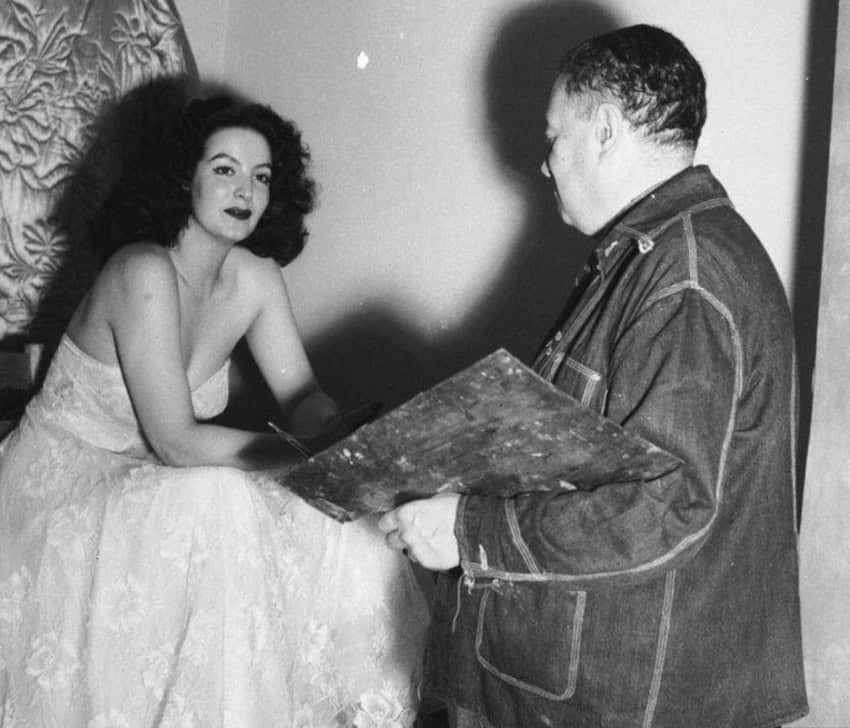
Although she accepted Rivera’s commission, María Félix wasn’t happy with the result. To avoid having her breasts exposed, according to gossip, she asked a mason to apply white paint over the lace Rivera had originally painted. The muralist never found out about this alteration, but only then did La Doña feel comfortable with the portrait. So much so, according to her foundation, that she kept it on display in her living room for years.
As a woman with an extremely high opinion of herself, La Doña was certain that Diego Rivera was in love with her. And it may well be true. Who wasn’t, back then? Strong, self-assured, lucid and talented, she captivated the Mexican art scene with her presence.
Some time after the painting was delivered, Diego Rivera asked María Félix to lend it to him for a portrait exhibition he was organizing. The actress flatly refused, knowing that she had altered the portrait without the artist’s consent.
A short time later, she sold the piece to Dr. José Álvarez Amézquita, who was then building his career in Mexican healthcare politics. What difference would it make, the actress thought. After all, she didn’t even like the portrait, and it was already causing problems at home: Her husband at the time, Alexander Berger, didn’t like the painting either. Unbeknownst to them at the moment, that purchase would cause the painting to wander for decades, until it disappeared from the map completely.
Another pop culture icon buys the painting
Dr. Álvarez Amézquita was not the last owner of the portrait Diego Rivera painted of María Félix. In the 1970s, years after Frida and Diego’s deaths, songwriter and performer Juan Gabriel bought the painting for 15 million pesos. As a devoted admirer of the actress since his youth, he could not have been happier to have the coveted painting in his personal collection.
After acquiring the painting, he wrote “María de Todas las Marías,” and even compared her to the Virgin of Guadalupe. The Mexican public forgave the blasphemy.
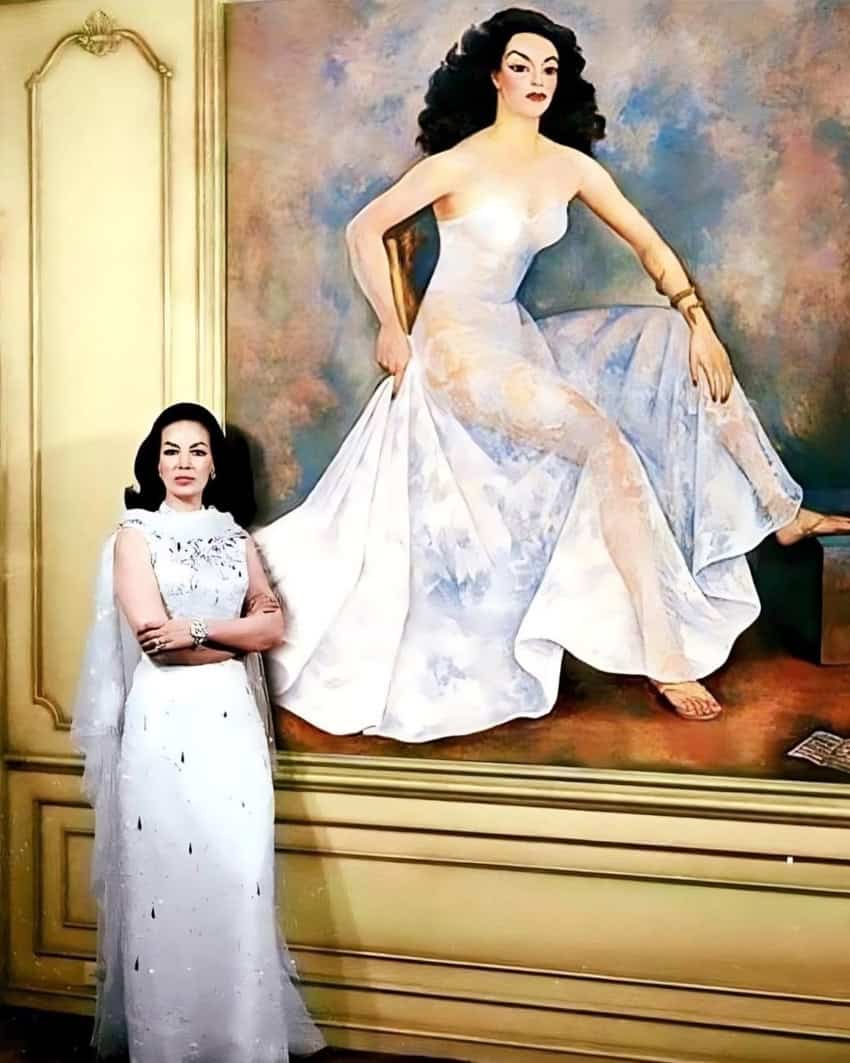
Like other eccentricities, the painting remained in the possession of Juan Gabriel’s family for decades. It wasn’t until his untimely death from a heart attack in 2016 that the portrait of María Félix disappeared. Amid the turmoil, confusion and grief over the icon’s loss, the artwork vanished, its whereabouts unknown for the past 10 years.
A national treasure is missing
Much of the investigation revolved around Juan Gabriel’s universal heir, Iván Gabriel. As his only recognized biological son, it was natural that his possessions would remain in his name. However, he for a time had no control over the US $45 million estate his father left — among which was María Félix’s portrait by Diego Rivera.
In 2020, with the outbreak of the COVID-19 pandemic, a glimmer of hope emerged in the case. Lawyer Guillermo Pous claimed that the painting was in the possession of César Duarte, the controversial Mexican politician. It was never known if he actually had it.
One version suggests that Juan Gabriel’s family sold the portrait to Duarte. However, if this were the case, given the historical and artistic significance of the piece, the National Institute of Fine Arts and Literature (INBAL) would have been required to receive notification. Another version indicates that the painting remains in the possession of Gabriel’s family, in one of their properties in New York or Las Vegas.
Be that as it may, the piece is still missing. Perhaps the fact that María Félix did not want it displayed cast a spell over Diego Rivera’s portrait of her — never to be seen again, not by her, not by anyone.
Andrea Fischer contributes to the features desk at Mexico News Daily. She has edited and written for National Geographic en Español and Muy Interesante México, and continues to be an advocate for anything that screams science. Or yoga. Or both.
