


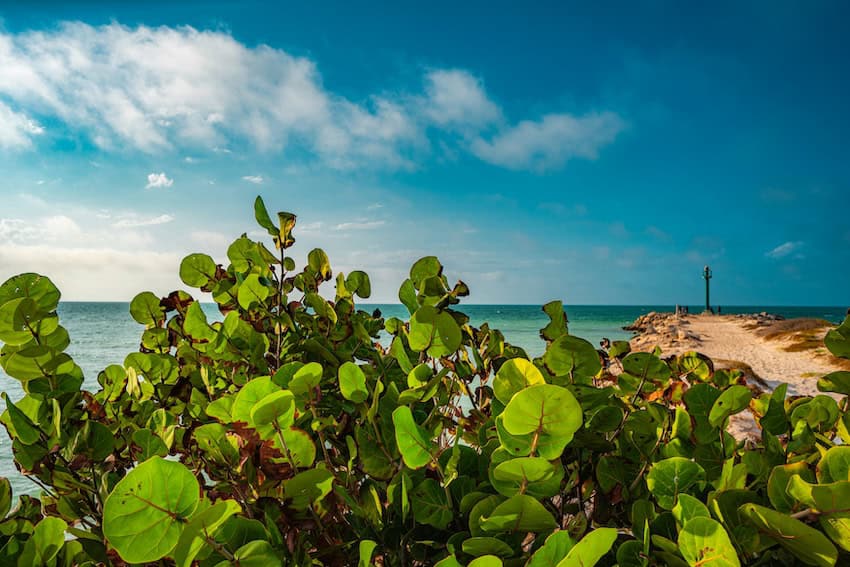
A proposed luxury real estate development along a protected beach community in Mexico’s Yucatán Peninsula has sparked protests and backlash online. It’s the latest in a string of projects that activists have sought to stop, saying the developments will have detrimental impacts on their communities.
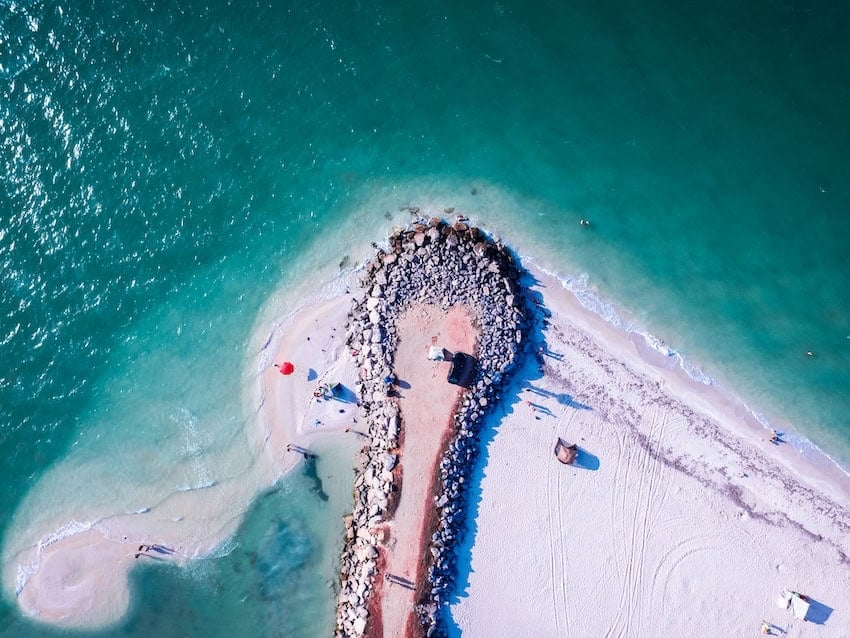
Las Dunas tourist complex is a planned luxury real estate and tourism venture that aims to encompass 92,000 square meters (more than 22 acres) of virgin beach area less than an hour’s drive from Mérida, the state capital of Yucatán, including more than 70 apartments spread across six towers.
Given its size and scope, activists say the project will have a significant economic and environmental impact on the small beach town, and that it ignores pressing issues that need to be addressed.
“In Chuburná, there are real needs – problems stemming from a lack of basic infrastructure and systematic neglect by the authorities,” Salvemos las Dunas, a local environmental activist group, told Mexico News Daily. “They want to foster the false belief that megaprojects bring economic benefits, but the question is: benefits for whom?”
‘A crime against biodiversity’
It’s not just Salvemos las Dunas that’s sounding the alarm.
Mexico’s Ministry of Environment and Natural Resources (Semarnat) denied the project’s initial proposal in December 2023, as the site was deemed highly vulnerable. However, in April 2025, after adjustments were made to the proposal, the project was federally approved.
As the Las Dunas development began to take shape, the outcry from community members and activists was swift. Salvemos las Dunas launched a petition calling for a halt to the project and an official review of the proposed plan.

“[A]bove all, this area is not just a stretch of sand; it’s the history and identity of the people who already live there,” Salvemos las Dunas said.
Their concerns were supported by a three-day inspection led by the Federal Prosecutor’s Office for Environmental Protection (Profepa) in late July. That report detailed multiple violations of federal regulations, some of which could carry criminal charges.
“Omissions, non-compliance and subsequent damage to species of wild flora and fauna protected by Official Mexican Standards may transcend the administrative scope and constitute a crime against biodiversity,” Profepa wrote in a statement shared with Mexico News Daily.
Profepa and the government of Yucatán have since paused the project while they verify its compliance. During a press conference in early August, Gov. Joaquín Díaz Mena said that the “protection of Yucatán’s natural heritage will prevail over any particular project.”
Meanwhile, Salvemos las Dunas’ petition to protect the dunes has garnered more than 140,000 signatures. A protest was also held at the Monumento a La Patria in nearby Mérida in late July.
The public opposition to the project appears to be working.
“Given the concern of citizens, the State Government formally requested, since last July 25, Semarnat and the Federal Attorney General’s Office for Environmental Protection (Profepa) to verify the timely compliance with the project authorizations and delivered all the technical information it has,” Yucatán’s government wrote in a statement.
Designia Desarrollos, the development firm behind Las Dunas, declined to comment on the ongoing proceedings.
“This project is completely contrary to environmental protection laws, contravening the human rights that guarantee access to a healthy environment, especially for the residents of Chuburná Puerto,” Salvemos las Dunas said. “The lack of regulation and the ease with which permits are granted to real estate developers have hijacked the state.”
Construction on 14-tower tourist project on Yucatán’s coast halted on environmental grounds
How important are the Chuburná Dunes?
The Chuburná Dunes are an integral part of the coastal ecosystem, recognized as one of the most well-preserved in Yucatán. Hosting various endangered wildlife species, including some that are endemic to Yucatán, as well as a nesting ground for a tortoise species on the brink of global extinction, the current ecosystem is both fragile and consequential.
Among the animals that call the dunes home are the Mexican sheartail hummingbird (doricha eliza) and the Yucateca wren (campylorhynchus yucatanicus), both of which have been granted a protective status, as well as the hawksbill sea turtle (eretmochelys imbricata) and the green sea turtle (chelonia mydas).
The dunes also serve as a natural protector against wind, tides, hurricanes, erosion and other storm systems that frequently batter the area, meaning any damage to them could prove irreversible.
“We believe that progress can be achieved consciously, hand in hand with environmental protection and citizen participation, but above all, by safeguarding the interests of the people, not just a few families in Mérida,” Salvemos las Dunas said.
A stalled Royal Caribbean project
The Las Dunas tourist complex is just the latest in a string of recent developments that didn’t sit well with local activists and conservationists.
Earlier this year, a Royal Caribbean megaproject in Quintana Roo came to a halt after citizens and activists expressed concerns.
Sheinbaum suspends work on Royal Caribbean’s ‘Perfect Day’ megaproject in Mahahual
The project, known as “Perfect Day,” is a proposed amusement park in the municipality of Othón P. Blanco, in the small fishing village of Mahahual. The famous cruise line had purchased the property, located close to the port of Costa Maya, which Royal Caribbean also owns, for $292 million.
An online petition against the development has garnered more than 5 million signatures to date.
Royal Caribbean officially withdrew its environmental assessment application in May, citing Semarnat’s intentions to deny the project. The company said it was “disappointed” in Semarnat’s decision and would “respect the role of Mexico’s environmental authorities,” but stopped short of saying “Perfect Day” would be scrapped entirely.
“We continue to believe in Mexico, and are optimistic in the potential to advance our investment responsibly,” the company wrote in a statement at the time. “Over the coming weeks, we will re-engage stakeholders to move forward in a way that delivers shared prosperity through the development of essential environmental infrastructure, the creation of thousands of local jobs, and community programs that support the people of Mexico.”
Tren Maya’s 900-mile development
The activism surrounding both Las Dunas and Perfect Day is set against the backdrop of the Tren Maya megaproject, which was completed in 2024 under then-President Andrés Manuel López Obrador.
So far, the 900-mile train route spread across five states in Mexico’s southeast has failed to realize its promised financial benefits for local communities, while also understating its overall environmental impact.
Tren Maya carried its first passengers in December 2023. Since then, 42 trains have been inaugurated, traveling more than 900 miles of track across Chiapas, Tabasco, Campeche, Yucatán and Quintana Roo.
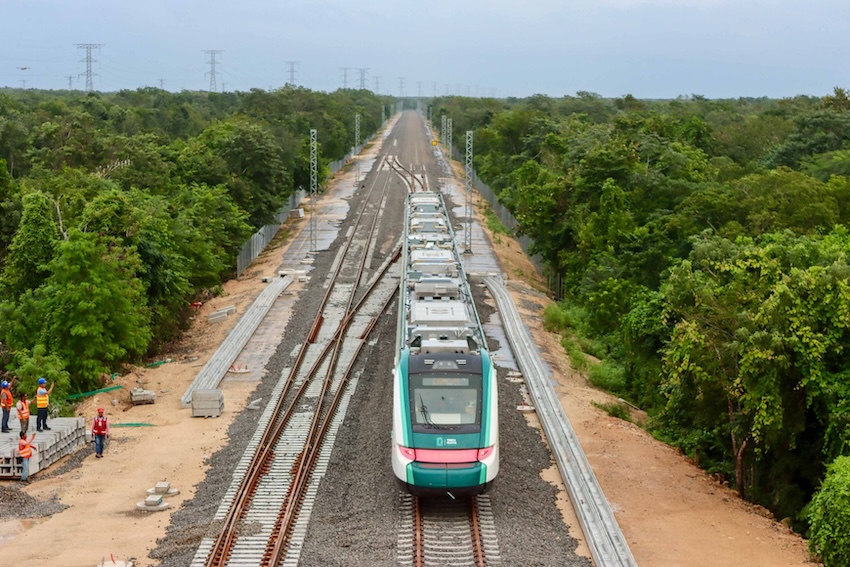
According to an August 2023 report by CartoCrítica, Tren Maya’s construction spans more than 26,000 acres, requiring deforestation efforts in 61% of the surrounding jungle. The report alleges that 87% of the deforestation was done without the necessary permits.
This, despite López Obrador’s assertions in a 2018 interview that “Not a single tree” would be cut down. Semarnat similarly released a statement in January 2023, saying that “More than 64,000 plants have been rescued with 85% survival.”
However, Priscila Alaniz Uribe, the general director for the Sélvame nonprofit, has a different take.
“About 12 million trees have been cut down, and around 125 cenotes have been damaged,” Alaniz Uribe told Sierra Club in July. “There are 15,000 piles of concrete poisoning the water in underground rivers – water we humans, animals, and plants use to live here.”
Such concerns define the environmental activism that has taken place around the Yucatán Peninsula in recent years.
“This project is completely contrary to environmental protection laws, contravening the human rights that guarantee access to a healthy environment, especially for the residents of Chuburná Puerto,” Salvemos las Dunas said of the project they’re working to stop. “If this area is cleared, it will leave the residents who have cared for their city for years unprotected; not to mention that it is home to endemic species of the area that are in danger of extinction.”
Jesse Foley-Tapia is a writer and photographer living in the Yucatán Peninsula, where he has dedicated his time and energy to shedding light on issues affecting Indigenous communities. His biggest journalistic accomplishment is interviewing Kendrick Lamar in 2010. His work has appeared in The Sun Magazine and BreakThrough News.
