


According to the International Organization for Migration, by December 2024, more than 7.89 million Venezuelans had left their homeland in the last 25 years, making it the second-largest population displacement in the world.
While Colombia is far and away the most common destination for displaced Venezuelans, the official INEGI census in 2020 counted more than 52,000 Venezuelans living in Mexico, while Milenio reported in 2025 that, at nearly 26,000, they now make up the largest group of foreign residents in Mexico City, not counting undocumented arrivals. Studies show that most Venezuelans obtain visas and permanent residency cards if they can, suggesting they intend to stay, work and live in Mexico City long term.
A growing presence across the capital
While this community is less than 1% of the city’s 9 million residents, you can note their influence if you pay attention — Venezuelan flags fluttering outside of restaurants in Narvarte and Polanco, arepa flour on the shelves of local grocery stores, Venezuelan accents calling out wares for sale along the streets of the Centro Histórico. Most of these immigrants arrived over the last decade, the years of deepest economic and social upheaval in their home country. But a small number of Venezuelans have been in Mexico since the mid-20th century.
In 1948, a small group of Venezuelan exiles came to Mexico fleeing the military coup that toppled democratically elected Rómulo Gallegos. This wave of around 1,000 immigrants and their families was led by Gallegos himself (besides being the ousted president, he was also the country’s most well-known novelist) and Andrés Eloy Blanco, Venezuela’s most celebrated poet and chancellor of the deposed government. It was an era when Mexico welcomed thousands of Europeans escaping World War II and Latin Americans fleeing political unrest in their countries.
Decades of migration and pivotal shifts
From then until the early 2000s, only a small trickle of Venezuelans moved to Mexico, with many working in the oil industry in places like Veracruz and Tabasco. However, when leftist Hugo Chávez was sworn in as president in 1999, many Venezuelans, particularly middle-class professionals who feared his policies, started leaving. They came with visas, passports and degrees, ready to start a new life elsewhere.
Where can you find a taste of Colombia in Mexico City?
That was when Glexsy Abreu arrived in Mexico. She had been introduced to her soon-to-be husband years before, but now she was making a permanent move to Mexico City from Maracaibo. In Mexico, she would have to completely start over when her hematology degree from Venezuela was not accepted, and she couldn’t practice as a doctor. She worked for seven years at the Venezuelan Embassy issuing passports, and she says she watched the flow of immigrants from her country slowly increase into the 2010s.
The influx reached a pivotal moment in 2015, when global oil prices crashed and the quality of life in Venezuela plummeted. The country experienced one of the most dramatic exoduses of its residents to date, with many working-class and low-income residents simply walking out of the country on a treacherous journey north.
Policy shifts and shelter in Mexico City
For many of these migrants, Mexico was not their intended destination. Most had their sights set on the United States. In 2022, Mexico and the U.S. announced a bilateral agreement that the U.S. would accept 24,000 Venezuelans who could prove they had financial support. Those who attempted to enter illegally would be sent back to Mexico.
In the fall of 2025, the population of a government-run shelter in Mexico City’s Tepito neighborhood was almost entirely Venezuelan women and children. Most had walked across the Darién Gap, a harrowing trip that took them through a 60- to 100-mile stretch of dense rainforest, swamps and steep mountains on the border between Colombia and Panama.
The women made it to Mexico just as border restrictions in the United States started to tighten, and so they made the choice to remain in the capital. By 2025, many had been living and working in CDMX for several years. In March 2024, the Venezuelan government offered free flights to anyone who wished to repatriate, and these women took advantage of the program. They moved into the shelter to wait for their flights home. By December 2025, they were all back in Caracas.
Building new lives through regional cuisine
Other immigrants, in particular middle-class professionals, had less dramatic exodus stories. Freddy Soto from the Ocho Tres Cinco restaurant in Roma Norte had already been traveling between Miami and his hometown of Maracaibo near the Colombian border. When his wife was offered a television and film production job, they decided to move to the capital and try their luck in Mexico. A few years later, they opened their restaurant.
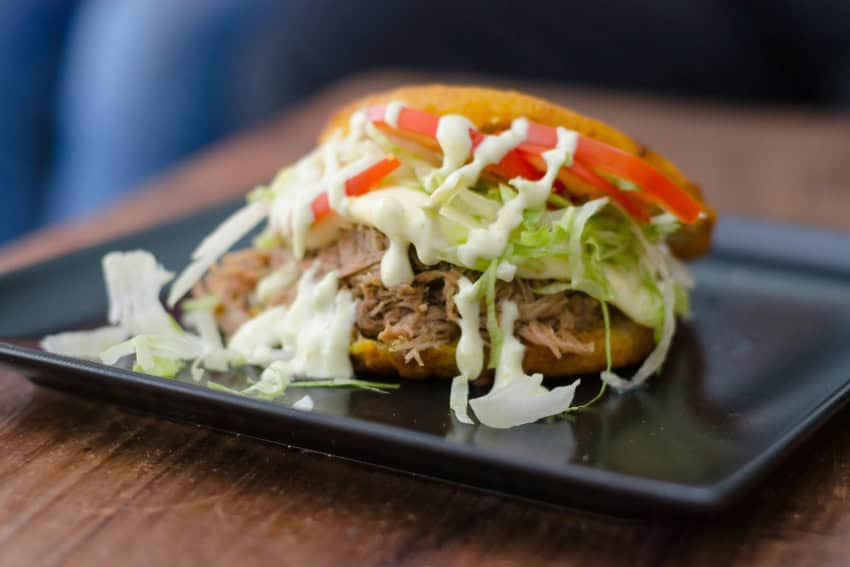
Freddy draws the inspiration for the menu at Ocho Tres Cinco from his hometown, a tropical destination that sits next to one of Venezuela’s largest oil reservoirs in Lake Maracaibo. Their specialty is the agüita de sapo, an extra-crispy arepa stuffed with slow-roasted beef and deep-fried cheese drowned in a sauce made from beef broth thickened by hours of slow cooking.
It’s washed down with a refreshing papelón — an iced-tea-like drink made with unrefined cane sugar (piloncillo) and lemon juice that you will find in almost every Venezuelan restaurant on the planet. My personal favorite is at Páramo House in Mercado Roma, where it’s made almost effervescent, with less sugar and freshly squeezed lemon juice.
Staples, flavors and shared traditions
Similar to Mexican cuisine, corn is fundamental to Venezuelan cooking, and foods like arepas (a thick corn patty), hallacas (a regional corn tamal), and cachapas (a type of sweet corn pancake) are common on menus and in kitchens. But there are also lots of tropical flavors like plantains (both sweet and savory), tangy, fresh regional cheeses, tubers like yuca and tropical fruits.
How US immigrants have shaped culinary culture in Mexico City
Then there are black beans and rice, common to most Caribbean cuisines, as well as various preparations of slow-cooked meats. One of Glexsy’s favorite dishes to make at home is asado negro — beef coated in a sweet-and-savory papelón sauce.
Some of the country’s most well-known recipes include tequeños (a kind of cheese stick that looks like pigs in a blanket and is sometimes filled with guava paste), pastelitos (a small, savory fried pie), and pabellón criollo, which is the national dish.
Every regional cuisine has its distinctiveness, and those closest to the border with Colombia include a lot of cross-border borrowing of flavors and techniques.
Expanding culinary landscapes across the capital
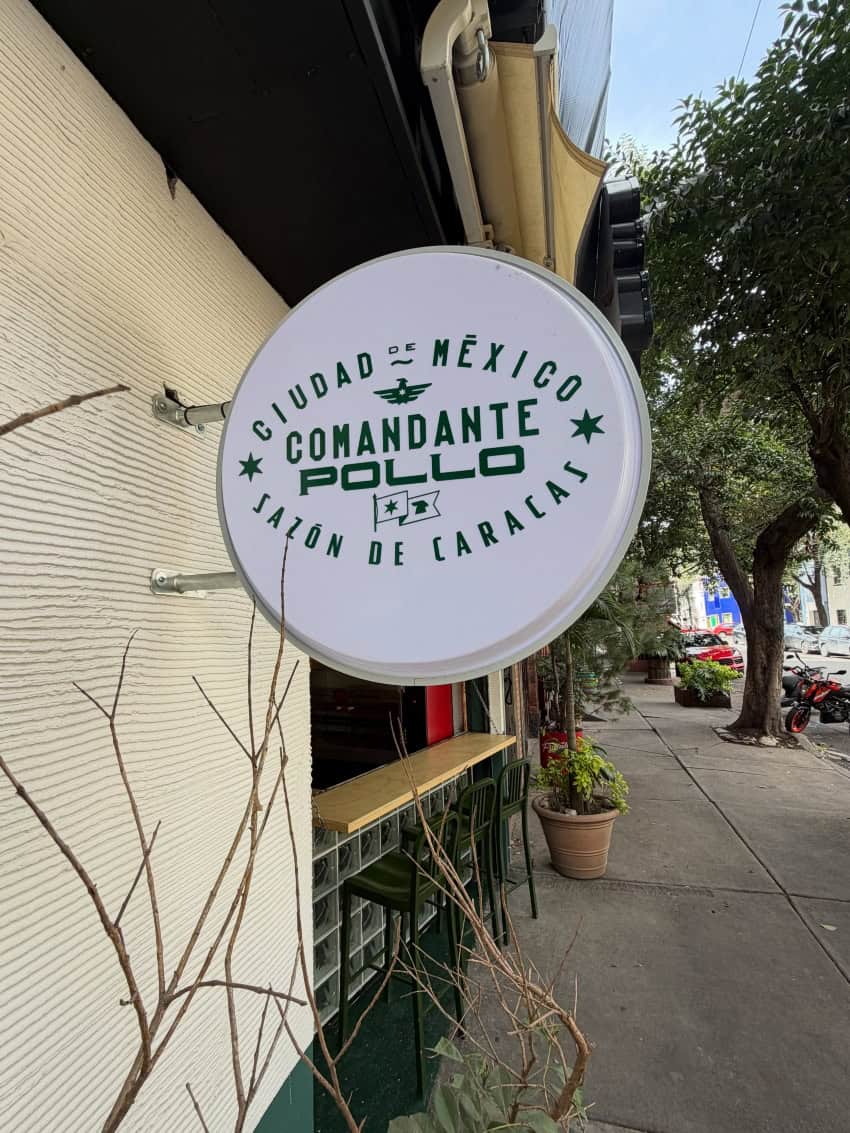
One of the best Venezuelan flavors is guasacaca salsa — a bright, intense blend of garlic, cilantro, parsley, vinegar and other spices. I had it recently at Comandante Pollo, a new restaurant in Colonia Roma dedicated to the flavors of Caracas. The traditional rotisserie chicken marinated in mojo de ajo and citrus is a bright alternative to the cumin-oregano-achiote-rubbed rotisserie chickens of Mexico, and the yuca fries with guasacaca salsa were unbeatable. The sweet plantains with shredded queso fresco and papelón honey were also fantastic.
These days, Venezuelan kitchens are spread across the city — in Polanco, Narvarte, Del Valle and other colonias. Some are great and some lack sazón.
As the community grows, so do the options, providing the city with yet another delicious culinary addition to all the others we’ve discovered through this series on Mexico City’s immigrants and their food.
Lydia Carey is a freelance writer and translator based in Mexico City. She has published extensively both online and in print, sharing her insights about Mexico for over a decade. She lives a double life as a local tour guide and is the author of “Mexico City Streets: La Roma.” Follow her urban adventures on Instagram and see more of her work at mexicocitystreets.com.
