


Generalísimo Francisco Franco is still dead, even if the Spanish dictator’s political sensibilities refuse to die. Spain had some cultural catching up to do following his 1975 death, after decades of social repression and censorship. The nation’s outrageous creative energy would take form in La Movida Madrileña, the frothy, futurist, queer-positive cultural movement christened in 1980 at a legendary free punk concert in Madrid. La Movida gave the world Pedro Almodovar and many other visionaries, including musicians exploring new wave (nueva ola), post-punk, and synth pop in dialog with scenes in New York, London, Paris, Munich, and elsewhere in the postwar free world.
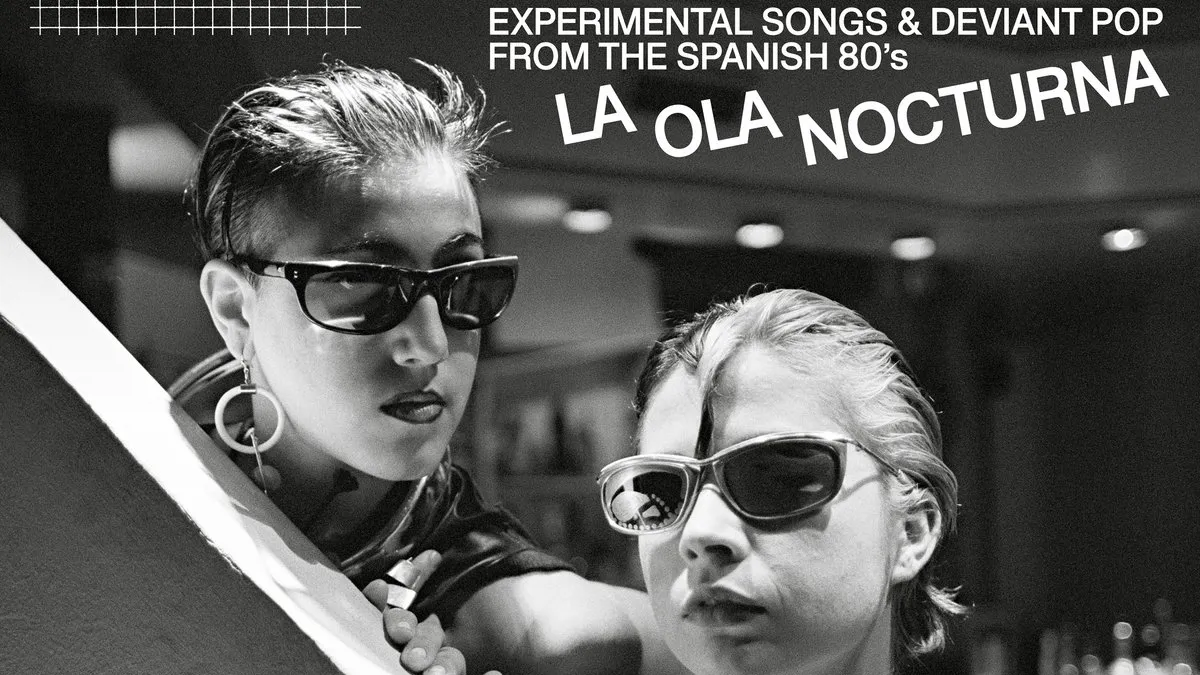
Many of these artists populate La Ola Nocturna, one of those great secret histories that reveal a parallel musical universe. For one thing, the album is a welcome change from the ’60s psych and British Invasion mirrorings that long defined these sorts of international flashbacks, before the synth-disco revelation of Who Is William Onyeabor? shifted the time frame forward. Curated and well annotated by Spanish-French “hantologist” Loïc Diaz Ronda in cahoots with the pan-national crate-diggers at Switzerland’s Mr. Bongo label, Ola Nocturna is the third entry in a series begun with the industrial electro-punk/punk-electro of La Contra Ola: Synth Wave & Post Punk From Spain 1980–1986 and the loopy, cinematic vistas of La Ola Interior: Spanish Ambient & Acid Exoticism, 1983–1990. In some ways the most interesting and tuneful of the bunch, Nocturna feels like a retrospective Spanish version of the underground-mapping 1980 Rough Trade comp Wanna Buy a Bridge?, a set that rewired quite a few brains abroad when it came out.
No score yet, be the first to add.
La Ola Nocturna has a similarly rangy aesthetic, by turns provocative, absurd, twee, fierce, slapping, serrated, and sugar-sweet. Girls, similarly, are to the front. The set opens with the Young Marble Giants minimalism of “En Invierno,” a perfect amuse bouche at 1:19—a wistful-lonely rumination on love psychology by Aventuras de Kirlian, the Basque band who later rebranded as twee polyglots Le Mans. The Madrid-based Esclarecidos were scene instigators, co-founding the important GASA label to release their debut single, which included “Música Para Convenios Colectivos” (“Music for Collective Bargaining”), a cheeky dance-pop rallying cry with morning-sickness baritone sax that crosswires Blondie with Essential Logic. The most visceral track, “The Girl Is Mine,” is by Kremlyn, a Catalan proto-Le Tigre fronted by firecracker youngster Montse Berman. The band never managed a proper single, let alone an album, although a posthumous live collection turned up long after they disbanded. Indeed, cassettes were often the release format of choice, or lack thereof, for many of these indie artists, who lacked resources but needed to spit.
