


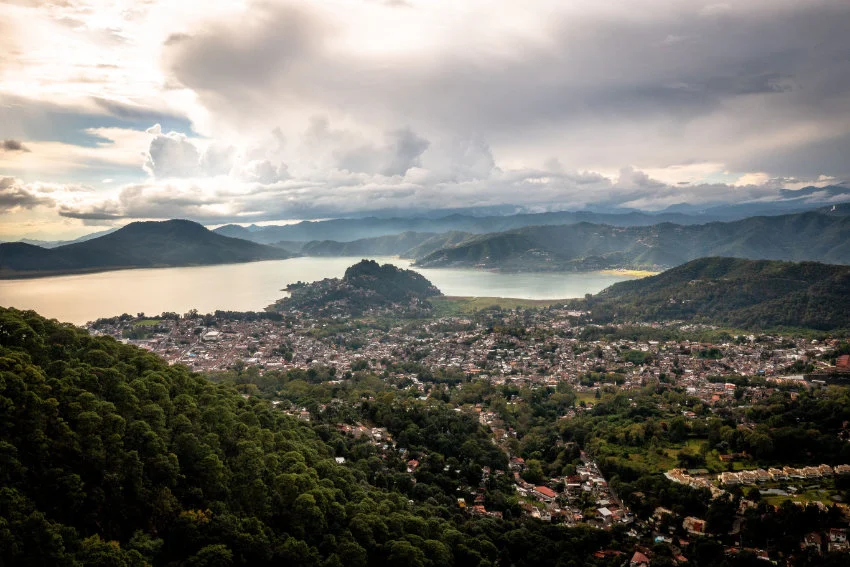
The town of Valle de Bravo has been Mexico City’s mountain retreat of choice for decades, a lakeside colonial town and Pueblo Mágico in the pine forests of México state where the capital’s professional class comes to decompress on weekends. What almost no one has noticed yet is what will happen when a major federally funded highway connecting Valle de Bravo to the Pacific coast opens in 2029.
The Mexican federal government is upgrading Federal Highway 134, which connects the Toluca region to the Pacific beach resort city of Zihuatanejo on the Guerrero coast, with a committed budget of approximately 18.6 billion pesos (about US $1 billion).
The infrastructure project, currently approximately 33% complete, will significantly reduce the drive from the Valle de Bravo region to Zihuatanejo — from more than eight hours to approximately four.
The existing Federal Highway 134 is a two-lane mountain route that demands full attention and adds significant time to distances that look more manageable on a map than they currently are by car.
Combined with Valle’s existing two-and-a-half-hour road connection to Mexico City, the project will create a triangle of access that few places in Mexico can offer: a major international city, a mountain environment with a developed residential landscape, and a pristine Pacific coastline, all reachable from a single address.
This outcome has not yet been widely talked about, and the market does not yet reflect it.
What Valle de Bravo actually is
Valle de Bravo’s historic center, with its cobblestone streets and lakeside promenade, is the version of Valle that most visitors see. It is also only part of the story.

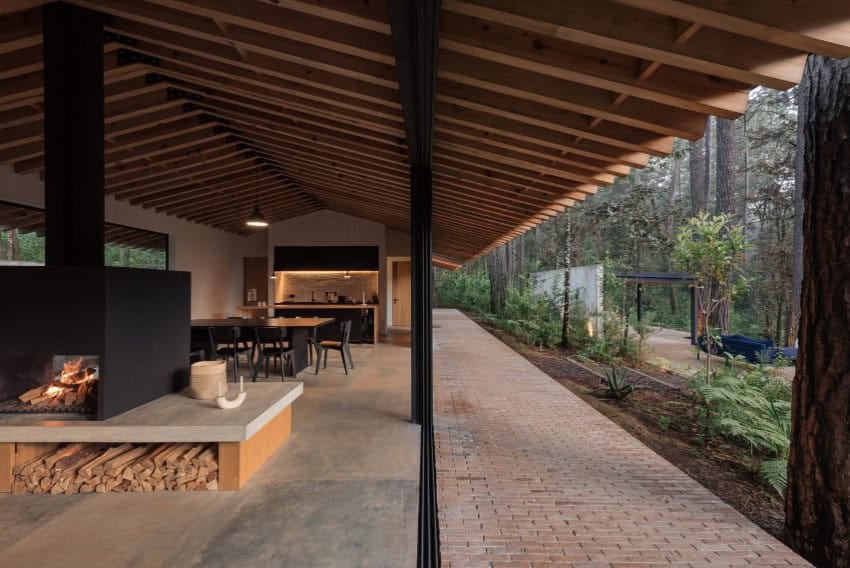
The residential landscape here that draws long-term residents with weekend homes extends across the surrounding forest and countryside, where elevations range from 1,800 to 2,600 meters above sea level. The climate shifts considerably across that range: cooler and more heavily forested at altitude, warmer and more open lower down. A car is close to essential; the communities that make up Valle’s residential fabric are spread across terrain that does not lend itself to walking.
It is in this broader residential landscape that a generation of Mexican architects has produced some of the more quietly influential residential work in the country. The homes here are modern and minimalist, built with gorgeous volcanic stone, cantera and floor-to-ceiling glass positioned to frame specific views at specific times of day. Outdoor terraces function as primary living spaces. Trails from private properties lead into the surrounding pine forest.
The design language is one of integration with the landscape rather than imposition on it, and it produces a quality of life difficult to find at comparable price points elsewhere in Mexico or, for that matter, North America.
“Valle de Bravo has all the ingredients to become a truly international destination”, says Luis Romo from Minkoba, a local real estate firm. “What makes it special is how much variety you can find in such a small area. Within just a few kilometers, you can go from warm, lakeview neighborhoods to cool, dense forests where you’re completely surrounded by nature. That diversity is also reflected in the architecture and in the lifestyle people choose here.”
Romo also noted that he’s seeing growing interest from international buyers.
“Foreign buyers are discovering that Valle offers something unique: beautiful natural surroundings, a great quality of life, a wide range of real estate opportunities, and easy access to one of the largest cities in the world.”
Valle de Bravo is at a “very interesting moment,” Romo says.
“It still feels authentic and relatively undiscovered internationally, but it has the potential to become one of Mexico’s most desirable residential destinations in the years ahead,” he says.
Central to its appeal is its location within a federally protected natural area, which has preserved the surrounding pine forest, keeping the air quality far cleaner than polluted Mexico City.
Residents also have easy daily access to fresh, local organic produce: Certified-organic farmers in the area do direct home delivery, with some even offering online orders.
A new real estate market for foreign buyers?
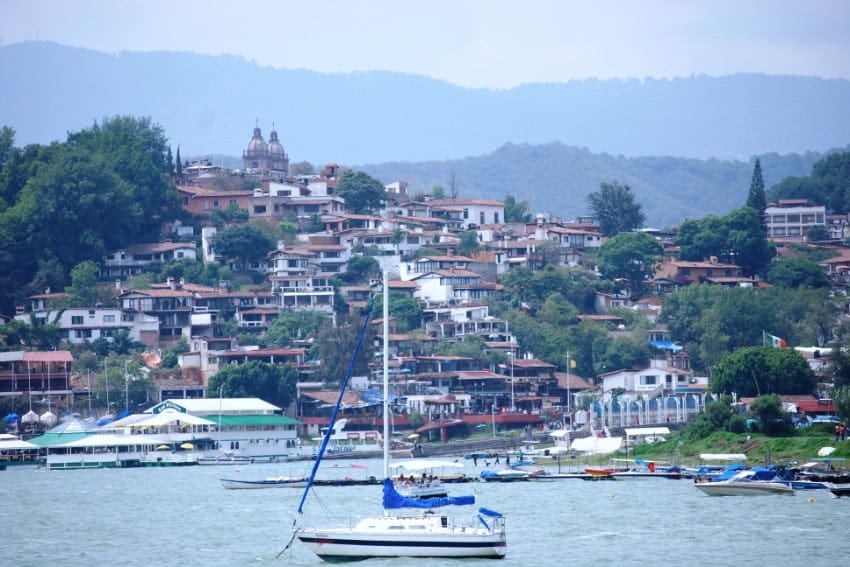
The ongoing work on Federal Highway 134 covers 317 kilometers or roadway and includes widening the highway from two lanes to three — with some key sections being widened to four lanes. The project is also building elevated bridges, underpasses and bypasses to eliminate the bottlenecks that currently make the mountain route so slow.
The full corridor runs from Toluca through the Nevado de Toluca area, Temascaltepec, Tejupilco, Ciudad Altamirano and Coyuca de Catalan, and, finally, to Zihuatanejo. As of early 2026, work is advancing along a 38-kilometer stretch between Tejupilco and Temascaltepec.
Full completion is projected for December 2029.
The current Valle-to-Zihuatanejo drive takes more than eight hours. The projected time after completion is approximately four.
Valle de Bravo, with an established residential landscape and an international-city connection that most coastal alternatives lack, has received comparatively little attention from buyers looking outside Mexico’s more familiar expat destinations. But that could change once this highway project finishes.
“I think the new Zihuatanejo highway has the potential to put Valle de Bravo on the radar of a much larger international audience,” says Romo. “For people who build their lives around the outdoors, Valle offers an incredible range of activities that are all accessible within minutes.”
The triangle
What the combination produces is a well-positioned triangle of access that has not previously existed for Valle residents: a practical three-point connection between a world-class city, a high-quality mountain environment and the Pacific coastline.
The highway does not change what Valle is; it changes what Valle can offer. Mexico City has always been the case for the region. Mexico City, the forest and a four-hour Pacific coast is a different conversation, and it is one that the market has not yet had.
How that conversation develops, and what it means for property values in the region, is a question that real estate professionals in Valle are beginning to examine closely.
Nolan Clack is the founder of Qué Onda Valle, an English-language publication covering Valle de Bravo.
