

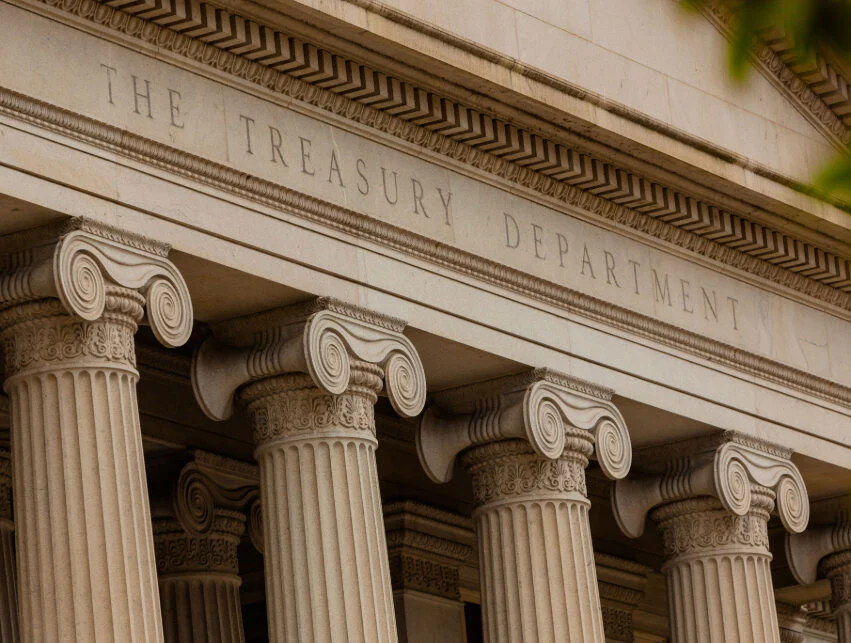
The U.S. Department of the Treasury’s Office of Foreign Assets Control (OFAC) has sanctioned two Mexican individuals and nine entities allegedly involved in a fuel theft scheme linked to the Jalisco New Generation Cartel (CJNG).
One of the two individuals sanctioned is Oscar Guillermo Juraidini Silva, who the Treasury Department (Treasury) said is “a key business person facilitating CJNG’s fuel theft enterprise.”
The other is J. Refugio Ruiz Villagomez, who Treasury said “has knowingly smuggled fuel from the United States into Mexico without proper permits.”
In a statement issued on Tuesday, Treasury announced sanctions against seven businesses owned by Juraidini, one of which is based in the United Kingdom. The other six businesses are in Mexico, mainly in northern states, and operate in the transportation, financial services and real estate sectors, Treasury said.
The two other sanctioned entities are México state-based logistics companies in which Ruiz “plays a role,” according to Treasury.
The OFAC sanctions block all U.S. assets of the designated persons and entities.
Treasury said on Tuesday that “Today’s action reflects strong collaboration between OFAC and FinCEN,” the Treasury Department’s Financial Crimes Enforcement Network, and was coordinated with various other U.S. authorities.

It added that the sanctions “were also developed jointly with the Government of Mexico’s financial intelligence unit, the Unidad de Inteligencia Financiera (UIF).”
Treasury Secretary Scott Bessent said Tuesday that the move “highlights the extent to which Mexico’s cartels are expanding beyond traditional drug trafficking to generate revenue for their criminal organizations, which continue to traffic deadly drugs that kill Americans.”
“Treasury’s actions targeting these illicit revenue streams advance the Trump Administration’s priority of dismantling these terrorist organizations and making America safe again,” he said.
The modus operandi of fuel smuggling schemes
In its statement, Treasury said that the CJNG-linked fuel theft scheme involves “cross-border smuggling, falsified customs documents, and shell companies.”
It aims to “evade Mexican taxes while generating tens of millions of dollars annually for the cartel,” Treasury said.

In recent years, Treasury said, “Mexico-based drug trafficking cartels like CJNG have become increasingly involved in the theft, adulteration, and smuggling of hydrocarbons, such as fuel and oil, in schemes colloquially referred to in Mexico as huachicol,” or huachicol fiscal — a practice in which fuel brought into the country is mislabeled as waste oil, lubricants, vegetable oil or other liquids to avoid the taxes that apply to fuel.
“These schemes have grown into powerful revenue generators for CJNG through the theft of tens of billions of dollars in lost revenue for the Mexican government and have enabled CJNG campaigns of narcotics trafficking in the United States, violence against Mexican government forces along the U.S. southwest border, and corruption within Mexico,” Treasury said.
In a separate document, Treasury summarizes the “fuel smuggling methodology process” of Mexican cartels, including the CJNG and the Sinaloa Cartel. According to Treasury, the process is as follows:
- Complicit U.S. fuel traders purchase U.S. fuel at export terminals.
- Purchased U.S. fuel is diverted to networks of complicit U.S. and Mexican front/shell companies.
- The fuel is smuggled into Mexico by Mexican cartels and their huachicoleros (fuel thieves) without paying Mexican taxes on fuel imports.
- The fuel is transported to Mexican storage yards under cartel control.
- The fuel is sold to cartels’ front distribution companies and false sale invoices are created by Mexican brokers.
- Front distribution companies commercialize fuel through cartel-controlled gas stations and/or roadside fuel stops.
- Cartels use fuel profits to finance drug trafficking operations and corruption via political campaign contributions.
Treasury said that huachicol-related activities are “currently the most significant non-drug revenue source for Mexican cartels and other illicit actors.”
It noted that huachicoleros “use a variety of means to steal fuel and crude oil from Mexico’s state-owned energy company, Petróleos Mexicanos (Pemex), including bribing corrupt Pemex employees, illegally drilling taps into pipelines, stealing from refineries, hijacking tanker trucks, and threatening Pemex employees.”
Fuel is also brought into the country using “fiscal fuel theft schemes” that “involve Mexico-based cartels and their huachicoleros smuggling gasoline, diesel, naphtha, and other fuel from the United States across the southern border or U.S. ports into Mexico in schemes to evade Mexico’s import tax on fuel, known as Impuesto Especial sobre Producción y Servicios (IEPS),” Treasury said.
The sanctioned individuals
Treasury said that Juraidini, a 41-year-old Tamaulipas native, “operates as an accountant and the mastermind behind certain financial operations for CJNG.”
“Juraidini creates and operates shell companies on behalf of CJNG, and falsifies customs documents for CJNG to aid in the illicit cross-border transfer of fuel,” Treasury said.

“Juraidini imports fuel from the United States into Mexico that is intentionally mislabeled in customs documentation to circumvent Mexican IEPS taxes,” the department said.
“The majority of Juraidini’s clients are gas station companies, which receive the refined fuel products and sell them via retail gas stations. Juraidini generates tens of millions of dollars annually, benefiting CJNG.”
Treasury said that OFAC designated Juraidini pursuant to two U.S. executive orders “for being owned, controlled, or directed by, or having acted or purported to act for or on behalf of, directly or indirectly, CJNG.”
His companies were designated “for being owned, controlled, or directed by, or having acted or purported to act for or on behalf of, directly or indirectly, Oscar Guillermo Juraidini Silva,” Treasury said.
Treasury said that Ruiz, in order to smuggle fuel into Mexico from the United States without proper permits, “pays fees to cartels and other criminal organizations that control ports of entry between the United States and Mexico.”
Treasury said that according to investigative findings made public by Mexico’s Attorney General’s office, Jomadi — a firm in which Ruiz, a 64-year-old Guanajuato native, is said to play a role — “is an import and export company involved in huachicol fiscal.”
Jomadi and Ahavat — another company in which Ruiz is said to be involved — “have transacted through the U.S. financial system to the tune of tens of millions of dollars with third parties linked to CJNG that have been involved in huachicol-related activities,” Treasury said.
Hence, Ruiz and the two companies he allegedly works for were sanctioned by OFAC.
UIF blocks Mexican bank accounts of Juraidini, Ruiz and 9 others
Mexico’s Ministry of Finance (SHCP) noted in a statement on Tuesday that OFAC had sanctioned two individuals and nine entities allegedly linked to the CJNG-linked fuel theft/smuggling scheme.
The ministry said that its Financial Intelligence Unit, the UIF, “carried out the tax, financial and corporate analysis of the designated individuals, identifying possible evidence of operations with resources of illicit origin and discrepancies between the income reported to the tax authorities and the resources observed in the financial system.”
“As a result of those analyses and within the scope of its legal authority, the UIF added the individuals designated by OFAC, as well as nine additional people, to the List of Blocked Persons (LPB) with the aim of protecting the integrity of the national financial system and restricting its use for activities allegedly linked to operations with resources of illicit origin,” the SHCP said.
The ministry said that “the actions coordinated between Mexican and U.S. authorities strengthen the mechanisms of international cooperation to prevent the improper use of the financial system, combat transactions with resources of illicit origin and weaken financial structures that provide economic support to organizations dedicated to the theft and illegal commercialization of hydrocarbons.”
Mexico News Daily
