


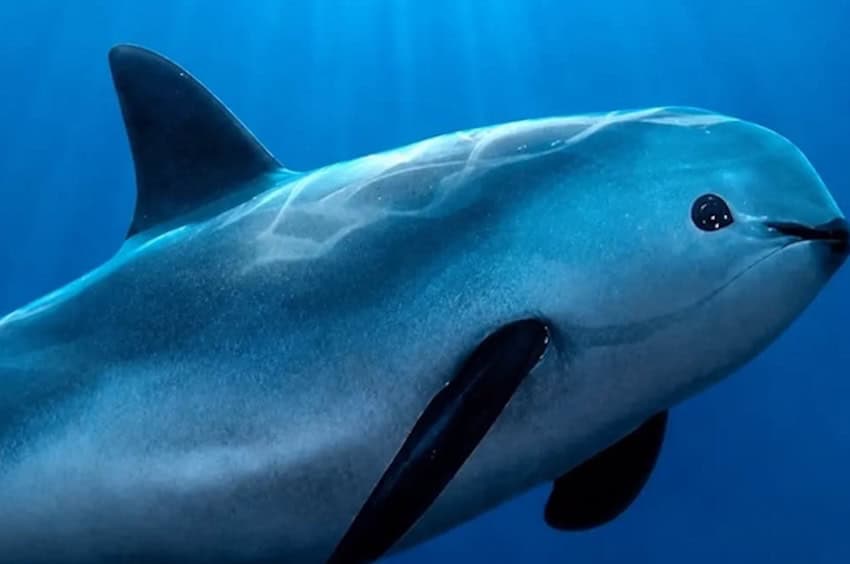
Mexico has until next Feb. 1 to convince UNESCO it is doing enough to protect the vaquita porpoise — the world’s most endangered marine mammal — and other Gulf of California species.
At its recently concluded annual meeting in Busan, South Korea, UNESCO’s World Heritage Committee set the 2027 deadline and asked Mexico to show “concrete actions” to shield the Gulf of California World Heritage site from liquefied natural gas projects such as Saguaro Energía LNG and AMIGO GNL.
The committee’s 48th session from July 19 to 29 came as global calls to save the vaquita intensified.
In fact, July 18 was International Save the Vaquita Day — which the Mexican government marked by touting new monitoring campaigns and a training program for community observers.
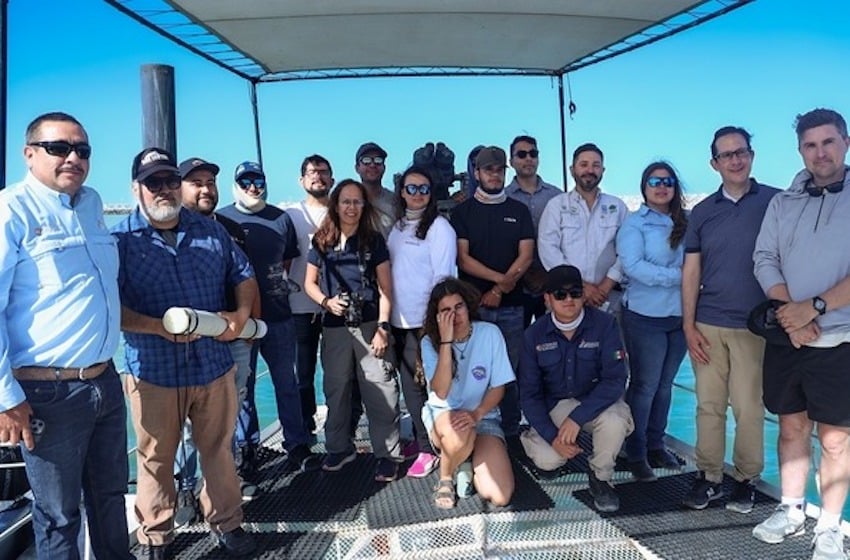
On that day, the Ministry of Environment and Natural Resources (Semarnat) highlighted a May cruise aboard Sea Shepherd’s vessel Seahorse on which eight young residents of San Felipe, Baja California, trained alongside professional scientists.
During 10 days at sea, the group used acoustic detectors, environmental DNA sampling and high-powered binoculars to collect data on vaquitas, who occupy a tiny pocket of the Upper Gulf sometimes called the “Aquarium of the World.”
With only a handful of vaquitas worldwide — all of them in that small region — the species is listed as critically endangered on the IUCN Red List. The world’s smallest cetacean (a family that also includes whales and dolphins) is considered in immediate danger of extinction.
Despite rough weather, observers recorded three sightings northwest of the zone and in an adjacent extension area, confirming that some vaquitas are using habitat outside the core refuge.
Mexican officials said those findings build on 2025 monitoring that estimated between seven and 10 vaquitas in the wild, including calves and a possible pregnant female. The annual survey concluded that the population is no longer declining, though it’s still at a critically low level.
The primary threat to the vaquita is being accidentally caught in illegal gillnets set by poachers trying to catch the totoaba fish, whose swim bladders are trafficked to Asian markets, especially China, for high‑priced use in traditional medicine and luxury tonics.
Vaquitas are also killed in wide-cast nets set legally and illegally for species such as shrimp and various fish, or in “ghost nets” set by illegal fishers as decoys to fool patrols.
Additionally, vaquitas, whales and other marine life face pressure from proposed liquefied natural gas (LNG) plants in and around the Gulf of California, especially the mega-ships used to transport the gas.
It’s in light of those risks that UNESCO is asking Mexico to submit the detailed report on LNG plants and other infrastructure projects that could affect the area’s universal value.
With reports from Infobae, La Jornada and Milenio
