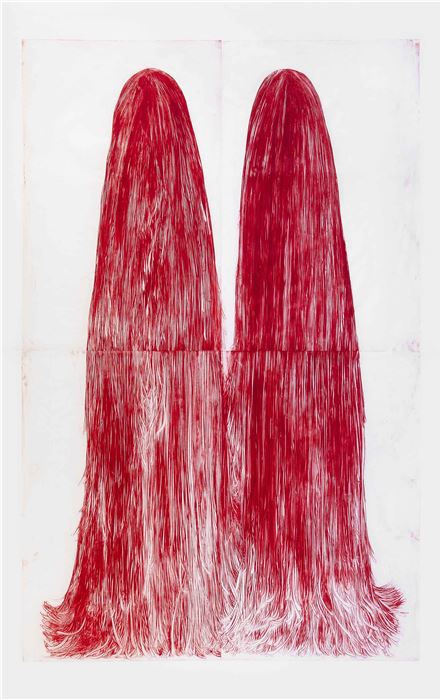
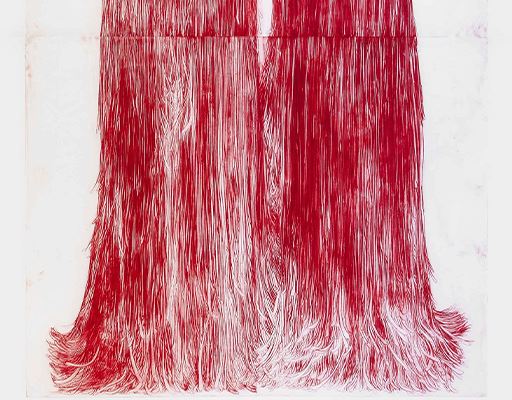
Contemporary collecting in 2026 continues to prioritize high-tactility surfaces, organic assemblage, and physical handcraft that challenge digital flattening. This curated selection highlights six original artworks from MutualArt partner galleries exploring hair embroidery, papier-mâché, sculpted oil, drypoint on non-woven fabric, kinetic serigraphy, and lacquered composite surfaces. Across primary galleries and secondary market channels, this return to physical texture reflects a structural shift in collector behavior. High-net-worth buyers and institutional acquisitions committees are increasingly looking beyond traditional paint-on-canvas paradigms, seeking labor-intensive, tactile practices as a tangible hedge against ephemeral or speculative art assets.
Institutional retrospectives and recent gallery acquisitions across North America, Europe, and Latin America have further validated this aesthetic direction. Sell-through rates for material-focused practices remain robust, while pricing dynamics for both established historical masters and mid-career innovators demonstrate consistent strength. By bridging non-traditional industrial textiles, organic forms, dynamic optical abstraction, and subverted artisanal methodologies, the selected works provide active collectors with compelling entry points across varying price segments.
Featured Profiles
Anne Wilson (browngrotta arts)
Anne Wilson, Areas of Disrepair, 1997, Found cloth, hair, and thread embroidery. Inquire with Gallery
American artist Anne Wilson has long maintained a formidable reputation within conceptual fiber arts, with works housed in major public collections including The Metropolitan Museum of Art, the Art Institute of Chicago, and the Museum of Contemporary Art Chicago. Represented by browngrotta arts, Wilson’s practice rigorously investigates themes of physical fragility, domestic labor, time, and ritual through hair embroidery and found linens. In her featured piece, Areas of Disrepair (1997), priced at $4,000, she transforms vintage cloth using delicate strands of human hair and thread embroidery to interrogate the boundaries between repair, bodily identity, and structural decay. Given the steady institutional re-evaluation of post-minimalist fiber art, Wilson’s primary inventory presents an accessible entry point for work rooted in deep museum prestige.
Sigalit Landau (Gallery Har-El)
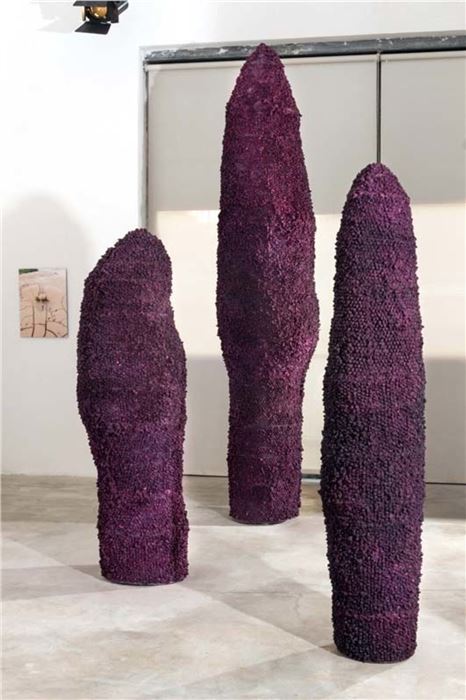
Sigalit Landau, Zbib El Ard, 2015, Metal frame, papier machee treated. Inquire with Gallery
Israeli sculptor and video artist Sigalit Landau, represented by Gallery Har-El, stands as a central figure in international contemporary sculpture, celebrated for her installations and site-specific Dead Sea salt-crystallization projects. Having represented Israel at the Venice Biennale in 2011 and exhibited extensively at the Centre Pompidou, MoMA, and the Brooklyn Museum, Landau commands a prestigious position in the primary and secondary markets. Her featured sculpture, Zbib El Ard, takes its title and organic, scarlet-hued form from the rare parasitic Mediterranean plant Cynomorium coccineum. Constructed from dark purple papier-mâché and chicken wire, this variable-dimension installation highlights themes of transformation, survival, and landscape. Offered at €12,000 – €15,000 ($13,923.12 – $17,403.90 USD) through Gallery Har-El, Zbib El Ard presents serious collectors with an opportunity to acquire a centerpiece work backed by significant institutional validation.
Karolina Wysocka (HOS Gallery)