


Art Review
A show on art from Cuba, Guam, the Philippines, Puerto Rico, and their diasporas touches on themes of colonization, enslavement, migration, and more.
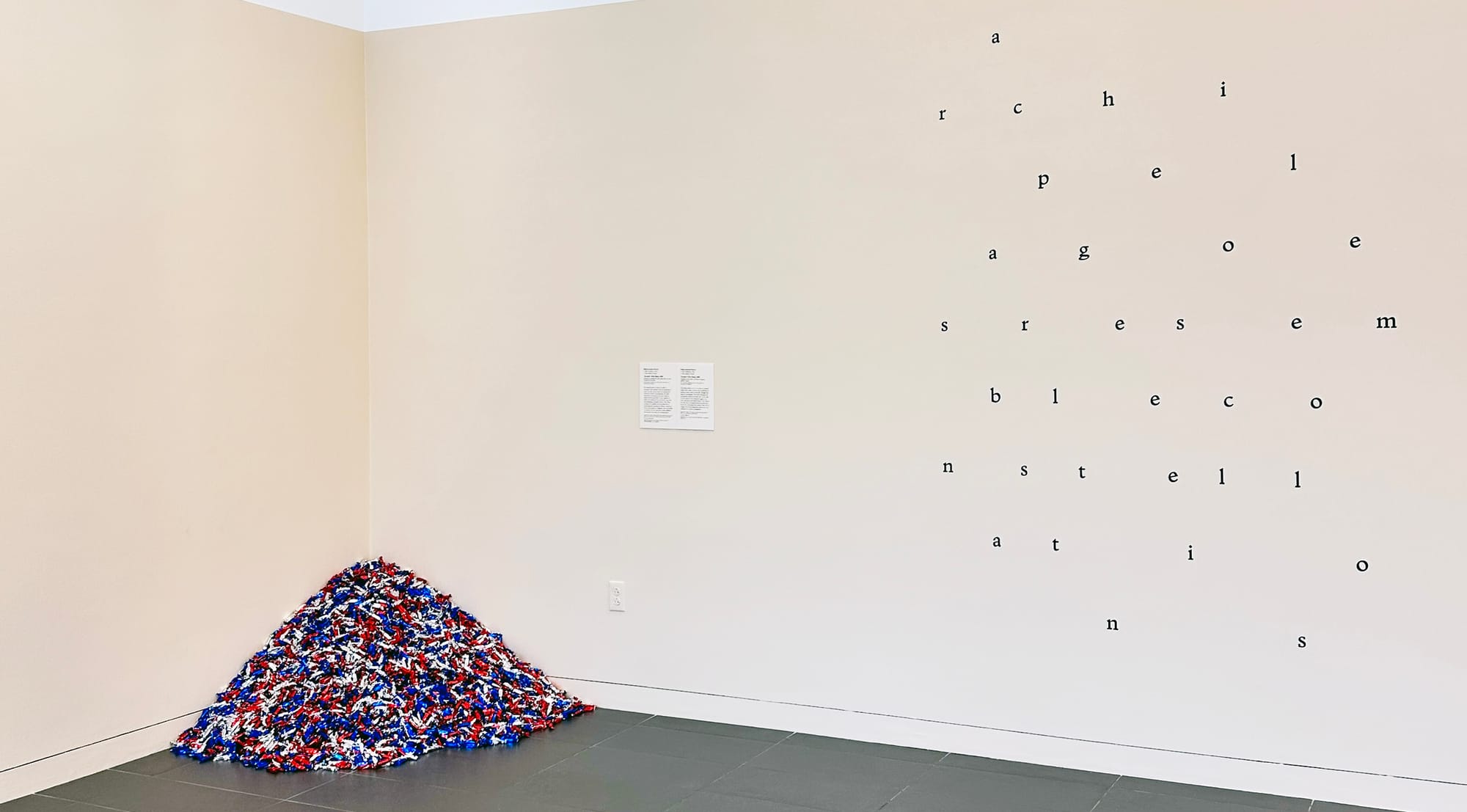
WATERVILLE, Maine — At the entrance of the conceptually ambitious exhibition Imagining an Archipelago: Art from Cuba, Guam, the Philippines, Puerto Rico, and Their Diasporas at the Colby College Museum of Art are four works that embody many of its themes. A painting by Cuban-born Zilia Sánchez is composed of white marks that hover between fully abstract, figurative, and cosmological, traced on a gray-black ground, as if we are looking down at a body or up from a boat to the sky — either way, trying to find our bearings. Félix González-Torres’s “Untitled (USA Today)” (1990) lays out candies in wrappers of red, white, and blue for viewers to consume over time, incorporating the colors of the American flag (along with the patriotism it implies) into our very bodies. The letters of a 2023 concrete poem by the CHamoru scholar and poet Craig Santos Perez spell out “Archipelagoes resemble constellations,” spaced out like an archipelago or constellation — or both — on the wall. A series of photographs by Juana Valdés, “On the Malecón” (2000), documents a performance in Havana, done in the wake of a mass migration of Cubans to the United States to escape economic privation, in which she set afloat paper boats fashioned from the torn-out pages of a 19th-century novel exploring the country’s racial and social hierarchies.
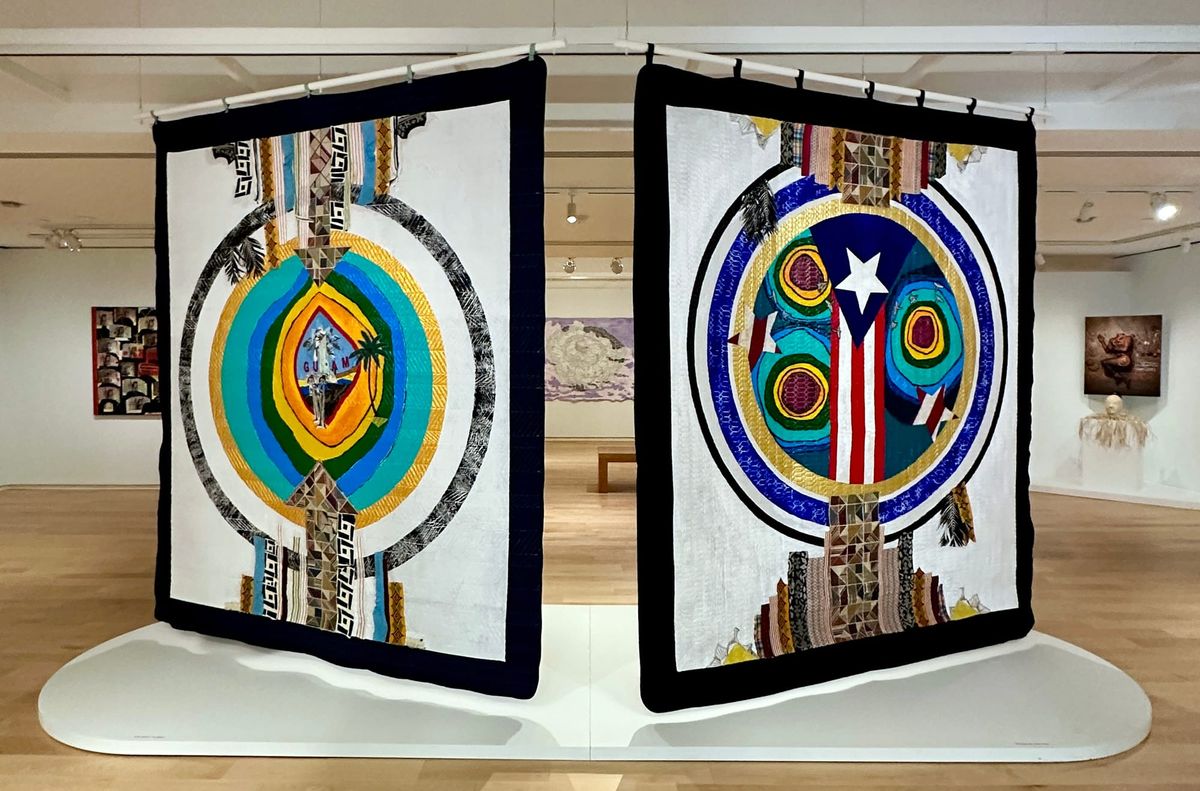
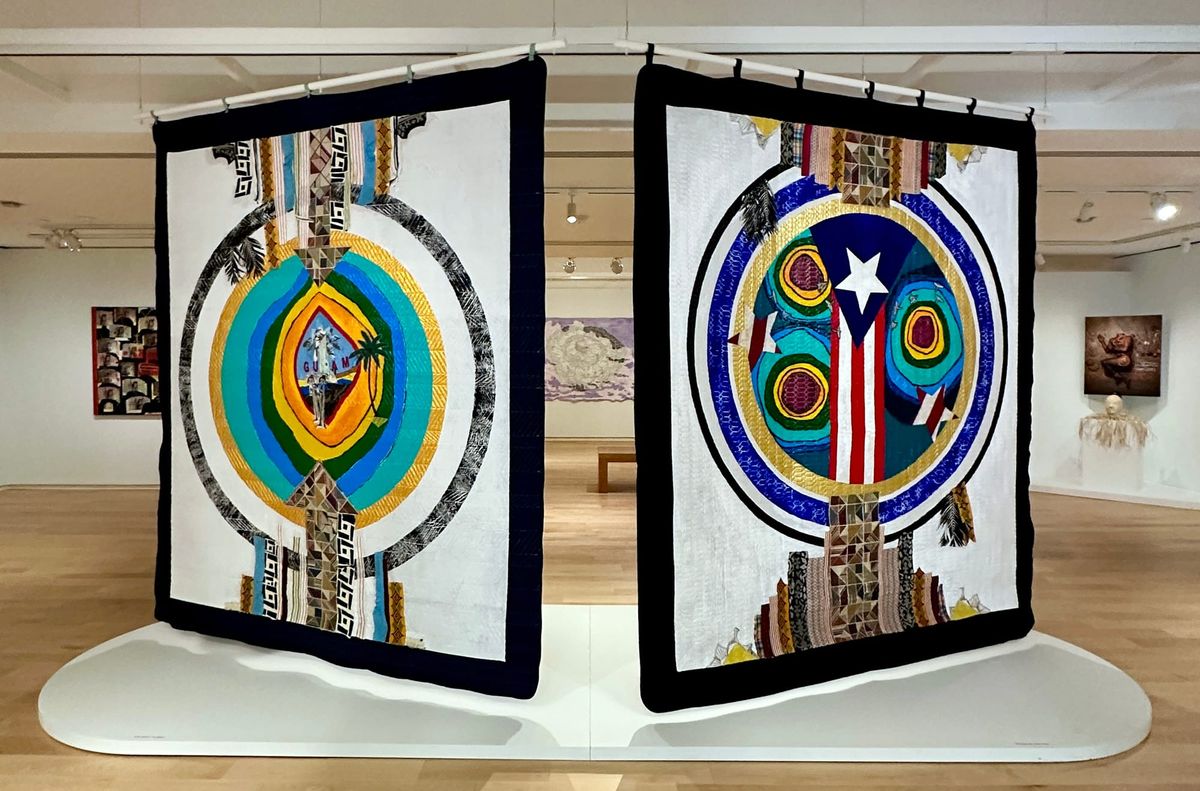
The sea, the stars, “America” as a thing to be consumed, the archipelago, waves of colonization, enslavement, migration, and diaspora that complicate any sense of identity: All of these ideas run through artworks by more than 40 contemporary artists and collectives. Though geographically disconnected, their islands of origin share a common history, playing key, if hardly willing, roles in the US’s transformation into a colonial power: All were brought under US control at the end of the War of 1898 (also known as the Spanish-American War), handed over by Spain as part of the Treaty of Paris.
Despite the historical conceit at the heart of the show, its curator, Jessamine Batario, takes pains to ensure that these places, and the art that emerges from them, are not reduced to an unnuanced sameness. The exhibition, on the contrary, is an attempt at archipelagic thinking. Introduced by Édouard Glissant and expanded upon by many others since, archipelagic thinking asks us to consider the specific forms of relation and solidarity made possible by seeing the world from the perspective of archipelagoes, islands that retain their distinctiveness even while existing as a collective.
The exhibition is divided into two floors, one organized by region, the other by theme. Among the artists in the section on the Philippines, migrant labor plays a major role — not surprising, as wealth sent back to the country by Overseas Filipino Workers (an official designation) accounts for nearly 9% of the country’s GDP. In “Export Quality (Value Studies: Uniforms)” (2023), Thea Canlas fashions work uniforms for a factory laborer and a maid out of delicate piña cloth, a material usually reserved for finery worn on special occasions. Jerome Reyes’s newly commissioned projection of text fragments — “Those who care for everyone/ The Anointed salvaged/ That save all except themselves/ Who tends to you” — coalesces into a poem that speaks to the role Filipino health care workers played, and the price they paid, during the COVID-19 crisis. “Where My Uncles Went,” a 1996 sculpture by Carlos Villa, draws upon the history of an earlier wave of migrant workers to the US in the 1920s and 30s. These so-called manongs (uncles) are represented here by a floating fedora mounted onto a wooden shadow box frame, surrounded by a spare geometric arrangement of lines suggesting a revolving door. This uncle is the Invisible Man, a subtle indictment of how those who benefit from labor fail to perceive it.
Two works that are themselves archipelagos — Teresita Fernández’s “Archipelago (Garland)” (2020), fashioned out of fragments of charcoal, and Sara Jimenez’s “the seas breathing us in and out” (2026), a ceramic and textile installation newly commissioned for the show — imagine the ocean as a means of connection. Fernández’s is an alternative geography, a “map” composed from the fused coastal contours of the islands of the Caribbean, while Jimenez’s, in its configuration of fragmented body parts, faces, flora, and fauna, alludes to the maritime route that connected the Philippines and Mexico.
A video work by Beatriz Santiago Muñoz (“Ojos para mis enemigos,” 2014) follows a man who walks through a decommissioned, crumbling US Navy base in Puerto Rico; two panels of found photographs by Sherwin Rivera Tibayan offer a view into the world of Filipinos serving in the US Navy (“Untitled Collage Frame #1 and #2,” 2025); and a photo of a doctored Cracker Jack box by Miguel Luciano (“Cracker Juan,” 1998) turns an acerbic eye on the way the US military exploits Puerto Ricans: “Highest Combat Fatalities in US!” “Citizenship Prize Inside.” Together, these and other works offer up a complicated view of these islands and their people’s relation to US militarism.
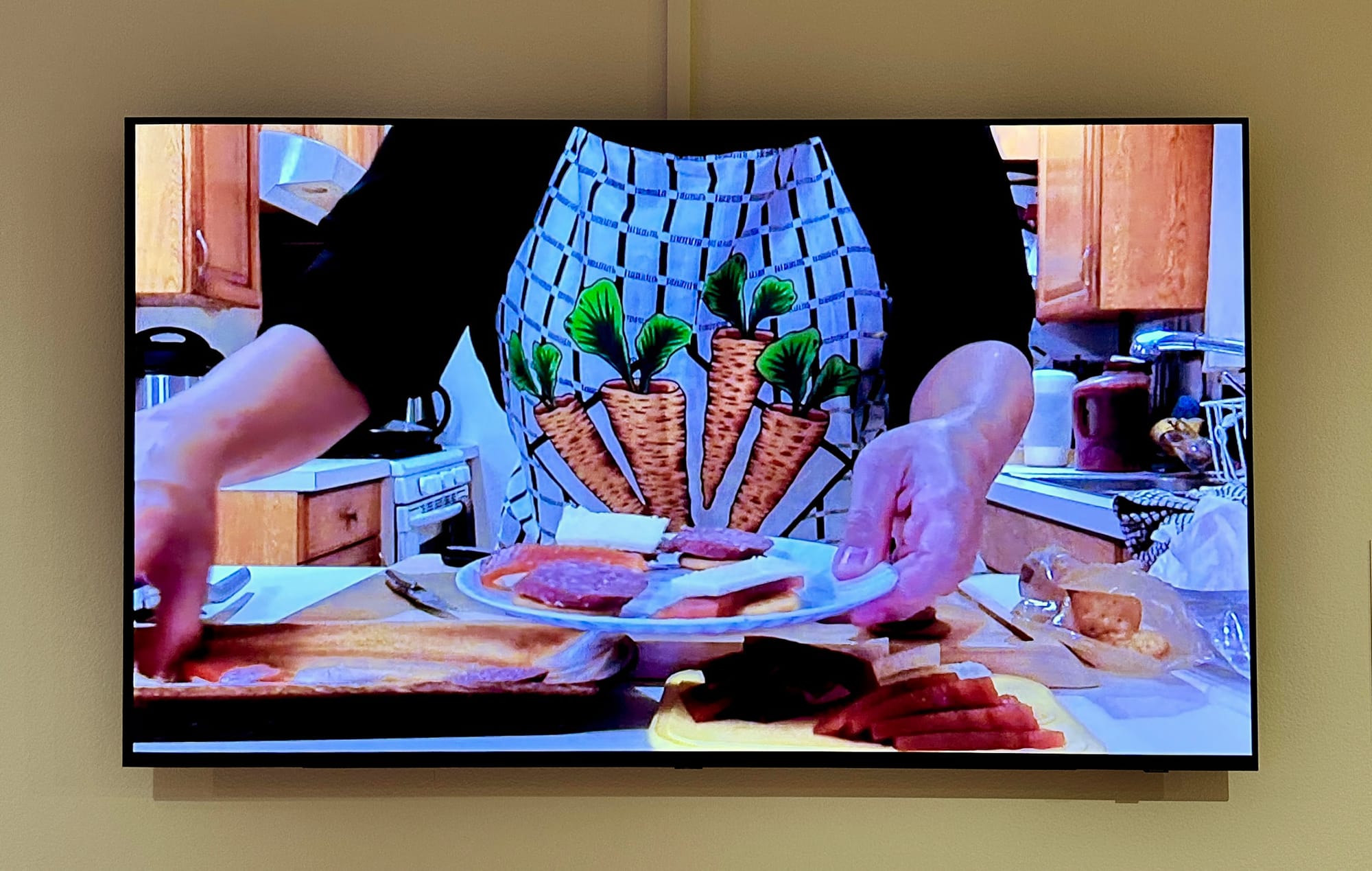
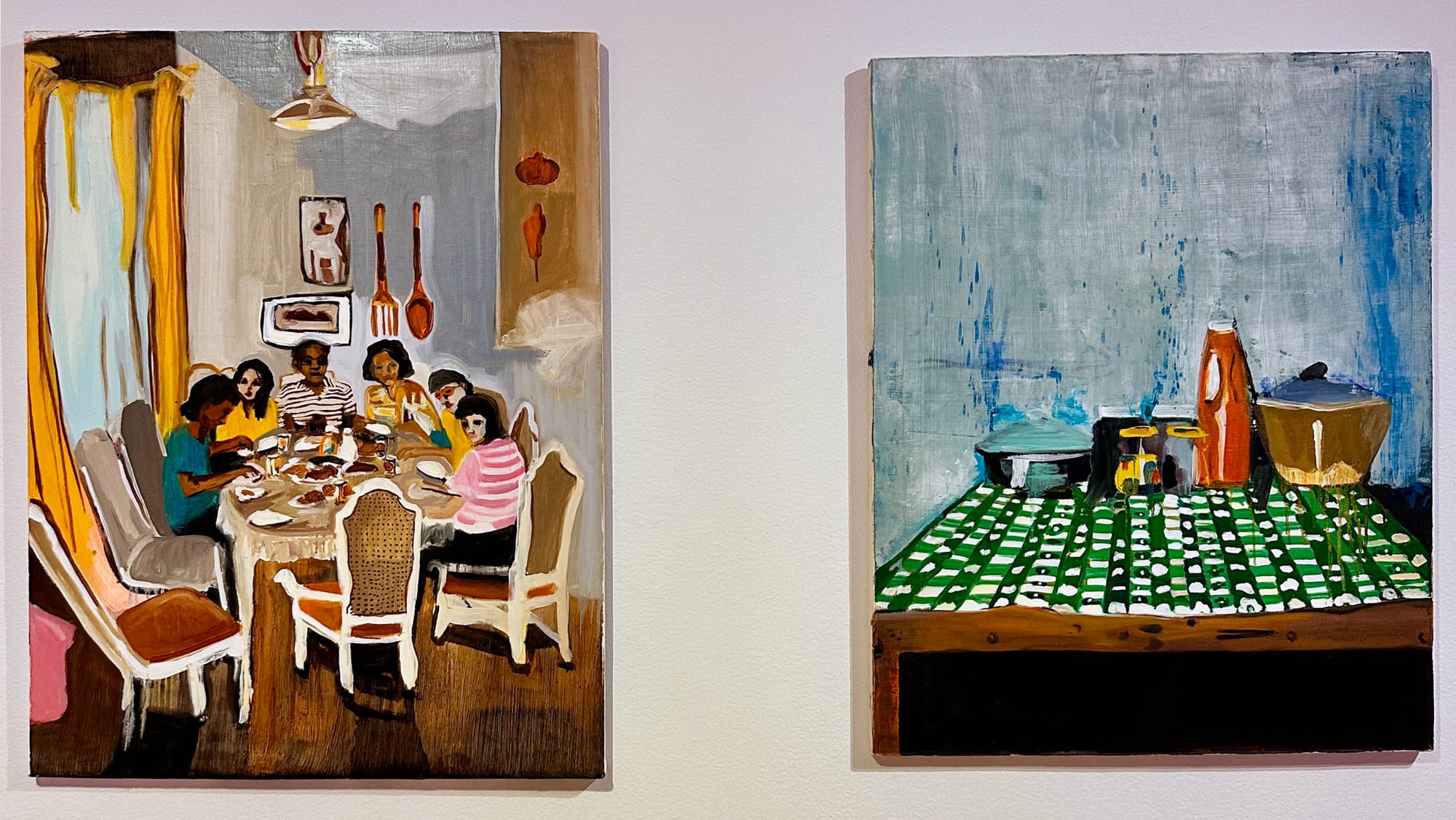
In a section on food, Maia Cruz Palileo’s gorgeous little paintings of domestic scenes (“Still Life with Banana Catsup” and “The Old Table,” both 2014) hang alongside Edra Soto’s deadpan video “Happy Hour, La Hora Feliz” (2020), a close-up view of the artist preparing party snacks from an array of American processed food — food that came to replace Puerto Rico’s island-grown crops, as the soundtrack explains. Elsewhere, Daniel Lind-Ramos’s “Vencedor: 1797” (2018–19), an assemblage of found objects that commemorates the Black Puerto Ricans who sided with Spain to fend off a British invasion, and Reynier Leyva Novo’s exacting resin casts of the guns, machetes, and a bullet used by the leaders of Cuba’s 19th-century wars of independence (“The Desire to Die for Others,” 2012), speak to fraught notions of sovereignty.
Batario, during a walkthrough, said that she had intended for the show to be fully thematic, but a number of the artists demurred, pointing out that viewers probably couldn’t identify the places in question on a map, let alone have an idea of their cultures and histories. The comment has stuck with me, not least because I had to consult an atlas to confirm where every place stood in relation to the others, but also because it underlines just how necessary this show is now, as we contend with a new phase of American expansionist ambitions.
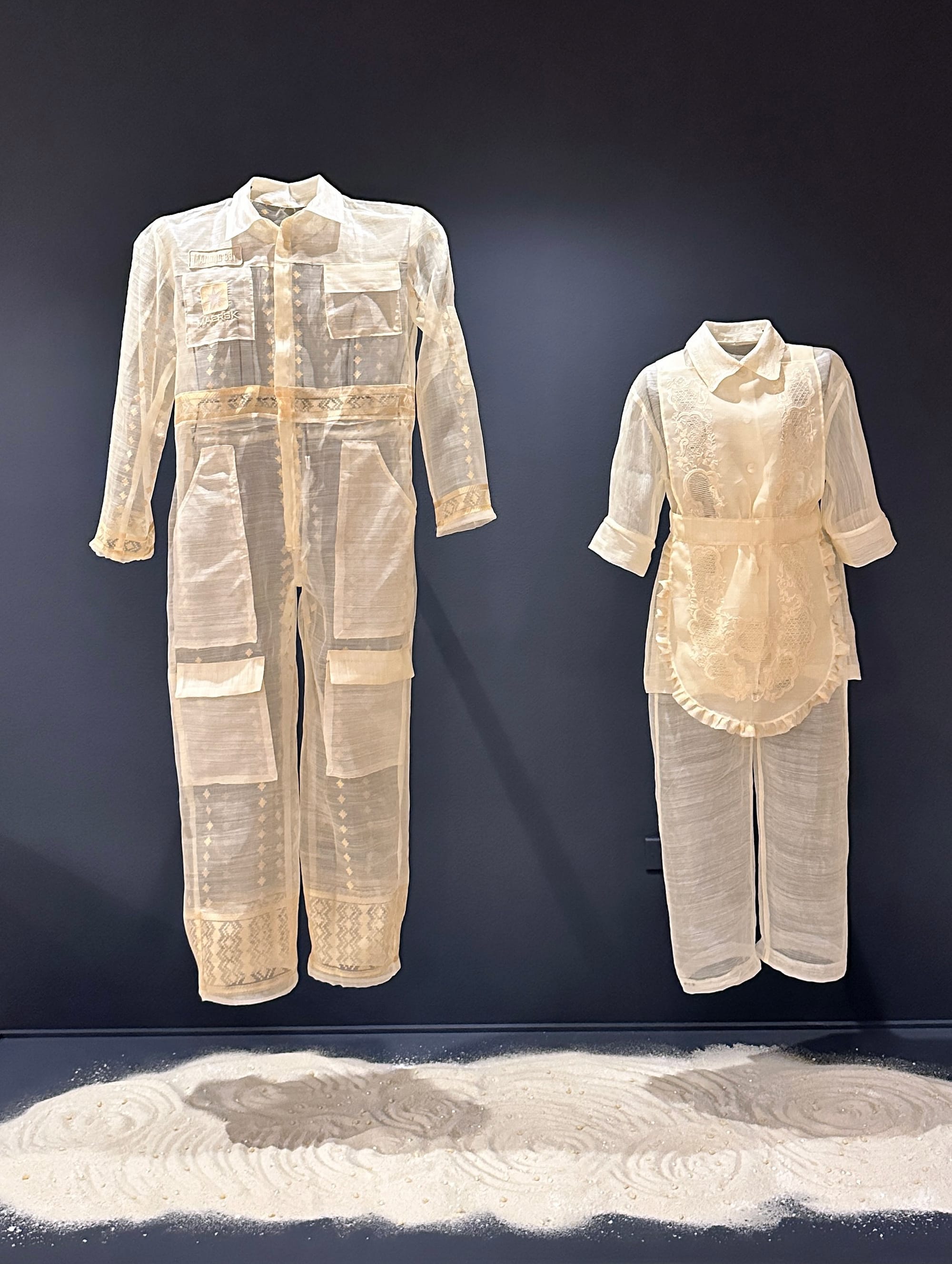
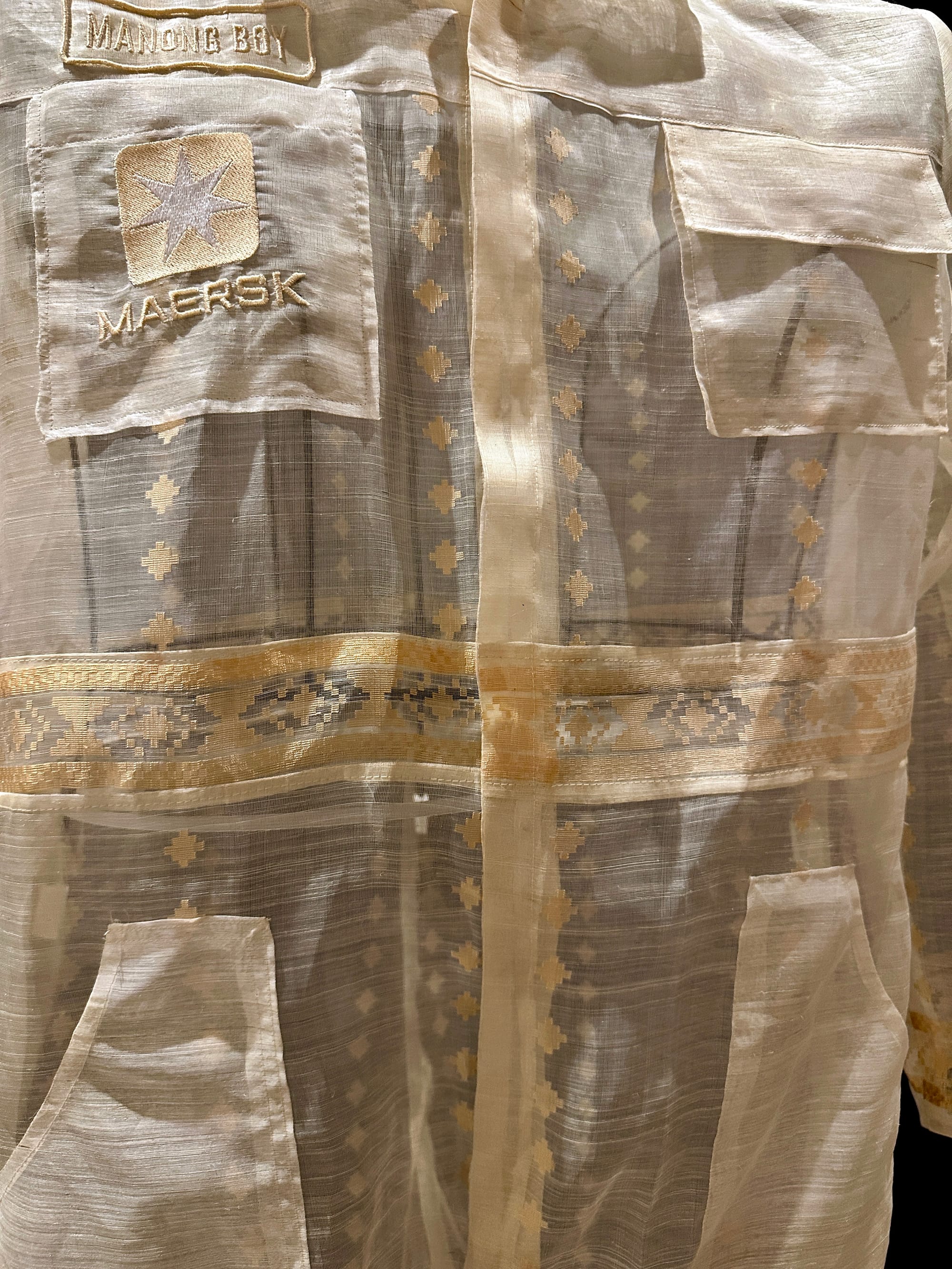
Installation view and detail of Thea Canlas, “Export Quality (Value Studies: Uniforms)” (2023)
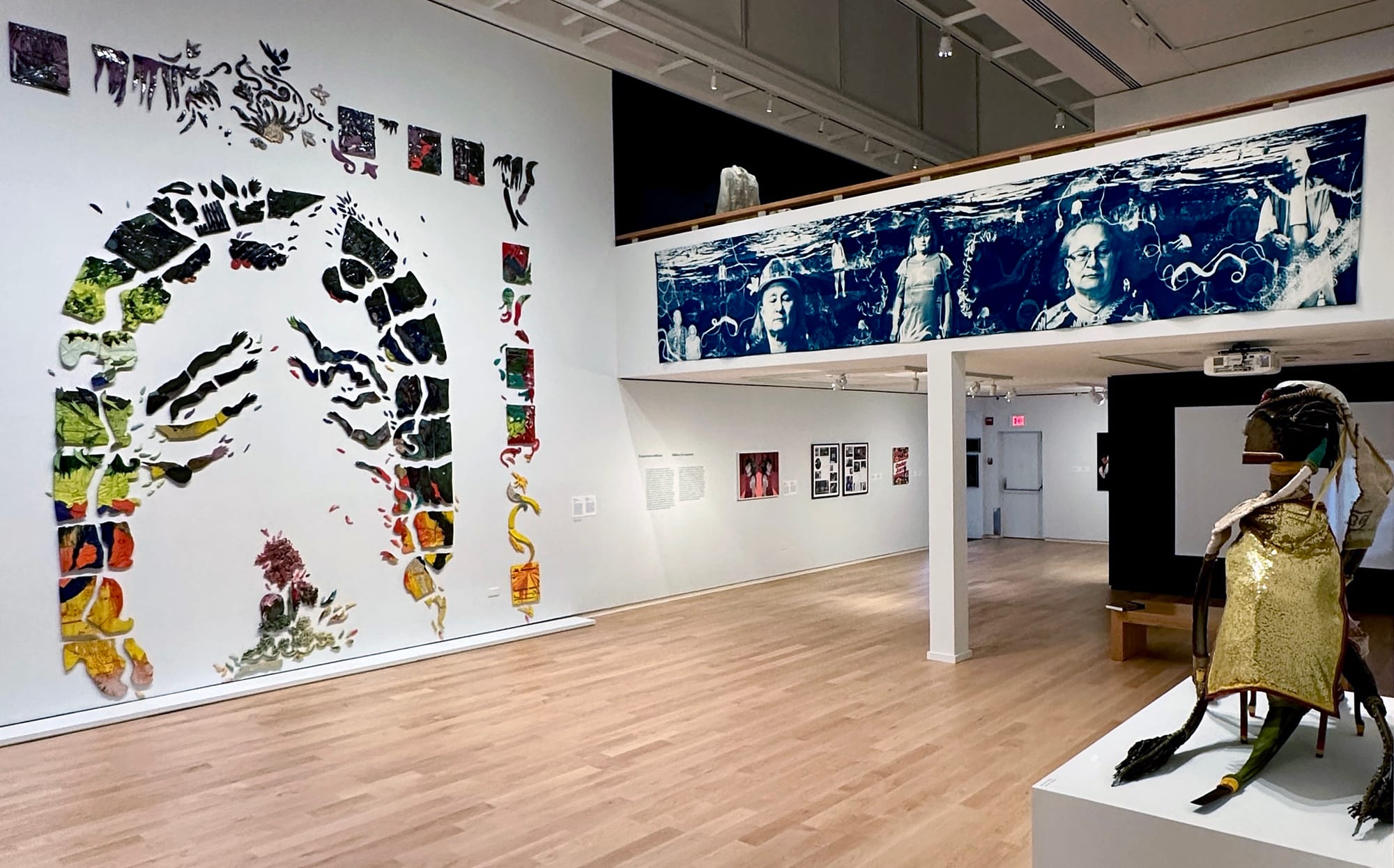
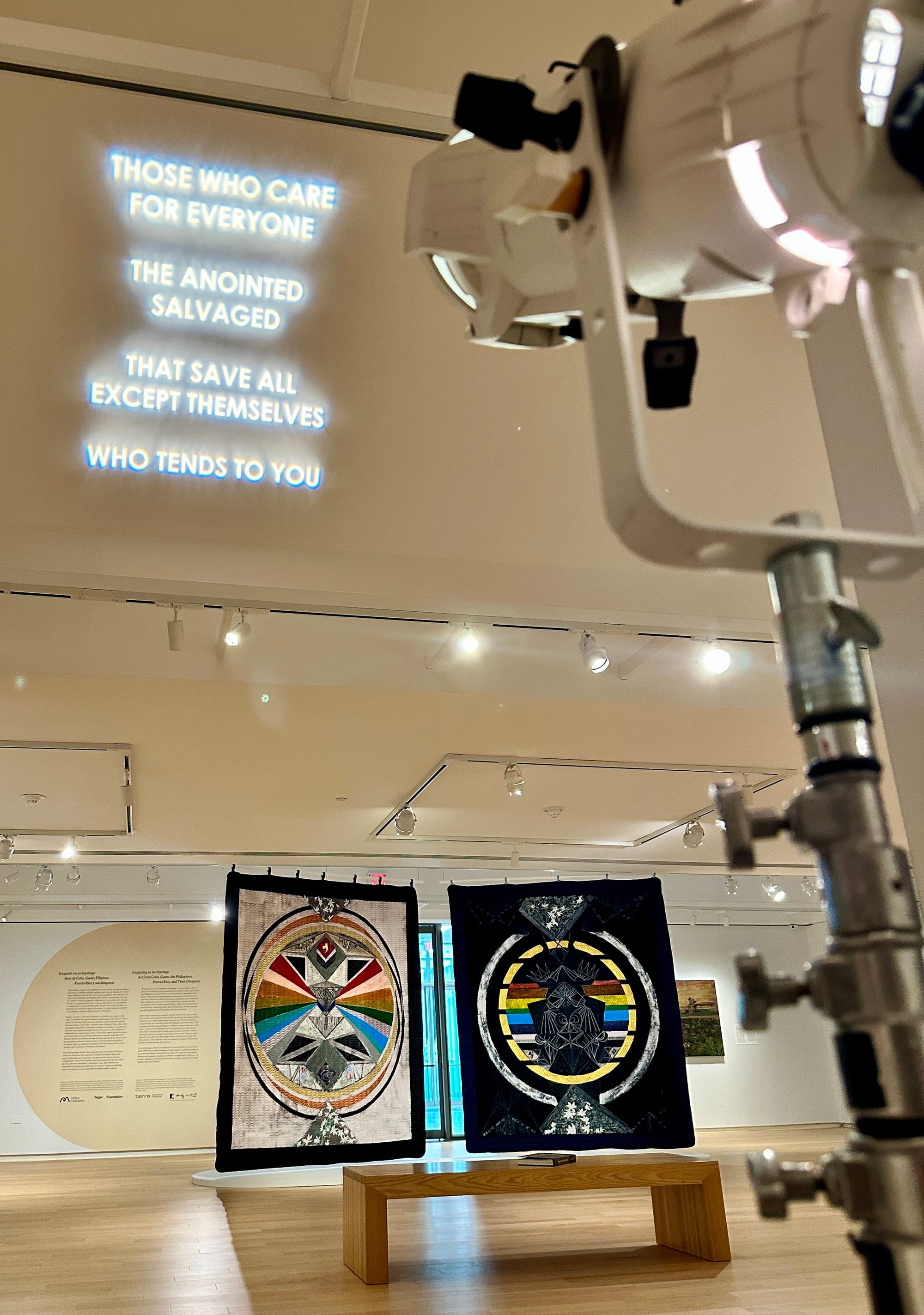
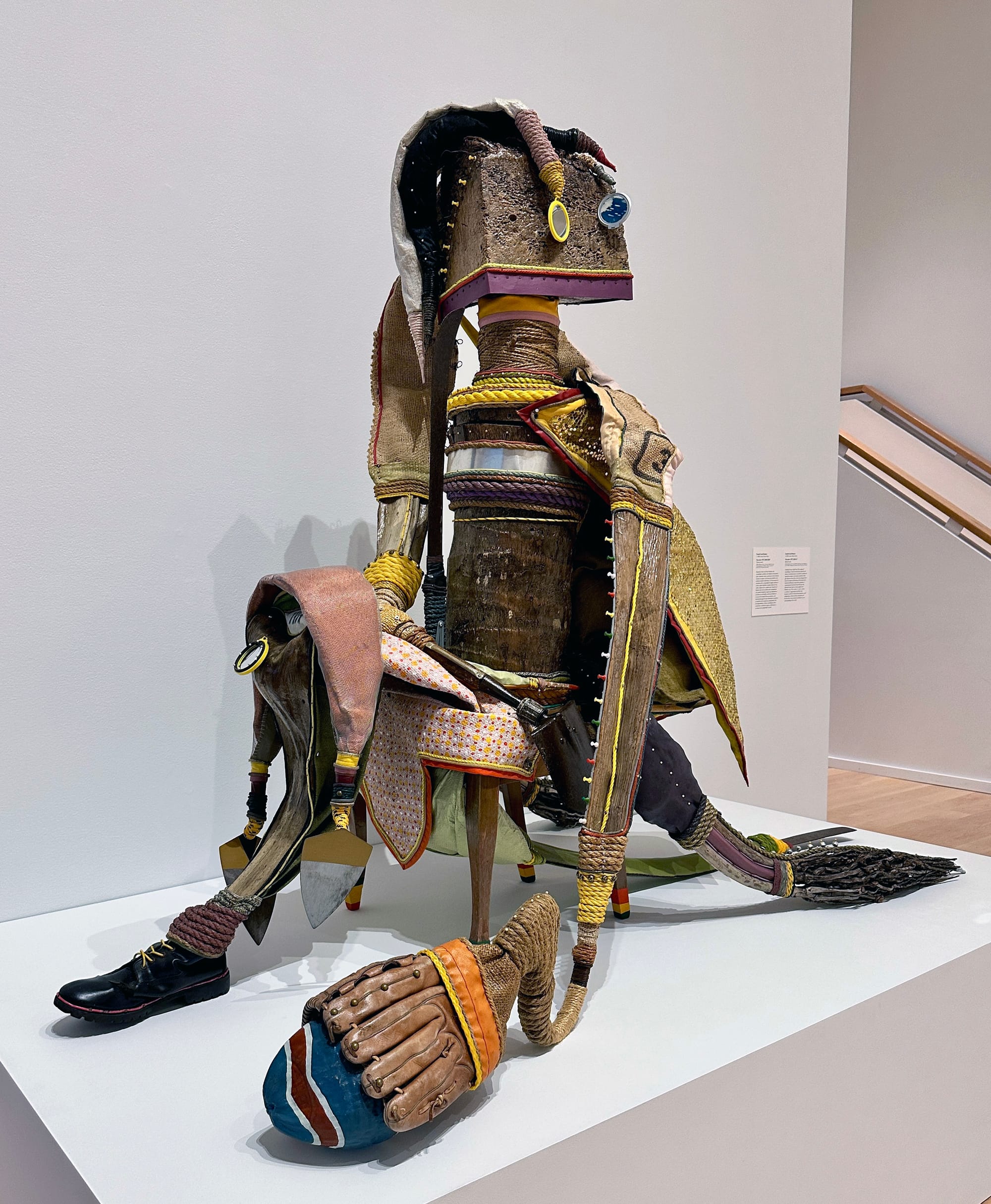
Left: Installation view of Imagining an Archipelago: Art from Cuba, Guam, the Philippines, Puerto Rico, and Their Diasporas with Jerome Reyes, “Pharos (Covenants)” (2026) projected; right: Daniel Lind-Ramos, “Vencedor: 1797” (2018–19)
Imagining an Archipelago: Art from Cuba, Guam, the Philippines, Puerto Rico, and Their Diasporas continues at the Colby College Museum of Art (5600 Mayflower Hill Drive, Waterville) through June 6, 2027. The exhibition was curated by Jessamine Batario.
