


Perhaps someone should have driven a stake through its heart.
Royal Caribbean’s Perfect Day Mexico was widely believed dead in May, when Environment Minister Alicia Bárcena announced that the massive water park planned for Mahahual, Quintana Roo, would not be approved.
But the massive, US $1 billion extreme water park proposal wasn’t buried after all. Royal Caribbean withdrew its environmental application before authorities could formally reject it, leaving the cruise giant free to return with a revised proposal.
Now the residents’ battle has reached Mexico’s Supreme Court, which on Aug. 10 agreed to hear three challenges to fast-tracked land-use changes that helped make Perfect Day possible.
The stakes reach well beyond the fate of a water park. The fight involves development alongside the Mesoamerican Reef, the world’s second-largest barrier reef system; a national campaign that drew more than 5 million petition signatures; and now a potentially precedent-setting question: How much opportunity must Mexican citizens be given to challenge development decisions that could permanently alter the places where they live?
How Loreto stood up to the cruise industry and reversed a presidential decree

A reef transformed
When Luis Fernando Amezcua first began diving off Mahahual nearly three decades ago, he remembers a very different Caribbean: water about 5 to 6 degrees Fahrenheit cooler, with coral reefs alive with color and an extraordinary variety of marine life.
The reef is still remarkable. A first-time visitor could easily be dazzled by its diversity. But to Amezcua, the losses are impossible to miss.
If he could take a visitor anywhere in Mahahual, he said, he would dive with them directly in front of town. Then he would show them photographs of that same reef 20 years ago, and let the contrast speak for itself.
Mahahual’s problems don’t stop at the shoreline. Amezcua says the wastewater system is already overwhelmed in a town of roughly 3,000 residents, where a single cruise ship can arrive with 6,000 passengers — and as many as four ships may call in a day.
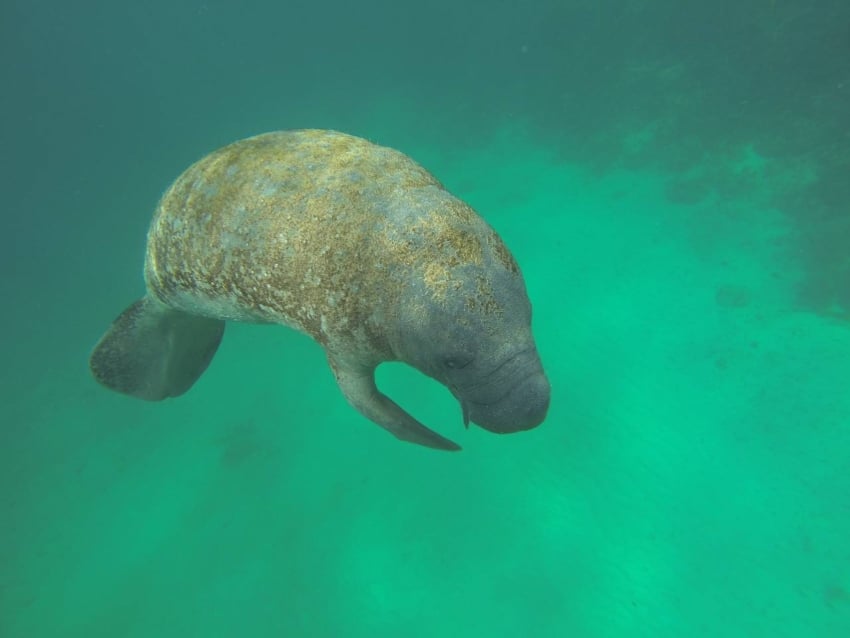
And on the Yucatán Peninsula’s porous limestone, what happens on land doesn’t necessarily stay there. Contaminated water can quickly move through the underground aquifer toward the sea, adding another source of stress to an already vulnerable reef.
For Amezcua, who has lived in Mahahual for about 17 years and belongs to the citizens’ collective Salvemos Mahahual, the issue isn’t whether the town should develop. It’s what kind of development — and how much the ecosystem can withstand.
From four stories to 20
Accommodating the company required changing the rules.
In December 2025, the municipality of Othón P. Blanco approved changes to the urban development plan covering 107.67 hectares — roughly 200 football fields — in less than three weeks, a process attorney Irma Morales says normally takes eight months to a year.
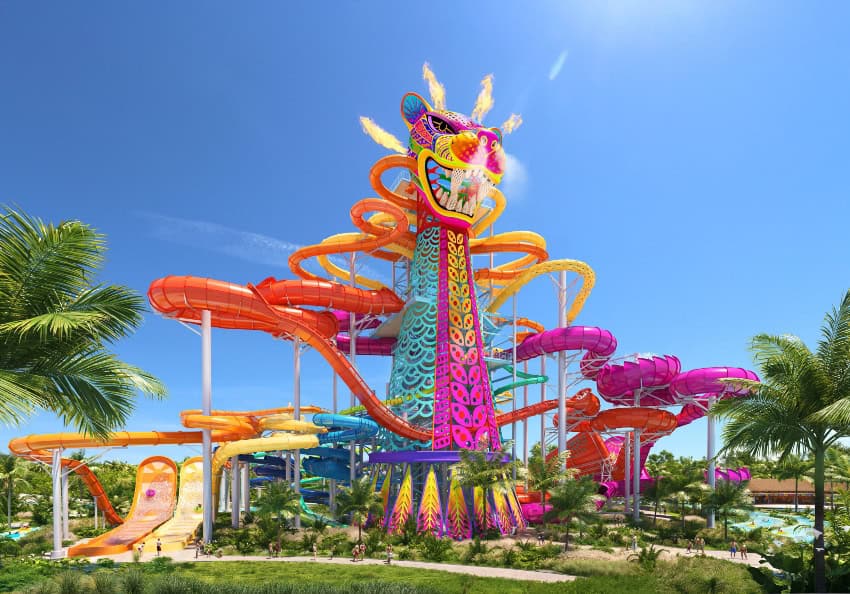
Among the changes: The maximum permitted height on part of the property jumped from roughly four stories to about 20 — just what Royal Caribbean needed for the record-breaking water park it was proposing. The company had touted Jaguar’s Peak, at more than 170 feet tall, as the tallest waterslide tower in North and South America.
Morales, an attorney with Defendiendo el Derecho a un Medio Ambiente Sano (DMAS), said the changes were approved without the studies and public participation required by law.
Residents challenged them in federal court.
Their cases never got as far as the environmental questions. They were dismissed because judges found that residents had filed them too late — in one case applying a 15-day deadline for citizens to respond.
But Morales said the residents hadn’t even known the land-use plan had been changed while that clock was running.
Environmental justice and the rights of communities
That dispute has now landed Mahahual before the Supreme Court. At stake is a broader question of environmental justice: How meaningful is the right to challenge decisions capable of transforming a community and its environment if residents have only weeks to discover those decisions, understand their implications and get into court?
The justices are not deciding whether Royal Caribbean can build Perfect Day. But their ruling could establish new ground rules for when and how communities across Mexico can challenge land-use decisions with potentially irreversible environmental consequences.
Guadalajara residents turn to citizen science as water crisis deepens
That could affect communities fighting tourism, real estate and industrial projects far beyond Mahahual.
How a local fight went national
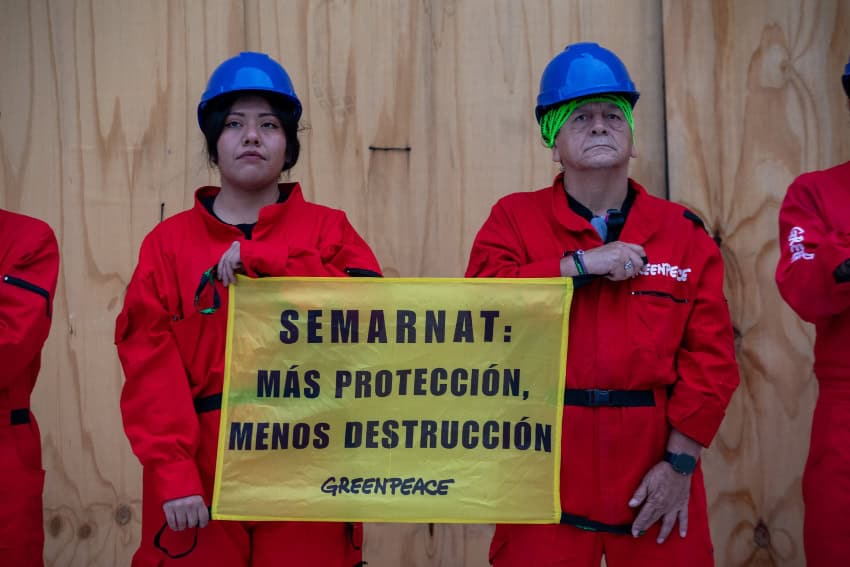
Long before the federal government intervened, Mahahual’s fight had become a national cause. Local residents had been organizing for months when Greenpeace Mexico and other national organizations joined.
The response surprised even veteran campaigners. A Greenpeace petition opposing Perfect Day ultimately drew 846,646 signatures. High-profile Mexican content creators, including film critic Javier Ibarreche and travel creator Alan Estrada, spoke out against the project, while Mexican BTS and Taylor Swift fan networks mobilized their formidable social media reach behind the cause.
For Ornela Garelli, campaigns director for Greenpeace Mexico, Mahahual tapped into a wider backlash against tourism, real estate and industrial megaprojects that communities say threaten ecosystems while giving residents too little voice over what happens to their territory.
Perfect Day became a particularly potent symbol: an enormous artificial attraction proposed beside one of the planet’s great natural ones.
The project anticipated as many as 21,000 visitors a day — seven times Mahahual’s resident population — while a Greenpeace analysis warned of impacts to vegetation, groundwater and biodiversity.
The campaign appeared to work.
The victory that wasn’t
In May, Bárcena announced that Perfect Day would not be approved. Semarnat requested additional information from Royal Caribbean, later saying the company failed to show how significant environmental impacts would be avoided.
On May 19, before Semarnat issued a final ruling on the main Perfect Day application, Royal Caribbean withdrew it. Morales says developers sometimes withdraw applications facing likely rejection to avoid a formal denial, allowing them to return later with another proposal.
Amezcua and his fellow activists understood immediately what that meant.
Asked whether Salvemos Mahahual believed in May that the fight was finally over, his answer was emphatic: “Not for a moment.”
Royal Caribbean, meanwhile, has made clear it is not walking away from Mahahual. On a July 28 earnings call, CEO Jason Liberty told investors the company was continuing to work “to develop a tourism destination” there, saying negotiations with government and community stakeholders would “affect our previously planned timeline.”
That is precisely what worries Amezcua: that attention will fade before Perfect Day returns in another form.
After nearly three decades watching Mahahual’s reef change, his message is simple: “Everything we do has consequences for the ecosystem we inhabit.”
Tracy L. Barnett is a Guadalajara-based freelance writer and the founder of The Esperanza Project.
