


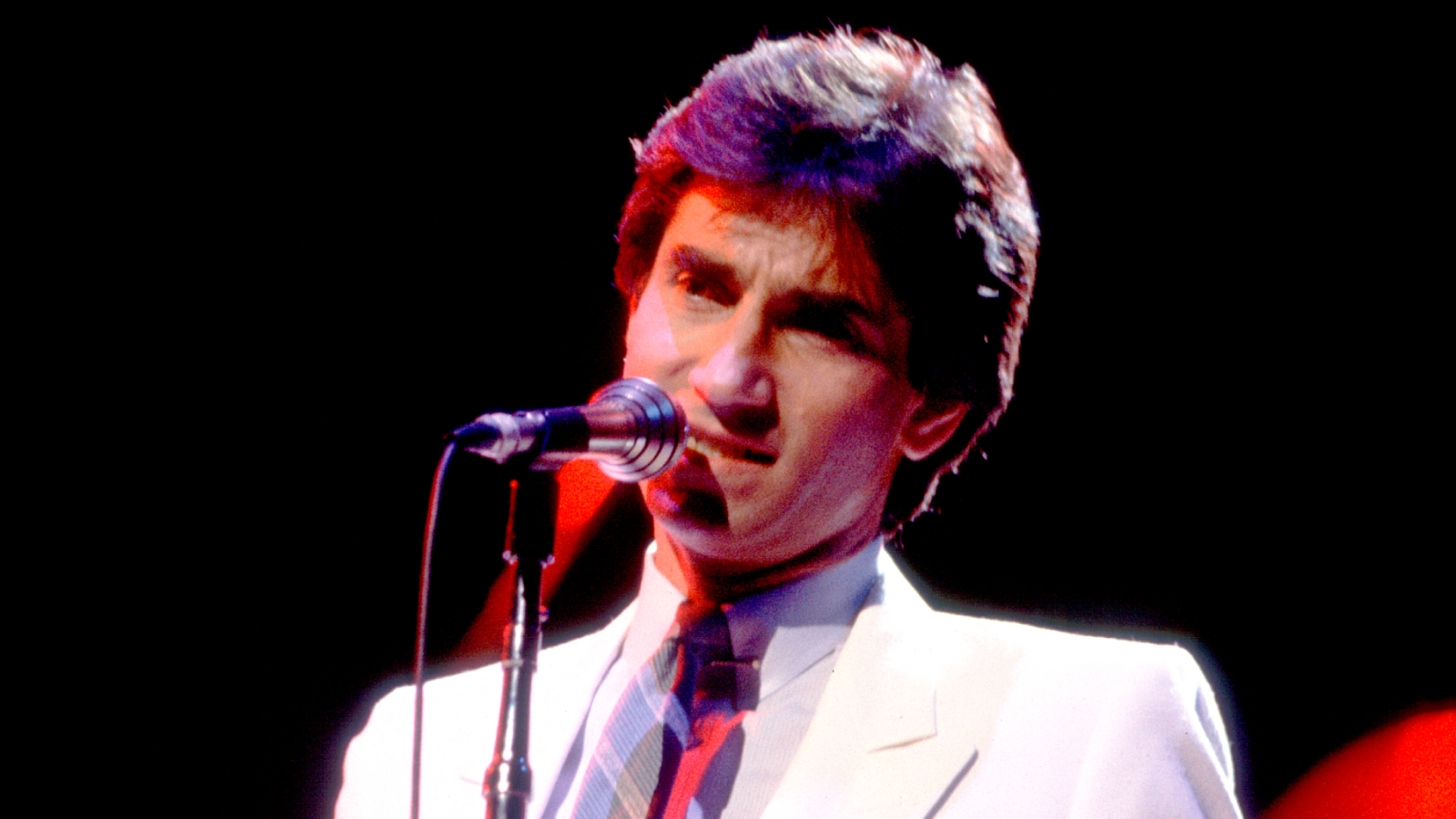
Richard Sterban, the bass vocalist whose river-deep delivery of “oom poppa mow-mow” in the crossover hit “Elvira” helped give the Oak Ridge Boys their signature song, died Saturday. He was 83. Sterban’s rep, Jeremy Westby, confirmed the singer’s death, adding that the Country Music Hall of Fame member died “due to complications from bronchitis and pneumonia.” In March, Sterban said that he had been diagnosed with pancreatic cancer.
A native of Collingswood, New Jersey, Sterban grew up across the Delaware River from his future Oak Ridge Boys bandmate, the Philadelphia-born Joe Bonsall. But the pair first crossed paths in the gospel music community, in the quartet the Keystones, which Sterban helped form.
Gospel music defined Sterban’s early years and put him in the circle of rock & roll royalty when he joined J.D. Sumner and the Stamps near the end of the Sixties and hit the road with the group behind Elvis Presley in 1971. Sterban toured with Presley until 1972 when he left to join the Oak Ridge Boys, but his time with “The King of Rock & Roll” was deeply impactful: In the 1972 doc Elvis on Tour, Sterban, fellow bass singer Sumner, and the Stamps are seen harmonizing backstage with Presley on the gospel standard “Bosom of Abraham.” He’d go on to detail his history with Presley in the 2012 memoir From Elvis to Elvira: My Life On Stage.
Prior to becoming country music stars, the Oak Ridge Boys — like both the Keystones and the Stamps — were primarily a gospel group. The outfit started as the Oak Ridge Quartet and cycled through numerous members before landing on the most well-known lineup of William Lee Golden, Duane Allen, Sterban, and Bonsall. In 1974, they released their self-titled album, but it was 1977’s Y’all Come Back Saloon and its title track that put them on the country music charts. (They were already on the radar of Paul Simon: In 1976, the songwriter recruited the Oaks to sing backup on his song “Slip Slidin’ Away.”)
A string of successful albums and singles followed — a version of Rodney Crowell’s “Leaving Louisiana in the Broad Daylight,” the Number One hit “Trying to Love Two Women” — leading up to the album that would turn them into radio hitmakers, 1981’s Fancy Free. The LP was a country music smash and went on to be certified double platinum, thanks to songs like the title track “(I’m Settin’) Fancy Free” and the crossover juggernaut “Elvira.”
Written by Dallas Frazier, “Elvira” — ranked No. 193 on Rolling Stone‘s list of the 200 Greatest Country Songs of All Time — became a country Number One hit and peaked at Number Five on the pop charts. It also won the Oaks a Grammy in 1982 for Best Country Performance by a Duo or Group With Vocal, and was named Single of the Year by both the Country Music Association and Academy of Country Music. It was a testament to Sterban’s dramatic voice that “Elvira” became so closely associated with his baritone, despite his friend Bonsall, a tenor, singing lead.
“I have a voice that is so unusual, when I come out with a low note or a solo part, it’s so different than what the other guys are doing, that it kind of sticks out,” Sterban once said in an interview with Charlie Chase and Lorianne Crook. “It gets a response from the audience and it does make me feel good. Makes me feel like maybe I’m doing something that is right.”
The Country Music Hall of Fame agreed. In 2015, Sterban, along with his Oak Ridge Boys bandmates, was inducted as a member. Just last month, he appeared with some of his Hall of Fame peers during the institution’s Medallion Ceremony in Nashville.
In addition to the Country Music Hall of Fame, Sterban, with the Oaks, was also a member of the Gospel Music Hall of Fame — a distinction he shared with his onetime boss, Presley.
“As a young man in my twenties, singing with Elvis, I had no idea that some day I would be in the same Hall of Fame with him. Not only the Country Music Hall of Fame, but the Gospel Hall of Fame as well,” Sterban once told an interviewer. “Very few people can say that.”
