



The text came on a Sunday afternoon. Roma Norte’s Puebla Street was quiet but for the jacarandas rustling in the Mexico City breeze.
“We’re writing to let you know that, unfortunately, we won’t be able to extend your stay beyond the end of this month,” my landlord wrote. “With exactly two weeks left until what would have been the next payment cycle, we believe this gives you enough time to make the necessary arrangements.”
No rental contract? Mexican law still applies
Two weeks. After months of paying rent on time, befriending neighbors and even investing in home improvements, I was being told to pack up and leave — with no explanation beyond “personal reasons” as “we have another person coming for a prolonged stay.”
Never mind that, a month earlier, I had extended my lease over WhatsApp — to my landlord’s apparent delight. Now those texts were being reframed.
“This has been an informal agreement from the beginning,” my landlord replied when I questioned my eviction.
Yet, this informality is how expat housing often works here: WhatsApp groups, a few texts, a bank transfer. No contract. Where I saw flexibility, my landlord saw a loophole; he thought he had total control.
Across Mexico, foreigners renting apartments face a troubling pattern: Landlords who believe that expats — often on tourist visas and unfamiliar with local laws — will simply comply when pushed out. Deposits vanish. Verbal agreements get “reinterpreted.”

But here is what I learned: Mexican tenant protections are remarkably strong, they apply to foreigners regardless of immigration status and many landlords do not actually know the law.
The other side of gentrification

By the time I moved in on Puebla Street, my block — unbeknownst to me — had become infamous. In February 2024, police and National Guard officers raided Puebla 261 — the building across from my terrace — evicting by force families who had lived there for decades.
Puebla Street, reporters at the online publication The Dial wrote, had become “a microcosm of the changing city center” — a place where trendy cafes replace family-owned torta shops, and digital nomads displace longtime residents.
Yet, here I was, a dollar-spending gringo, new to the neighborhood and facing an illegal eviction of my own.
The irony of gentrification is that it exploits everyone it touches. Profit-maximizing landlords push out locals to make room for foreigners — then push out the foreigners too, betting that they cannot fight back.
But in Mexico City, all tenants — be they citizens or tourists — have rights. The question is whether you know how to use them.
Your guide to rental disputes
Step 1: Ask why, document everything, and keep it in writing
When the text arrived, my first instinct was to ask for an explanation. The answer — “personal reasons” and wanting to accommodate another guest — was not a legal basis for ending a tenancy.
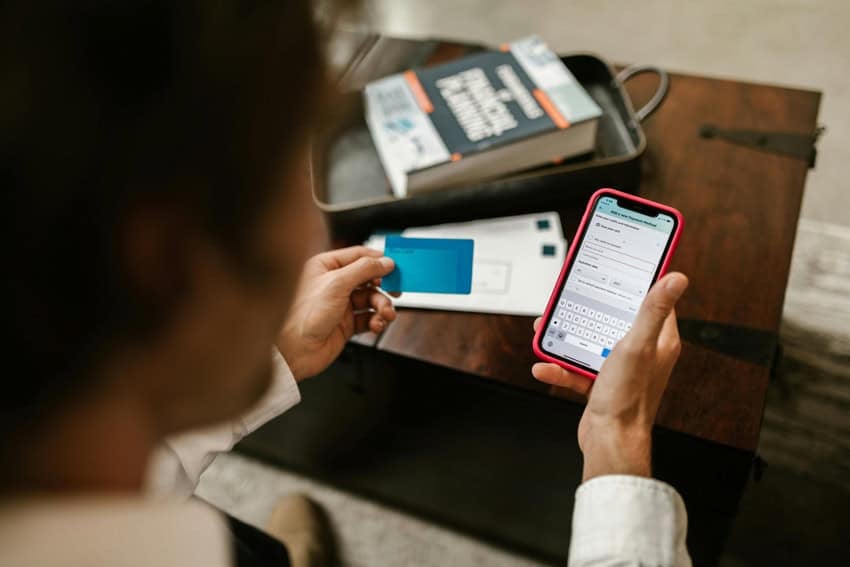
When the text arrived, my first instinct was to ask for an explanation. The answer — “personal reasons” and wanting to accommodate another guest — was not a legal basis for ending a tenancy.
I took a screenshot — immediately — in case he deleted the message. WhatsApp allows “deleting for everyone” for two days after a message is sent. I then backed up our conversation — which contained crucial evidence of my rental agreement — by exporting the chat onto my computer. Lastly, I planned to keep all communications going forward in writing only to limit any risk of confusion.
Step 2: Research your rights
I spent the next few days digging through Mexico City’s civil code and housing law. What I found surprised me: Verbal and digital rental agreements are fully valid under Mexican law when there is mutual consent and continued payment.
Messages confirming the rental agreement, my bank transfers and even my landlord’s casual “Amazing! Received. Very glad to hear you’ve liked your stay so far,” when I asked to extend my lease, all constituted a binding agreement under Mexican law.
Here’s how I established my legal claim, in translated legal-speak:
First, I established that Article 4 of the Mexican Constitution guarantees the right to housing for all residents of Mexico, regardless of immigration status. Being on a tourist visa does not strip you of tenant protections.

I then ensured that my rental contract is enforceable without signed paperwork by Articles 1796, 1803, 2398, and 2448-F of the Mexico City Civil Code. Note: State civil codes closely follow Mexico’s Federal Civil Code; however, the relevant state civil code will govern your rental situation.
Verbal agreements
Verbal agreements — though often opaque — are enshrined in Mexican law; written agreements without signatures are equally valid (and always clearer). By law, proof of payment and payment acceptance solidify any verbal agreement.
Next, I checked that tacit acceptance of my lease extension was legally binding — meaning that silence constituted agreement since my landlord did not object to my extension request within a reasonable amount of time — as per Article 2414 of the Civil Code.
I then ensured that, if for some reason the extension request was not valid, Article 2448-C of the Civil Code establishes that residential leases have a default minimum term of one year — meaning that if no rental term is clearly agreed upon, but rent is paid and accepted, the lease defaults to a one-year term.
Lastly, Articles 2431 and 2448-C of the Civil Code, as well as Article 60 of the Mexico City Law of Human Rights, make clear that any eviction requires a court order following due process; forcing a tenant out without that process is illegal. Unlawful evictions by force should be reported to the police immediately — landlords can be subject to criminal prosecution.
Though minimum notice periods vary, 30 days is typical for open-ended leases — for example, month-to-month rentals, as long as rent is paid monthly — as established by Article 2478 of the Civil Code; otherwise, the lease ends on the initially agreed-upon date.

Finally, I will note that I am not a lawyer and, for legal purposes, this is not legal advice – just research.
Step 3: Contact PROSOC
PROSOC (the Procuraduría Social del Distrito Federal) is Mexico City’s tenant advocacy office. I called, explained my situation to their legal expert and received a free consultation that confirmed my reading of the law. No, I did not end up filing a formal case, but the consultation gave me confidence. More importantly, mentioning to my landlord that I engaged PROSOC lawyers proved decisive later on.
Step 4: Send the message
Armed with legal citations and PROSOC’s backing, I sent my landlords a detailed response laying out my rights, citing specific laws and provisions and noting that “personal reasons” are not legal grounds for eviction. I made clear that I had engaged with PROSOC and that escalating this case would be easy.
My landlord’s response came within minutes: “We are willing to respect your right to remain in the room until your lease ends.”
The twist is, however, that my landlord then tried to impose more rules on my stay.
Any unilateral changes in rental agreements are invalid and unenforceable. As such, these new rules my landlord tried to impose were illegal. Moreover, Article 2411 of the Civil Code expressly states that tenants have the right to use and enjoy the rented property — language that is interpreted broadly by the law. So, any unilateral rule changes imposed after the lease is signed are reportable to authorities and require due process for enforcement.
Step 5: Escalate, if needed.

Luckily for me, my threatening legal text scared off my landlord. However, I was prepared for multiple escalatory actions, if needed.
First: The easy escalation would be to ask my landlord for facturas (official tax invoices) for all my rent payments, then double-check that any facturas provided were valid by using the SAT’s free website.
The SAT is Mexico’s federal tax collection agency, like the IRS in the United States. If my landlord pushed back—or could not produce the facturas—this would imply that he was likely not reporting his rental income to SAT, Mexico’s tax agency, required by law.
Not reporting this sort of income is a common flouting of the law in Mexico because, until recently, it has been easy to get away with. But SAT is now actively seeking to uncover under-the-table landlords, especially in tourist zones.
Not reporting rental income can result in years of back payments and fines. Threatening to go to the SAT or PROFECO — Mexico’s consumer protection agency — in the absence of validated facturas often results in rapid landlord acquiescence.
Second: Get PROSOC further involved by opening a case and beginning any preliminary legal proceedings. While the case could end up in court, the likelier outcome is that PROSOC would have mediated with my landlord and we would have come to some sort of agreement.
A note on deposits

The most common complaint I hear from foreigners is about not getting their deposit back. While this did not happen to me, the strategies to combat this are similar: Document everything in writing, photograph the apartment at move-in and move-out, and — critically — request facturas for your rent payments.
The pressure point is the same as the escalation tactics I advised above: Landlords who refuse to provide facturas may be evading taxes. You are entitled to request these invoices even as a tourist (using the generic RFC code). If they give you trouble, mentioning that you will report them to SAT or PROFECO tends to clarify the situation quickly. Landlords who are not paying taxes on rental income are often more willing to negotiate when the alternative is government scrutiny.
What landlords don’t know
Surprisingly, my landlord was not malicious. He was just wrong and genuinely seemed to believe that an “informal arrangement” meant he could end the tenancy whenever he wanted. What he did not know was that verbal agreements are binding, that the lack of a written contract is legally the landlord’s problem (not the tenant’s) or that Mexico City law requires proper notice periods for ending a rental agreement.
This is the pattern I’ve heard from other expats: landlords who change rules mid-lease, who demand extra payments, who withhold deposits because they think they’re entitled to or simply assume you will not fight back. They are not all bad actors. Many simply don’t know the law — and assume you don’t either.
The bottom line
If you are a foreigner renting in Mexico City and your landlord tries to push you out, remember: The law is on your side. Verbal agreements are binding. Proper notice is required. Eviction without a court order is illegal. And your rights do not disappear because you are a foreigner on a tourist visa.
Document everything. Know the relevant articles of law. Contact PROSOC, who can help you understand if you indeed have a case against your landlord. And do not assume that just because you are a guest in this beautiful country — for however short or long a time that may be — that you do not have the right to a home here.
Logan J Gardner is a Wharton-educated content strategist, writer, photographer and filmmaker based in Mexico City. Sign up to receive his newsletter, Half-Baked, peruse his blog or follow him on Instagram for more.
