


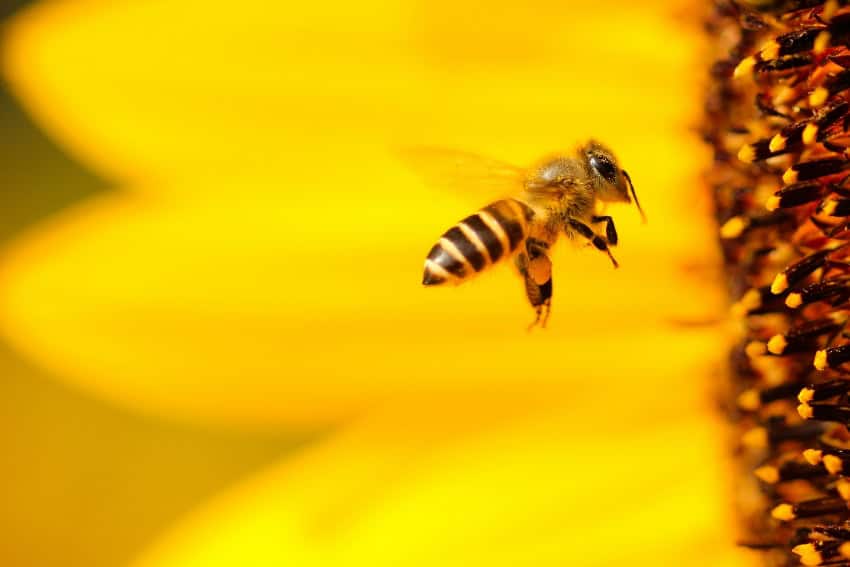
Mexico ranks fourth among the world’s most biodiverse countries, hosting more than 10% of the world’s known species on just 1.5% of the planet’s territory. Due to its abundant biodiversity, Mexico is also considered one of the world’s bee diversity hotspots, with nearly 2,000 bee species found in the country.
In this week’s “Mexico in Numbers,” we’ll explore Mexico’s biodiversity and its importance as an apicultural hub and global honey exporter.
Mexico’s forests and bee habitats
A whopping 72.6% of Mexico’s surface is covered by plant life. Within this, the country has around 138 million hectares of forest ecosystems. Of these forest ecosystems, 40.5% are xerophytic scrub, or low-thorn forests found in arid and semi-arid areas capable of withstanding long periods of drought and extreme sun. Coahuila state, located in northern Mexico, boasts the highest abundance of xerophytic scrub.
Roughly a quarter of forest ecosystems are temperate forests, characterized by the dominance of broadleaf trees often found in mountainous regions such as Chihuahua and Durango. Of Durango’s total surface area of 9.1 million hectares, 4.98 million hectares are considered forest, making it Mexico’s top forestry state.
Rainforests make up 21.9% of the country’s forest ecosystems. Part of the rainforest is the dry tropics, which lie below 4,600 feet above sea level and present well-defined dry seasons, or semi-evergreen tropical forests with shorter dry seasons, as in Quintana Roo and Yucatán, and the humid tropical forests that have consistent yearly rainfall and are most abundant in Chiapas.
Mangroves cover 0.7% of Mexico’s forest ecosystems and are present in coastal regions such as the Mexican South Pacific coast and along the Baja California Peninsula. Oaxaca is the state that holds the most categories of forest ecosystems. (11.8% of the remaining ecosystems can be considered as “others.”)
Impact of pollination on food crops
According to a study on global patterns and drivers of bee distribution, xeric areas with arid and semi-arid climates are particularly rich in bee species. It is no surprise that Mexico, with its abundance of xerophytic scrub, is considered such a suitable habitat for bees, with an estimated 1,800 to 2,000 bee species represented, some of them stingless, such as the melipona bee.

Bees provide important ecosystem services because they are key pollinators. The global contribution of pollination services to food crops is estimated at between US $235 billion and US $577 billion annually, with the honeybee serving as the most important managed pollinator. In North America alone, honeybees pollinate more than 100 commercial crops, such as apples, almonds and pumpkins.
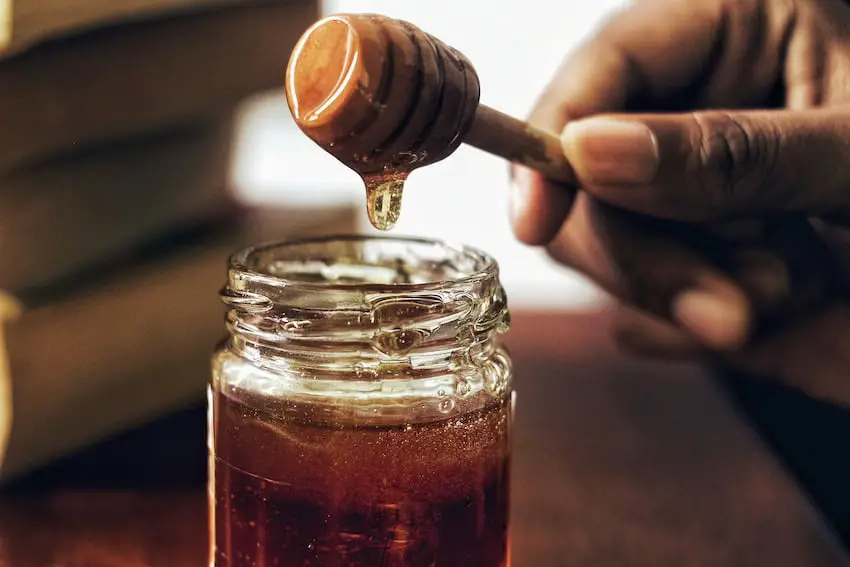
Across Mexico — especially in Sinaloa, Chihuahua and Coahuila — honeybees are used for pollination services. In those states, 140,000 beehives are utilized for crop pollination.
In 2025, Mexico had a record year for honey production, with 60,297 tons of honey produced, a 5% increase from the previous year. Yucatán is Mexico’s top producer of honey, followed by Chiapas and Jalisco.
Mesquite honey and other regional varieties
According to the Secretariat of Agriculture and Rural Development, the northern region of Mexico is the top producer of mesquite honey, foraged from the mesquite tree, part of the thorn forest, which has adapted to harsh climates and periods of drought through a deep root system. Mesquite honey is a light-colored, sometimes white honey with mild and smoky notes and rapid crystallization. The northern region produces around 7.4% of national honey production.
The Gulf Coast region of Mexico is especially known for its orange blossom honey, foraged from citrus plantations, with an acidic and tangy taste. Nine percent of all honey is harvested there.
The Pacific Coast region of Mexico produces 21.4% of all honey, with mangrove honey being a specialty due to its sweet and briny notes.
The Mexican Plateau region contributes 29.8% to national honey production, and the Yucatán Peninsula region is Mexico’s top honey producer, responsible for 32.4% of all honey production. The dzidzilché honey, a product of the native Mesoamerican Gymnopodium floribundum tree, is foraged not only by honeybees but also by the stingless melipona bee. It is an emblematic honey of the Yucatán region and, with its amber color and floral and caramel flavor profile, a sought-after delicacy worldwide.
Supporting local beekeepers
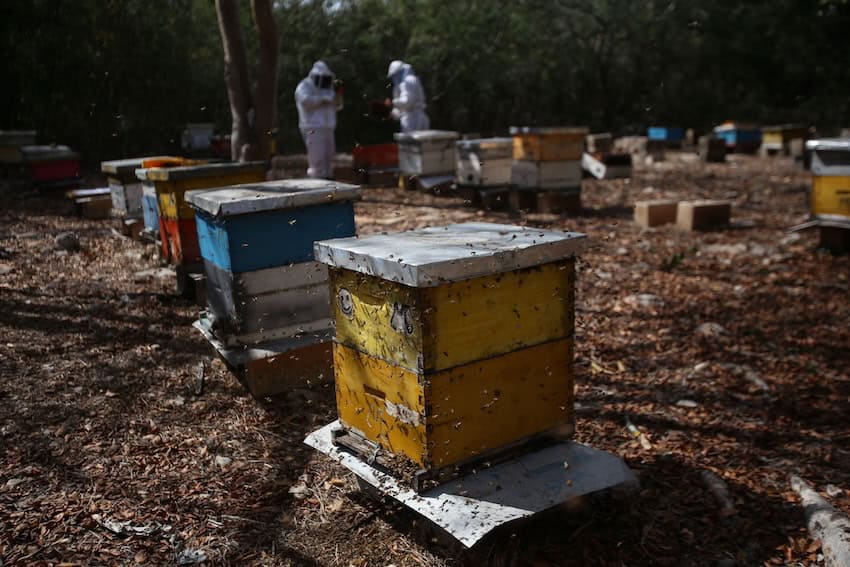
Over 47,000 beekeepers work in Mexico, of whom 2,322 are certified organic producers.
Mexico ranks ninth among the world’s honey exporters, with Germany being one of its top buyers. Out of every 10 kilograms of honey consumed in Germany, between 7 and 8 kilograms are of Mexican origin. In Germany, per-capita consumption of honey is around 2 kilograms per year. In Mexico, average per-capita consumption lies around 200 grams per year.
Mexico is not only rich in biodiversity but also rich in honey varieties and flavors. By consuming local honey, consumers can support local beekeepers who look after the health of beehives, which in turn play a significant role in biodiversity.
Katy Alivraz is a contributor to Mexico News Daily.
