


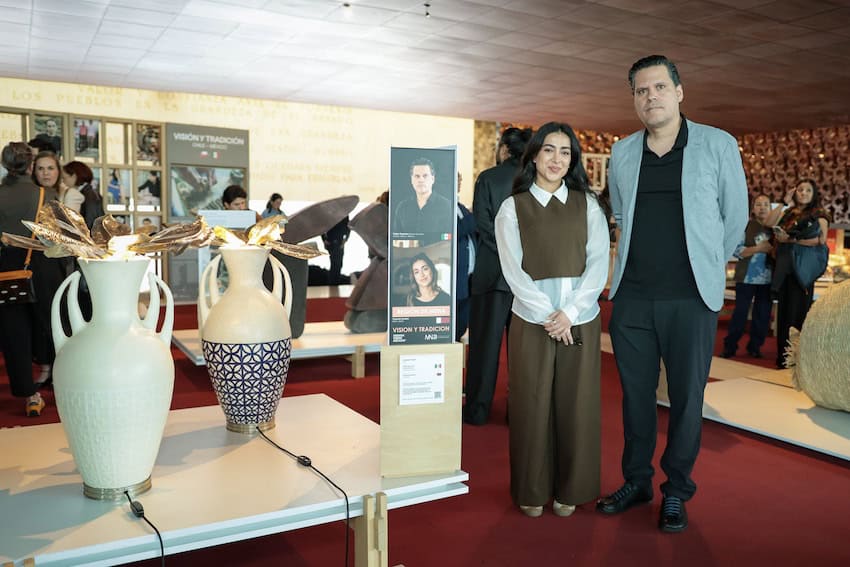
Mexico City’s National Museum of Anthropology is currently hosting a unique exhibition featuring works resulting from creative collaborations between Mexican master artisans and designers from Syria, Lebanon, Iran and India, as part of a cultural exchange program between Qatar and Mexico.
The exhibition showcases artworks created during Crafting Design Futures, a Design Doha residency program, which chose Mexico to celebrate its second edition.
‘Building something together’
During the residency, traditional family-run artisan workshops in the states of Michoacán, Jalisco and Mexico City hosted international designers from the wider Middle East region and South Asia to explore ways in which inherited craft knowledge influences contemporary design.
Beyond a simple exhibition of objects, the program highlights dialogue and human collaboration across cultures in a time when using digital tools in the creative process is becoming more prevalent.
“In a world where design is increasingly shaped by digital tools and speed, working directly with materials and with people who have spent decades understanding them gives designers a very different perspective on value, authorship and collaboration,” Design Doha Director Fahad Al Obaidly told Qatar News Agency. “It also teaches a more responsible way of working with craft communities by building something together.”
In Guadalajara, Jalisco, Qatar-based Iranian designer Yasamin Shaikhi worked with Estudio Guerrero on a ceramic vessel inspired by the Nasrid pottery of Al-Andalus, the name given to the medieval Muslim-ruled territories on the Iberian Peninsula from 711 to 1492.
This form of pottery would eventually arrive in Mexico with the Spanish conquest and influence other pottery styles, like Puebla’s Talavera.
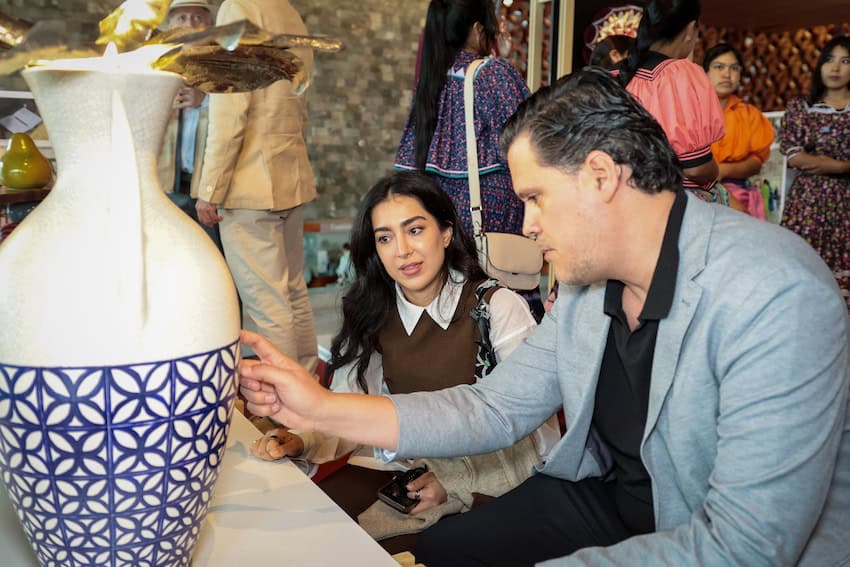
Dubbed Shared Traces, a crown of hand-hammered metallic petals emerges from the vessel, reflecting light across its glazed surface and creating a play of shadows that reveals and conceals geometric patterns inspired by motifs found in Qatar and Mexico.
In a joint statement, the artists said the vessel represents a meeting point between East and West, Mexico and Qatar.
Middle Eastern designers influence Mexican locals
Meanwhile, in Xochimilco, located along the southern outskirts of Mexico City, Syrian designer Kenan Alkuwatly collaborated with José Cruz, one of Mexico’s most renowned pepita (dot-pattern) artists. Cruz began learning this craft at the age of 12 in the workshops of his father and uncle. By the time he turned 17, he was already recognized as a master engraver.
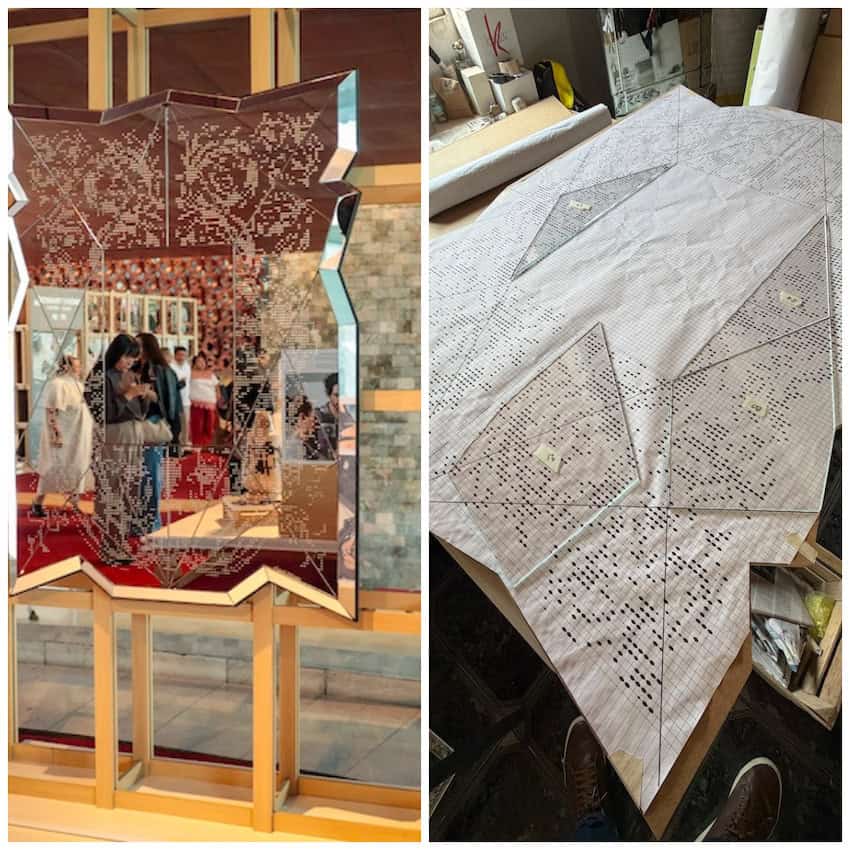
To create MANUS_0X, the artists digitally reinterpreted a 1,000-year-old floral motif from the Umayyad Mosque in Damascus, breaking it down into thousands of tiny fragments that were then incorporated into the traditional Mexican craft of pepita. The result is a mirror-like structure that reflects the tension between the human and digital world, the artists said.
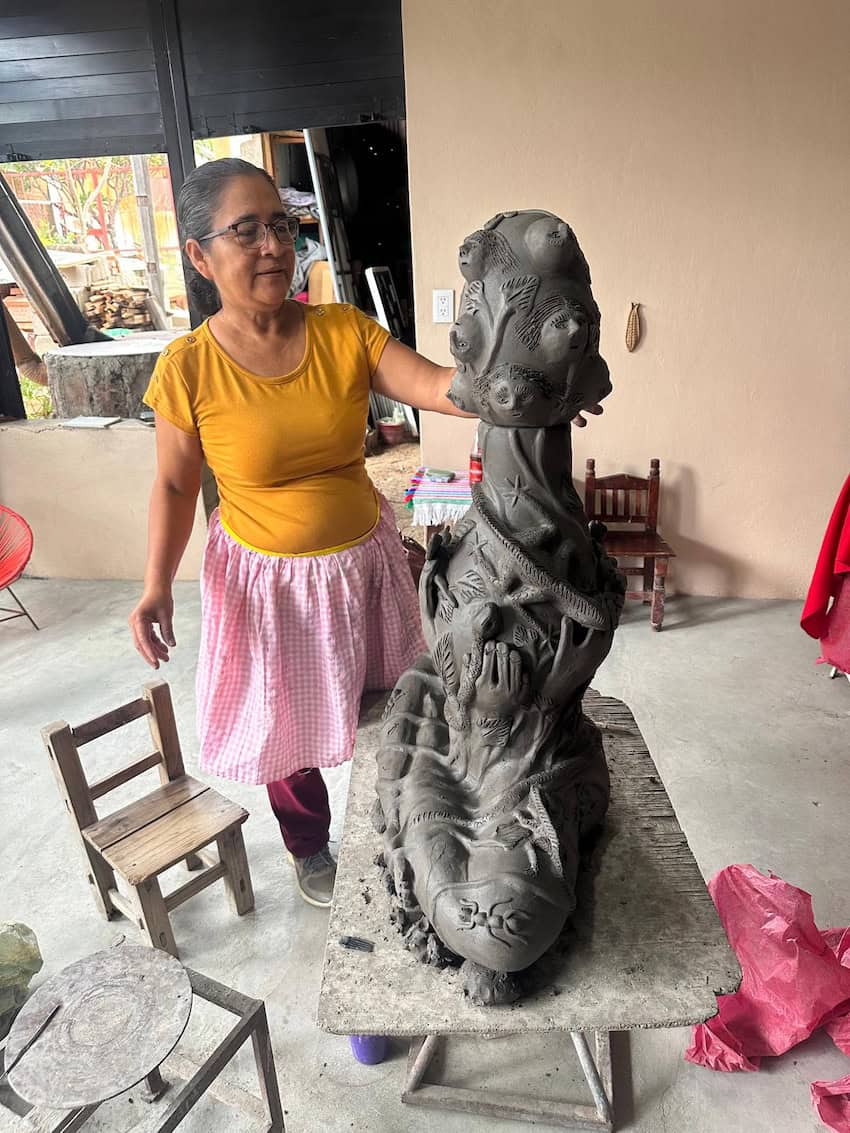
Meanwhile, in Uruapan, Michoacán, Lebanese designer Shirine Sbaiti collaborated with artisans Norberto and Rosi, master ceramists whose work fuses ancestral Mexican techniques with contemporary design.
Their sculpture and Raíz de Vida combine Sbaiti’s figurative style — characterized by fragmented bodies and multiple limbs — with the colorful depictions of animals, faces and natural elements typical of the work of Norberto and Rosi.
Raíz de Vida shows the mutual appreciation and respect both cultures share for the land, animals and ancestors, the artists explained.
Evolution of Mexican architecture
Finally, in Santa Clara del Cobre, Michoacán — a town renowned for its centuries-old hand-hammered copper tradition — British-Indian designer Armaan Bansal worked with Alan Pureco, whose family has spent more than three generations crafting hand-hammered copper objects.
Using Santa Clara del Cobre’s deep-rooted technique, Despierto a estas horas features small openings in the copper, letting light glow from within and evoking an illuminated town in the dark hours of the night.
The artists said their piece represents the evolution of Mexican architecture through copper, with forms inspired by how buildings have changed over time.
These collaborations are part of Years of Culture (YoC), a Qatari initiative that seeks to strengthen ties between participating countries through projects in art, design, gastronomy and other disciplines. The 2026 edition has been dedicated to Mexico and Canada.
While the cultural exchange will continue with upcoming events in Doha, including a culinary demonstration by renowned chef Elena Reygadas from Panadería Rosetta, audiences in Mexico have until Nov. 1 to see the results at the Anthropology Museum’s Media Luna exhibition space. Admission is free of charge.
Gabriela Solís is a Mexican lawyer turned full-time writer. She was born and raised in Guadalajara and covers business, culture, lifestyle and travel for Mexico News Daily. You can follow her lifestyle blog, Dunas y Palmeras.
