



Mexican author Carlos Fuentes entered my life with the soft insistence of a truth you recognize before you can name it. In a house where books functioned as liturgy and political arguments were my family’s daily prayer, politics and fiction braided until nationhood itself could only be discussed through story.
Friends learned to avoid politics and religion in polite conversation. But at our table, it was compulsory.
Encountering Carlos Fuentes
Between my mother’s journalistic and analytic perception and my father’s artistic view of the world, I first encountered Carlos Fuentes. It was an introduction that felt less like discovery than initiation.
I first found “La Muerte de Artemio Cruz” (“The Death of Artemio Cruz“) rummaging through my parents’ bookshelves as a teenager, that furtive, holy act of taking what the house has to offer.
The book is a slow, terrible confession. It follows a revolutionary soldier who becomes a wealthy businessman and, on his deathbed, confronts the compromises that made his life
possible.
I asked my father if I might read it. He agreed with the tolerant risk of someone who knows the power of literature. I was too young to understand everything — too young for many of the dates and alliances and the dense historical scaffolding — but not too young for the voices.
The blunt honesty of Fuentes’ interlocutors cut into me. Their phrases echoed family stories, private grievances and the way a father’s silence sometimes explained more than his sermons.

I went to sleep that night with the book heavy under my pillow, feeling the first tremor of an allegiance.
Fuentes liked to say that the Latin American novel rescues what official history neglects. It is an attractive aphorism: literature as a salvage operation, novels as lifeboats ferrying the lives, rumors and embarrassments that governments prefer to let sink.
But his claim is more than rhetoric. Read Fuentes and you find not an inventory of facts but a map of forces — the informal routines, petty calculations and generational betrayals — through which Mexican politics actually works. He is not interested in vindicating every detail of the public record. He excavates the subterranean arithmetic of power. The small acts and grand illusions that produce regimes.
A ‘gypsy in a black tie’
If Fuentes’ vantage feels panoramic, it is because it was cultivated that way. Born in 1928 in Panama to a cultured, liberal diplomatic family, he spent his early years amid the humid expanses of Montevideo and Rio de Janeiro. Those tropical afternoons — book-lined, humid and full of foreign tongues — were where Fuentes first fell in love with literature. Alfonso Reyes, the Mexican humanist and a central pillar of the country’s intellectual life, became an early mentor who guided him through the literary world.
The young Fuentes absorbed European and Latin American canons with equal appetite, continued his journey to Washington with his family. They stayed eight years in the American capital amid tense Mexico–U.S. relations following President Lázaro Cárdenas’ 1938 nationalizations.
Distance sharpened his sense of Mexico as a nation, and of his identity as Mexican in a foreign country, as he turned into a schoolyard enemy thanks to the “Tata Lázaro initiative.” Watching his country from abroad, he did not simply miss home. He began to interrogate it. He traced a family history animated by wider European convulsions — ancestors who fled Germany and Spain and settled in Veracruz, establishing a coffee hacienda, and he learned how much a personal identity could be a palimpsest of political choices and historical happenstance.
Then a pivotal evening at a New York cinema, where he watched “Citizen Kane” with his father, supplied a kind of formal revelation: narrative could reveal the way private lives braided into public histories. He decided then to write within those intersections.
The acquisition of a global perspective
Fuentes’ early reading list — Stevenson, Dumas, Miguel Zévaco, Jules Verne — reads less like a curriculum than a confession. He wanted plot and spectacle, but with an eye to the moral and historical sediment underneath.
A teenage posting in Chile broadened that sensibility further. Latin American politics did not respect borders. The authoritarian and reformist rhythms he observed in Chile and Argentina taught him that patterns reverberated across the continent, that the fate of one republic often presaged the anxieties of another.
He returned to Mexico, weary of the peripatetic diplomat’s life — the “gypsy in a black tie” as he called it — and enrolled at UNAM to study law at Alfonso Reyes’ encouragement. The law sharpened him. Fuentes would later borrow Stendhal’s praise for the Napoleonic civil code — “clear, concise and effective” — and insist that legal training gave a novelist a discipline of clarity.
Yet his impulse was to use that clarity to break forms with novels that could capture the messy simultaneity of Latin American time.
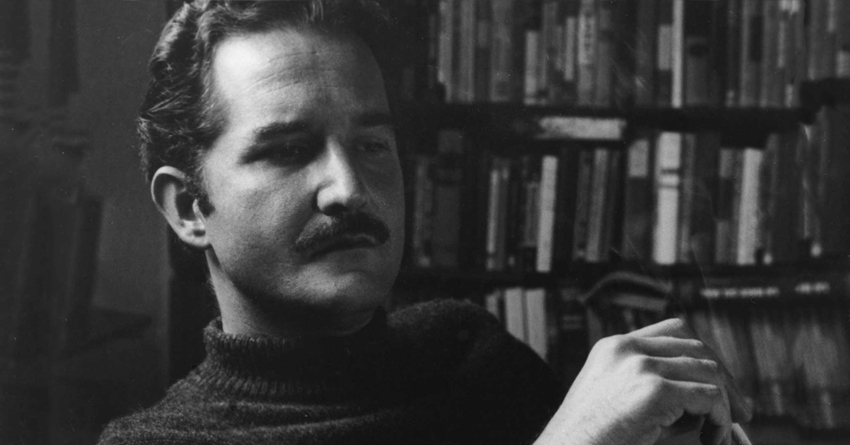
At age 26, he published his first book, “Los Días Enmascarados” (“The Masked Days”), 1954, a collection where myth and the fantastic meet a restless modernity. His true breakthrough came with “La Región Más Transparente” (“Where the Air Is Clear”), 1958, a book that announced, with a kind of civic thunder, a new way of seeing Mexico City.
From that moment, he was no longer an apprentice. He was a national habit.
A life stranger than fiction
Fuentes’ public life was as complicated as his fiction. His unique voice made him central to Mexican culture to the point where presidents listened carefully to what Fuentes and other Mexican intellectuals had to say about their regimes. Later, he accepted the ambassadorship to France (1975–1977), a decision tied to a friendship with President Luis Echeverría that earned both praise and censure.
When the following president, Gustavo Díaz Ordáz, took office, he resigned from his role as ambassador in protest to the Tlatelolco massacre in 1968, an act that marked him among writers who believed conscience could not be compartmentalized.
He would reflect on this episode as a reminder that the line between cultural influence and political entanglement is rarely neat. Fuentes moved in circles of power even as he remained a sharp critic.
5 books and 5 films to understand the 1968 social protests in Mexico
The restless writer
He was, by any measure, prolific, writing more than seventy books — including novels, essays, short stories, scripts and plays — along with a steady stream of articles across the Americas.
Critics who catalog his work point to recurring obsessions: the mestizo nature of Mexican identity, the ways power shifts under pressure, and, when left to its own inertia, the precariousness of state narratives that tidy over contradictions.
But to reduce Fuentes to a set of themes is to miss his artistry, which is the ability to render political life in the language of human habit: betrayal as domestic pattern, corruption as genealogy and revolution as a choreography of broken promises.
If a reader wants a beginning, here are five texts that make his method and moral urgency plain.
1. “La Región Más Transparente” (“Where the Air Is Clear”), 1958
A portrait of Mexico City through a chorus of characters — peasants, intellectuals, opportunists, dreamers — this novel critiques a hopeful bourgeoisie who believes concentrated wealth will somehow be redistributed by fate. The city is staged as myth and machinery, a place where pre-Hispanic ghosts brush against neon and where national identity is debated in salons and tenements alike. Fuentes anticipates the rupture generation’s disillusionments, sketching a metropolis both magnet and mirror.
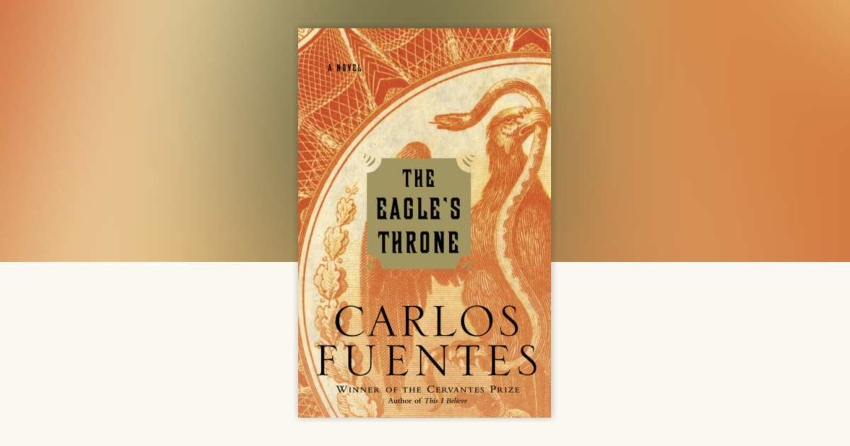
2. “La Silla del Águila” (“The Eagle’s Throne”), 2003
Set, proleptically, in 2020, told through letters after a communications collapse, it narrates a corrupt election, the corrosive compromises of those who seek higher office, and the blunt interventions of foreign powers — most pointedly the United States. It is less a speculative thriller than a study in how institutions erode when informal networks take precedence over civic duty.
3. “Tiempo Mexicano” (“Mexican Time”), 1971
An essayistic meditation on temporality and national memory. Fuentes argues that Mexican time is not linear but circular and overlapping. Epochs coexist and narrate one another. He examines who is given the right to remember and how state and culture conspire to shape collective consciousness. Here, his faith in youth and his hope that new generations could craft a more democratic nation glimmer most clearly.
4. “Nuevo Tiempo Mexicano” (“A New Time for Mexico”), 1994
Written in the wake of 1994’s ruptures — the Zapatista uprising in Chiapas and the peso’s collapse — this book is more sober. Where earlier essays were buoyed by the possibility of reform, “A New Time for Mexico” reflects on the hard limits of institution-building amid enduring inequality and the new economic realities shaped by NAFTA.
5. “El Espejo Enterrado” (“The Buried Mirror: Reflections on Spain and the New World”), 1992
Perhaps my favorite, a sweeping cultural history that traces five centuries of Hispanic America. Fuentes is at once historian and storyteller. He narrates the persistence of colonial and Indigenous legacies as the subterranean currents of identity. The book is elegiac and exuberant, a reminder that culture is not a surface polish but an accumulated architecture.
Mexico’s classic novels: Must-read books to add to your reading list
Why read Fuentes?
Because he converts complexity into clearness without flattening it. He is not a historian in the archival sense. Dates and citations are subordinated to moral geometry.
But he is remarkably precise in diagnosing how power, memory and myth conspire to produce national life. His prose wants to unsettle complacency. He hoped readers would argue with his books, not to annul them but to enlarge the conversation.
Fuentes belonged to an erudite generation that could look at Mexico from both inside and outside. The diplomat’s gaze that knows protocol and the exile’s view that knows perspective.
He understood how the Mexican Revolution’s promise had been domesticated: the postrevolutionary bourgeoisie reproducing prerevolutionary hierarchies, the Institutional Revolutionary Party’s (PRI) transformation from the Party of the Mexican Revolution (PRM) into an apparatus that welded party to state, and how industrial growth often masked social exclusion.
Mexican writer Juan Villoro honored with the Carlos Fuentes international literature prize
Clarity and cultural insight
But perhaps his clearest insight is cultural. The revolution’s deepest achievement was not the redistribution of land or the construction of institutions alone, but the knitting together of a fragmented populace so disparate communities could finally perceive one another.
To read Fuentes is to feel history as a kind of weather: sudden, changeable and always shaping the small gestures of private life. His novels let you listen to Mexico’s interiors — the whispered bargains, the private prayers and public betrayals. They teach patience.
Political truths are rarely delivered in headlines. They arrive through accumulations of habit and choice, through the intimate narratives that novels can, more truthfully than manifestos, deliver.
If you find a copy of his work, take it. Fuentes will not hand you a neat syllabus of reform. Instead, he will offer scenes and voices that make the stakes of politics unavoidable. His writing insists upon engagement.
Not mere consumption, but conversation, argument, indignation, laughter and, sometimes, renewal. In that stubborn insistence lies his lasting invitation: to read Mexico not as a place to be explained, but as a country alive with stories that refine what we think we know.
María Meléndez is a writer and art historian. She works at the Mexican Cultural Institute of the Embassy of Mexico in Washington, D.C.
