


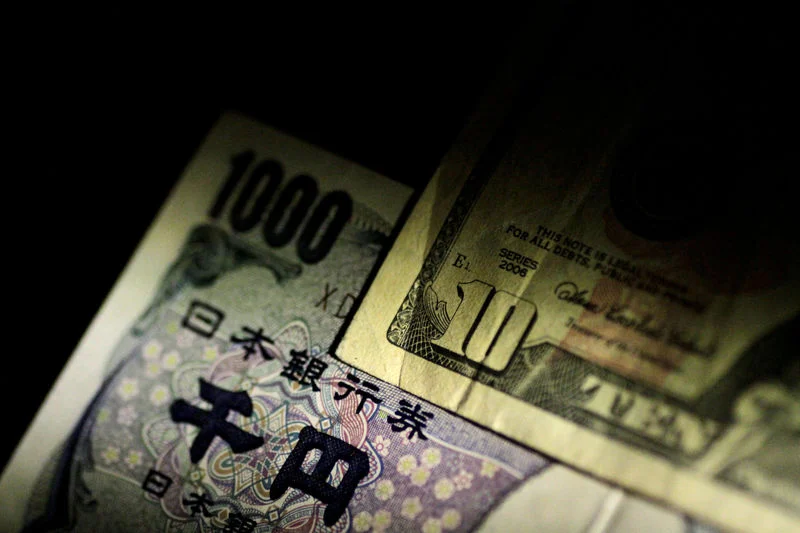
Investing.com — Citi Research is out with a note weighing the question of whether global currency policy is witnessing a major shift akin to the Plaza Accord of 1985 as Treasury Secretary Scott Bessent works to remedy imbalances through interventions seen by many as controversial.
While Citi believes that there is “no confirmation for the start of a structural turning point,” the currency alliance between the U.S. and Japan aimed at reversing JPY weakness could be seen as a “sign of change in global policy.”
In late July, the U.S. Treasury joined Japan in a coordinated intervention to support the yen after had approached a 40-year high near ¥164 per dollar. Bessent directed the use of foreign-currency assets held in the Treasury’s Exchange Stabilization Fund (ESF) to buy yen; Bessent later confirmed that the operation used existing ESF assets, reportedly including euros, rather than extending credit to Japan.
“If the reversal in JPY weakness contributes to a further correction in CNY weakness, the possibility that European nations could participate in the framework and join with the US to demand China reverse CNY depreciation cannot be ruled out,” Citi Research said.
However, the firm believes that JPY weakness will be difficult to correct in this manner, given that it is driven by yen-selling hedges linked to the stock market rally. “This is likely to be an obstacle to the authorities’ attempts,” said the firm.
Against the backdrop of these interventions is the new “national economic policy” proposed by Secretary Bessent and dubbed “the Bessent doctrine”, Citi noted.
The proposed policy emphasises five pillars: economic security, mutual free trade, new rules for the next-generation economy, advantage in financial power, and greater benefits to U.S. workers.
While this differs from the Mar-a-Lago accord proposed by Stephen Miran, the two policies share the “common goal of rectifying the global imbalances symbolized by the US current account deficit.”
The latest interventions however do not mean a weakening of the U.S. dollar, said Citi. But a “mini-accord” of sorts between the U.S. and Japan with the goal of preventing a financial crisis that could start in Japan might in the future “lead to additional actions that involve other nations.”
Ultimately, the focus would likely be the Chinese current account (CA) and the CNY problem, according to Citi.
“If the reversal of JPY weakness also leads to the further CNY strength, it would not be surprising if European nations also adopted a cooperative stance toward the “currency alliance” between the US and Japan,” the firm added.
