


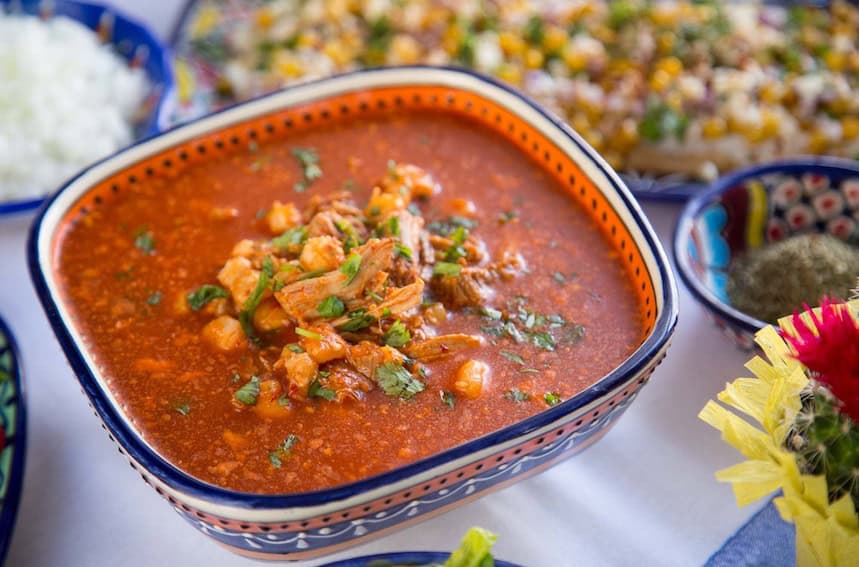
No state in Mexico has raised pozole to the level of culinary art quite like Guerrero. Of course, that’s only appropriate. Pozole is a stew (excepting pozole seco) whose main ingredient is corn — nixtamalized maize, to be exact, or hominy in English — and Guerrero is where corn was first created, 9,000 years ago.
Originally domesticated in the Balsas River Basin in Guerrero from a species of teosinte called parviglumis, corn was a wonder of the ancient world. It took over 1200 years to spread as far as Panama and 2300 to reach Peru, but corn eventually became one of the most consumed foods on the planet. In its birthplace of Mexico, where there are now at least 59 varieties, it has always been assumed that pozole was a natural evolution from this invention.
The origins of pozole
However, the origins of pozole are shrouded in controversy and contention. For instance, one of the most commonly shared stories about pozole is that the Mexica (Aztec) elites ate pozole with human flesh; essentially, committing cannibalism. This may or may not be true, but it must be noted that the oft-cited source, Fray Bernardino de Sahagún, never mentions pozole by name.
In fact, Alberto Peralta de Legarreta, who wrote the book on pre-Columbian food in Mexico (literally: “Cultura gastronómica en la Mesoamérica prehispánica”), insists that the word pozole was never used once in any pre-Hispanic text. He also explains that the Spanish authors who shaped our perception of this era, like Sahagún and Fray Diego Durán, didn’t use it either. They mention dishes of cooked corn, which may or may not have been pozole. After all, there are lots of corn dishes in Mexico.
The birth of pozole blanco, rojo and verde variations
That doesn’t mean pozole didn’t exist in pre-Columbian Mexico. It’s almost certainly a staple from great antiquity. But we don’t know much about its origins, only how it’s made — and even that is controversial. The first cookbook recipe Peralta could find for pozole is from 1937, a year before the Mexican president of the time, Lázaro Cárdenas, took control of the oil industry by expropriating wells from foreign owners.
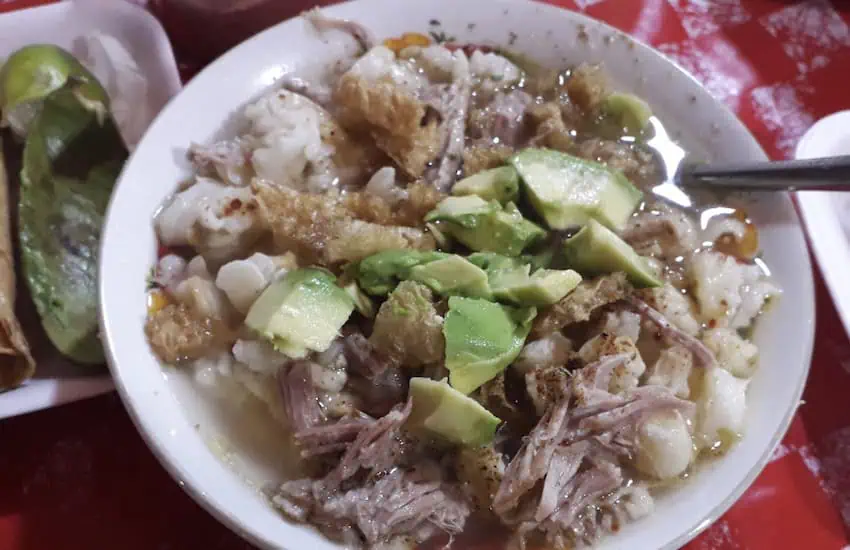
This period of patriotic fervor was profound for Mexican cuisine, particularly with dishes that mimic the colors of the Mexican flag, like the rojo, blanco and verde variations of pozole. One of them, pozole verde, my favorite, certainly originated in Guerrero, and pozole blanco, the original form of the dish, is sometimes credited to the state, too.
However, the latter statement, like all those dealing with the early history of pozole, is unprovable. Nevertheless, Guerrero is famous for pozole verde and pozole blanco, just as Jalisco and Michoacán are hailed for their pozole rojo, and Colima for pozole seco.

How pozole is made in Guerrero
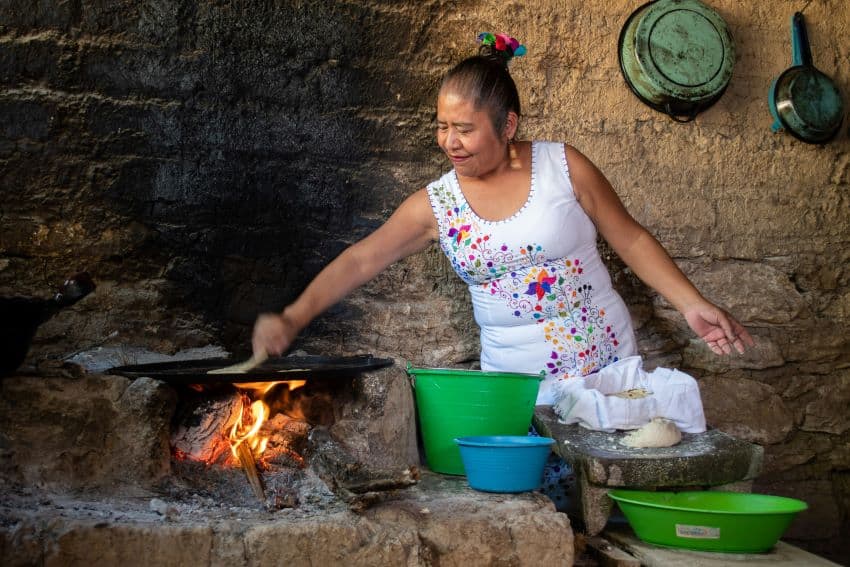
Corn is nixtamalized for pozole via several methods — typically by boiling it in an alkaline solution. Afterward, the kernels are left to steep overnight before being washed to remove the outer shell. Notably, this is the prelude to grinding to make nixtamalized tortillas. However, for those who don’t want to go through the traditional effort of making pozole from scratch, nixtamalized corn in a can may be found at almost any grocery.
The corn used as the base for pozole varies from state to state. In Guerrero, they use the ancho variety, not cacahuazintle, a more generically acceptable type. This is the first of many ways the state distinguishes its pozoles. Pork is the protein of choice in Guerrero and for pozole verde, for instance, tomatillo is used to color and flavor the sauce, as are herbs like hoja santa and epazote.
To make pozole blanco, the pork-and-corn-simmering-broth acquires seasoning via ingredients like onion, garlic, bay leaf, salt, pepper and oregano. It’s simple and delicious, with chilies added as preferred. Of course, depending upon what part of the state of Guerrero one resides in — coast, mountains or plateau — some regionally specific ingredients like eggs, chicharrón and sardines may be added to both pozole blanco and pozole verde.
In rare pozole verde recipes, chicken may be substituted for pork. This exception is observable nationwide, although pork is easily the most common meat in Guerrero and elsewhere. Then there are the fixings, added afterward — but more on that subject later.
Always on Thursday — the creation of jueves pozolero
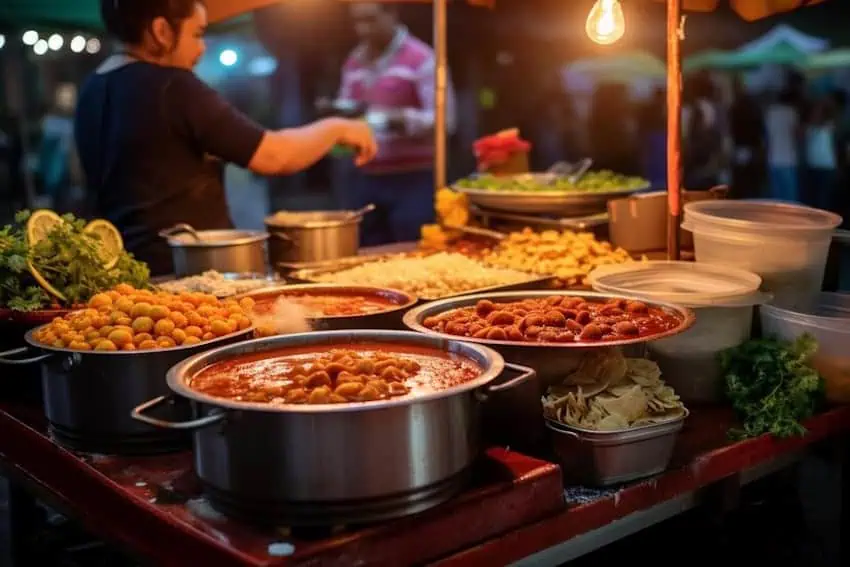
The practice of serving pozole every Thursday, which originated in Guerrero and has now been picked up by restaurants in many states in Mexico, can be traced back to the 19th century in Iguala, where local families made it a custom. That’s one theory, anyway. Of course, many theories for how “jueves pozolero” began have been posited.
An earlier tale links the birth of jueves pozolero to a crucial event in Mexican history: namely, the Embrace of Acatempan, an 1821 agreement between military leaders Agustín de Iturbide and Vicente Guerrero in the town of that name, Teloloapan municipality, in Guerrero — yes, it was named for him — that paved the way for Mexico’s independence from Spain. After the Thursday rapprochement, the two generals declared a feast, with a pig roasted for pozole served in clay pots.
Another theory claims the practice arose near a famous nightclub in Acapulco in the 1980s — News Disco & Concert Hall or Baby’O, perhaps — where the music scene was especially popular on Wednesday nights. Thus, hungover patrons needed their pozole verde or blanco to cure the condition on Thursdays, and there was always a vendor nearby to assist.
But who knows? Almost nothing about pozole is known with certainty. There are only legends and lore, so why not embrace them like Iturbide embraced Guerrero?
Building the perfect pozole
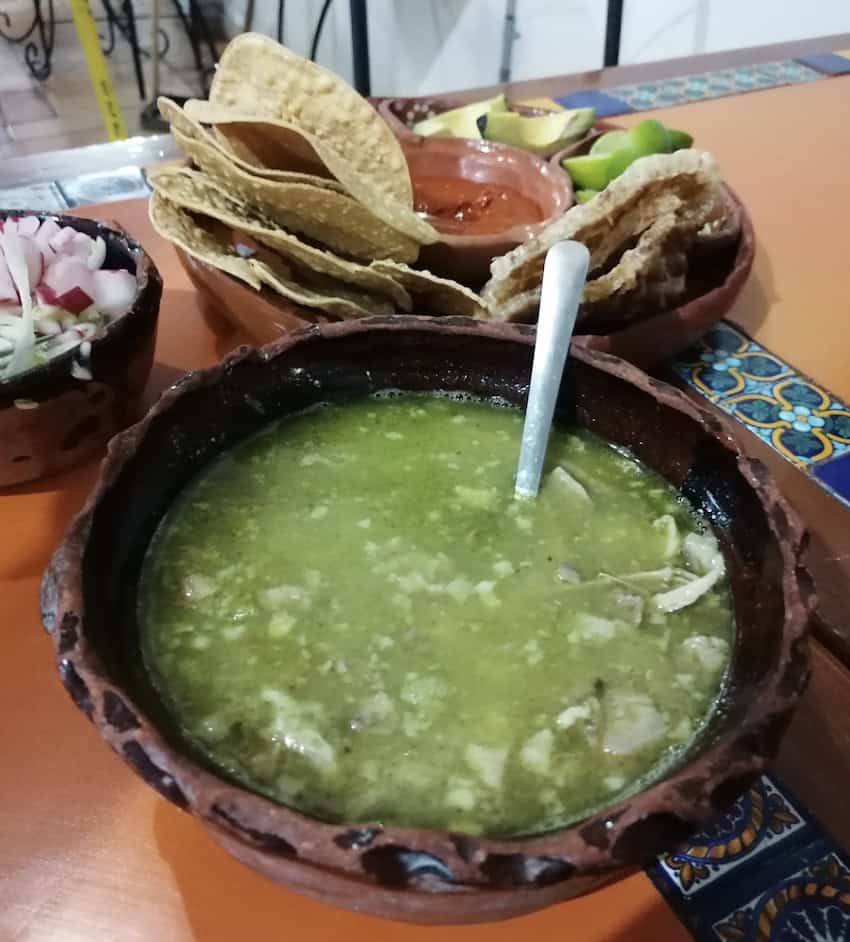
There’s a process to taking all the fixings home and arranging them in the bowl. That’s part of the pleasure. The stew with pork and hominy is packaged in a large styrofoam cup and poured straight into the bowl. Then come the fixings.
Oregano, onion and dried chili powder are rolled up in small foil balls and added as desired … as are the chicharrón — which I crumble — radish, avocado and lime; squeezed in the soup only.
Lettuce or the alternative cabbage is optional, at least in my opinion. And, like all lovers of Guerrero-style pozole, I have developed strong opinions.
Chris Sands is a writer and editor for Mexico News Daily, and the former Cabo San Lucas local expert for the USA Today travel website 10 Best and writer of Fodor’s Los Cabos travel guidebook. He has also contributed to numerous other websites and publications, including The San Diego Union-Tribune, Marriott Bonvoy Traveler, Forbes Travel Guide, Porthole Cruise and Travel, and Cabo Living.
