


I’m sitting in the courtyard of Guanajuato’s Museo Iconográfico del Quijote, admiring the stone arches and columns, waiting for a chamber music concert to begin. I probably walk through at least one courtyard a day in Guanajuato because they’re everywhere in town – not just in museums, but in restaurants, universities, government buildings and parks. Even the classic Mexican colonial home has a courtyard with a fountain in the center, surrounded by rooms.
Mexican courtyards reflect the influence of the Moors, the North African Islamic group that ruled Spain for 800 years and whose ornate tilework, intricate geometric patterns and decorative calligraphy influenced the art and architecture of Spain. After the fall of the Moors in 1492, Spain continued to use Islamic patterns in its designs, creating a unique style that blended Islamic and Christian elements known as mudéjar, which later made its way to Mexico.
But it’s not just courtyards that bear the mark of the Moors. From architecture and folk medicine to crafts and textiles, here’s a quick roundup of the Islamic group’s lasting impact on Mexican culture.
Alhambrismo
This is an architectural style in Spain and Latin America inspired by the decorative Islamic arts of the Alhambra, a palace and fortress complex in Granada, Spain, with Moorish elements such as horseshoe arches, intricate stucco and colorful tilework.
A well-known example of this is the Kiosk of Santa Maria la Ríbera, an ornate octagonal pavilion made of wrought iron with a glass cupola dome on the top, in Mexico City’s Alameda Park.
Churches
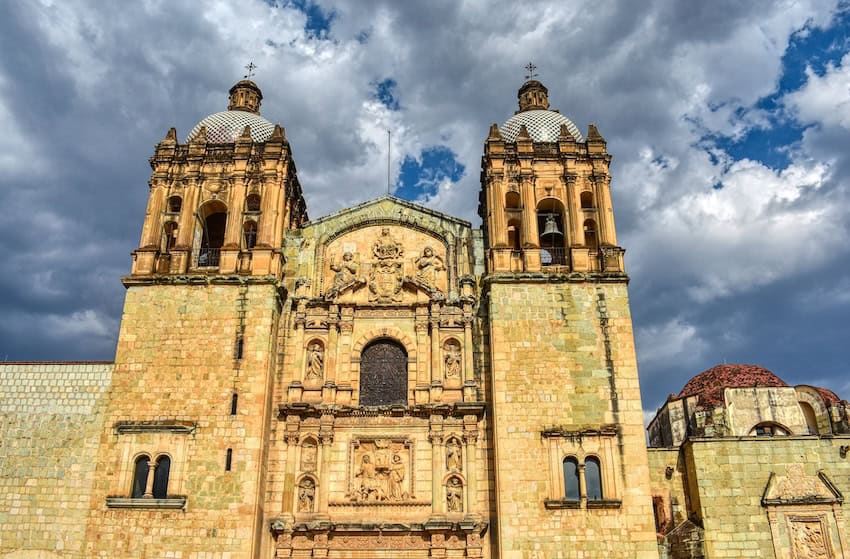
In many colonial Mexican churches, you can see echoes of the mudéjar architectural style, including azulejos, blue-glazed tiles that adorn domes, bell towers and facades; intricate geometric carved-wood ceilings resembling inverted ship hulls; and arches and doorways.
Oaxaca’s famous Templo de Santo Domingo de Guzmán, for example, displays these design elements in the intricate geometric arabesque patterns on the ceiling and the genealogical tree of the temple’s namesake saint.

Mexico’s early Syrian, Lebanese migrants had an impact often overlooked
Inward-facing living
I remember when my husband and I first saw the house we bought in Guanajuato. Although one of its assets was a close-up view of the dome atop one of the city’s signature churches, San Francisco, we could barely see it from the tiny window in one of the bedrooms.
Unlike in the U.S. and Canada, traditional Mexican houses face inward, revealing their Moorish and Andalusian roots, with walled enclosures and internal gathering spaces.
Urban layouts
While Spanish colonial urban planning in the Americas officially ordered a strict grid system, some historic Mexican towns like Guanajuato and Taxco have narrow, winding streets, reflecting the medieval and southern Andalusian urban layouts shaped by centuries of Moorish influence.
Tiles, pottery and ceramics
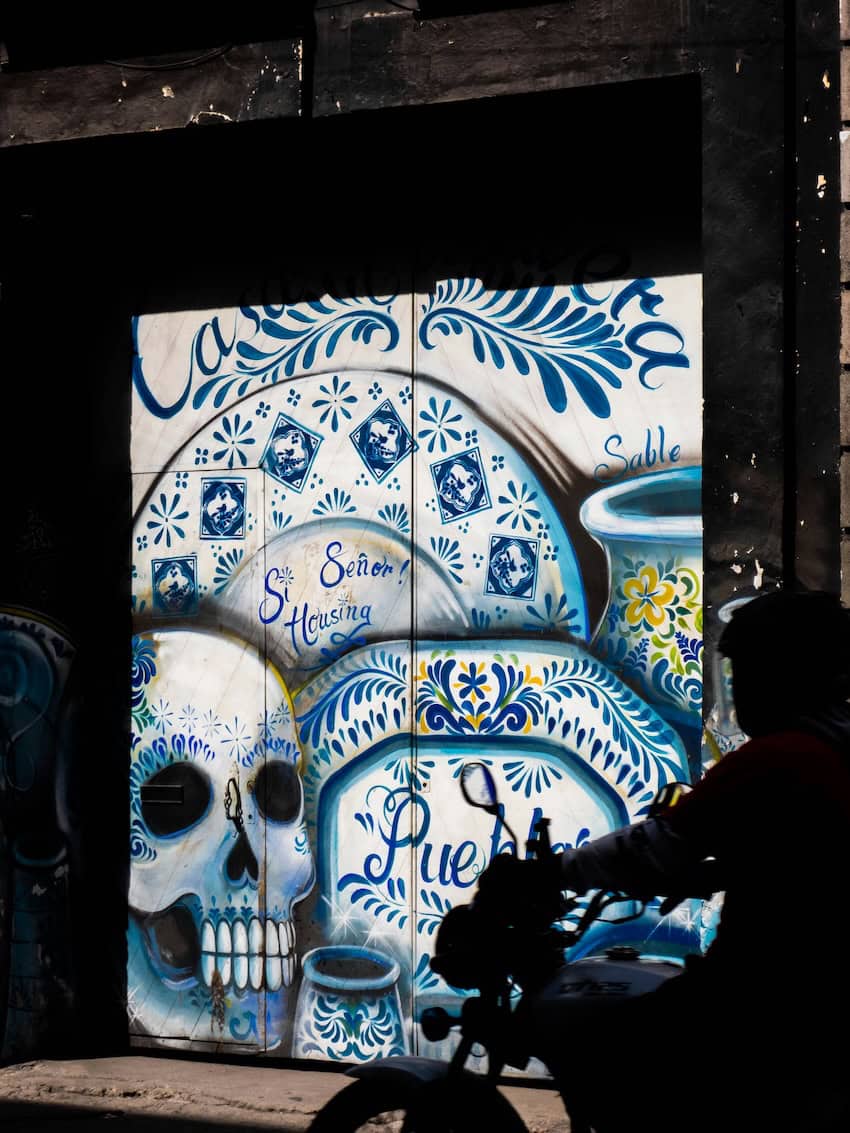
Moorish craftsmen influenced Iberian ceramic styles, including tin-glazed pottery, by integrating geometric patterns and calligraphic bands into their work. When the craft was established in Puebla during the colonial period, artisans carried over these traditional Iberian-Islamic design elements, including abstract script borders and traditional brushstroke motifs.
Puebla’s famous Talavera pottery also blends Indigenous styles with Spanish and Moorish glazed-tile traditions.
Crafts and textiles
Mudéjar geometric inlaid woodworking and carpentry techniques influenced traditional lacquerware and furniture crafts in regions like Michoacán and Guerrero. Precise interlaced framing merged with Indigenous wood-carving and pre-Hispanic lacquering, creating colonial furniture like desks with repetitive geometric paneling and floral touches.
As for weaving, the traditional Mexican sarape displays complex linear, diamond and star-centered layouts that show cross-cultural parallels to Middle Eastern flat-weave blanket traditions.
Curanderismo (folk medicine)
Moorish and Islamic medical practices influenced curanderismo, the herbal medicine still widely practiced in Mexico. Ritual cleansing, petitionary prayers and talismanic magic elements arrived via Spanish traditions that had absorbed Moorish folk customs.
For example, the belief that the “mal de ojo,” or “evil eye,” can cause physical discomfort like fever, crying and restlessness was brought to the New World via Spanish and Moorish folk magic.
Middle Eastern influences beyond the Moors
Influential as the Moors were, they are not the only Middle Eastern influence in modern Mexico.
Following the fall of the Moors, many Sephardic Jews fled from the Middle East to colonial Mexico to escape the Inquisition. Later waves of Sephardic Jews arrived from the crumbling Ottoman Empire in the early 20th century. These communities established synagogues, cultural institutions and social networks, primarily in Mexico City.
While Mexico has seen periods of antisemitism throughout its history, modern Mexico hosts one of the largest and most vibrant Jewish communities in Latin America, mostly in Mexico City.
Meanwhile, the Lebanese diaspora in Mexico — currently standing at more than 500,000 descendants — has shaped the nation’s culture, cuisine and commerce since the late 19th century.
Before Náhuatl came Arabic: Spanish words of Arabic origin
In the 1890s, they left to escape political oppression, heavy taxes, religious conflict and military conscription. At the same time, Mexico’s then-president, Porfirio Díaz, encouraged foreign immigration and trade, offering a welcoming environment and growing business opportunities.
During the period between the 1890s and 1930s, more than 100,000 mostly Lebanese immigrants arrived from Arabic-speaking nations, settling predominantly in the Yucatán, but also in Veracruz, Puebla and Mexico City.
In the early 20th century, the Lebanese community contributed around 50% of the total immigrant input to Mexico’s economy, and it remains one of Mexico’s most successful immigrant groups.
I’ve known for years that words like ¡ojalá!, albañil, and azotea are Arabic in origin, but I had no idea about other enduring Middle Eastern influences. The next time I use the Talavera dish I bought in Puebla, I’ll appreciate its ancient Moorish history, going back almost 2,000 years.
Louisa Rogers and her husband Barry Evans divide their lives between Guanajuato and Eureka, on California’s North Coast. Louisa writes articles and essays about expat life, Mexico, travel, physical and psychological health, retirement and spirituality. Her recent articles are available on her website, authory.com/LouisaRogers.
