


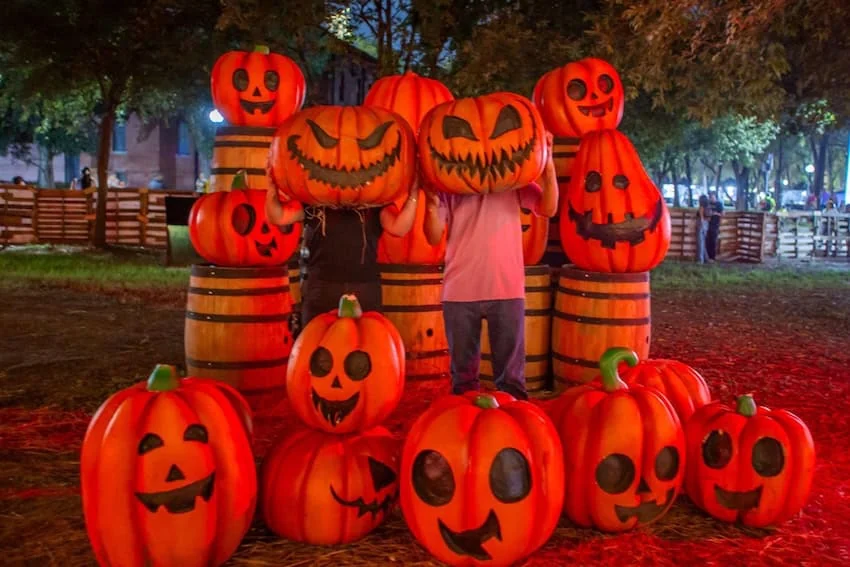
I have to be honest here. Growing up, I did get excited about Halloween parties at school.
Although some colleagues might be flabbergasted by this, as a kid, my friends in elementary school did organize trick-or-treat evenings — which were mostly about the treats, honestly — and children invited each other to their houses to play dress-up and paint their faces as pumpkins and skeletons.
However, for the November festivities, my family always made a point to put a special emphasis on building our Día de Muertos altar at home. It kind of felt more important, in a way, than just getting your pumpkin or vampire disguise. Still, as the air grows colder and the moons appear larger at night, the question arises: Do Mexicans celebrate Halloween? Well, it’s a bit more complicated than you might expect.
When the barrier between the two worlds grows thin
As the November festivities draw closer, you might come across the debate on social media. More nationalist and opinionated Mexicans will defend our millennia-old traditions over the hyper-Americanization of our fall festivals. Incidentally, there is a similar debate among our fellow countrymen regarding why pan de muerto should only be eaten during this time of year, and we have discussed it at length on MND before.
And the people who share this point of view do have a point. Setting up the altar for the dead, waiting for our deceased relatives to return and share a meal at home once more, is something we inherited from our parents, who in turn inherited it from their grandparents, and so on.
When the dead come home

The pre-Hispanic roots of this ritual are enough to warrant an article in their own right — covering the spiritual light of the cempasúchil flower and the way the barrier between the two worlds seems to grow thin at this time of year. But that is not all. Although it is a custom with distinctly Mexica origins, it manifests in widely diverse cultural ways across the country: The massive ofrenda created annually at UNAM is vastly different from the long nights people spend in Pátzcuaro, Michoacán, awaiting the return of their departed loved ones.
We even have a word for them: nuestros muertitos, our beloved deceased. The suffix -ito or -ita in Mexican Spanish implies not only a diminutive form, but also a relationship of affection and respect inherited from Nahuatl -tzin, the honorific suffix used for high-ranking officials as well as for our mothers and fathers.
In preparation for their return, we prepare the favorite foods of our dearly departed — like mole de olla for a dear auntie, or the Diet Coke my grandma used to enjoy so much. Some people leave cigarettes for a brother who has passed away, or even traditional candies like Pulparindo or Pelón Pelo Rico.
So, yeah, you can see how these festivities might weigh a lot more on us than simply going trick-or-treating. Why then, why do we see children running around dressed as skeletons, ghosts and pumpkins as Oct. 31 approaches?
Día de Muertos vs. Halloween: Is there a disagreement about this in Mexico?
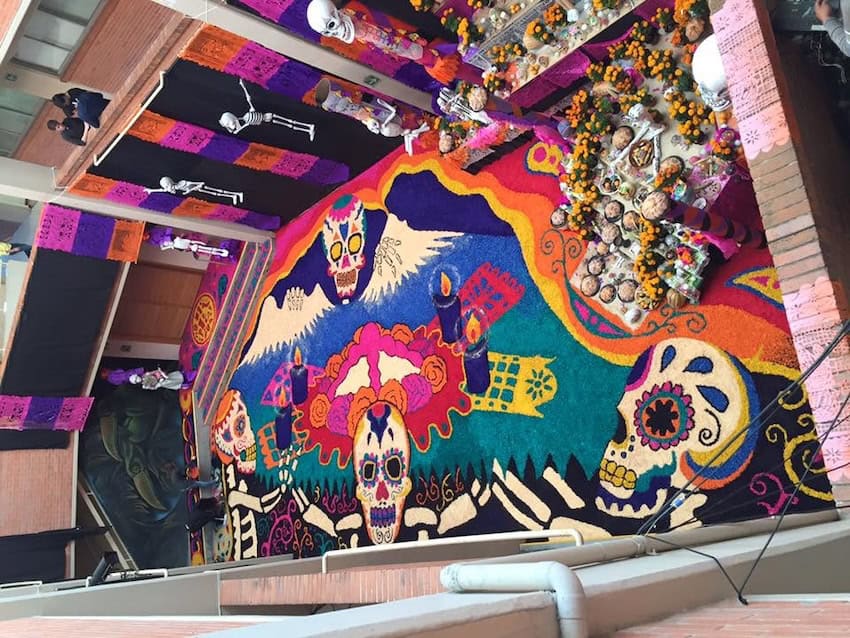
First of all, it is worth emphasizing that Mexico is an incredibly culturally diverse country. Even taking into account the legacy of the Mexica Empire — which spread many Day of the Dead practices across the nation — and the overwhelming influence of contemporary globalization, one cannot truly generalize about how the tradition is observed throughout the country. To do so would almost be disrespectful to the 68 official Indigenous languages (with their 364 linguistic variants) and the unique ways in which each culture shows respect and affection for its departed loved ones.
What I mean by this is that there is no single way to celebrate Day of the Dead in Mexico — or Halloween, for that matter.
That said, how right Porfirio Díaz was when he said that Mexico was very far from God, but very close to the United States. Given the geographic, commercial and political proximity we share with our northern neighbors — who are increasingly coming to share our country with us — it is only natural that Mexicans also join in the Halloween festivities.
We love dressing up, eating candy until we’re stuffed and having an excuse to run through the streets dressed as pumpkins. Who doesn’t, right?
Why the answer is complex
We could easily say, however, that both celebrations coexist today — and even engage in a dialogue. On more than one occasion, I have seen jack-o’-lanterns on Día de los Muertos altars. You can even hear children on Oct. 31 asking, “¿Me da mi calaverita?” — the hyper-Mexican version of “Trick or treat!”
Now, while all this is true, it would be somewhat simplistic to say, “Yes, in Mexico we celebrate everything.” Although it is true that we never lack reasons to throw a party here, the reality is that Halloween celebrations are more of a recreational activity than a cultural one. Day of the Dead is something we collectively look forward to and honor with greater solemnity — ranging from our intimate family traditions at home to the grand public displays we see in the streets year after year.
So yeah, if you ask a Mexican if they celebrate Halloween, they’ll probably say they do — but that they observe Día de Muertos.
Now, if you’ll excuse me, I have to set out a Coke for my grandma; she’s on her way back from the other side.
Andrea Fischer contributes to the Mexico News Daily Features desk. She has edited and written for National Geographic en Español and Muy Interesante México, and continues to be an advocate for anything that screams anthropology. Or yoga. Or both.
