


Mexico City is seeing new developments across its cultural, environmental and commercial landscapes this week. A new artistic hub opened in Santa María la Ribera, 10 significant trees received formal protections, and authorities seized more than 470 counterfeit gaming products in the Historic Center. Let’s get into it.
Santa María la Ribera gets a new theatre experience
A new artistic hub has officially set up shop in Mexico City’s Santa María la Ribera neighborhood. Dubbed Centro Cultural Casa Hechale, the new space occupies a 110-year-old home that was transformed into a multidisciplinary facility, hosting everything from artist residencies and theatre performances to sonic explorations and community events.
The project, Hechale Productions, is the brainchild of Héctor Zavala, a seasoned bilingual theatre director and performer with deep roots in California’s San Francisco Bay Area.
“This is not simply about opening a venue in another city,” Zavala said, per Broadway World. “It is about creating the conditions for artists to stay with a question long enough for it to become a piece of work — and to encounter people, languages and histories that may change the direction of that work.”
Centro Cultural Casa Hechale will serve as a “working cultural center and a place of exchange.” Its flagship program is AWAKEN YOUR ARTIST, a weeklong residency for artists from Mexico City and abroad to “examine not only how they make work, but also where their artistic instincts come from and what experiences have shaped their voices,” according to industry outlet Broadway World.
MND Local CDMX: Ghosts, zombies, Xolos and Día de Muertos
“Artists often move between cities because the work requires it, but the structures that support that movement are not always there,” Zavala said. “Casa Hechale is our attempt to build one of those structures: a place with memory, but also a place where something not yet known can begin.”
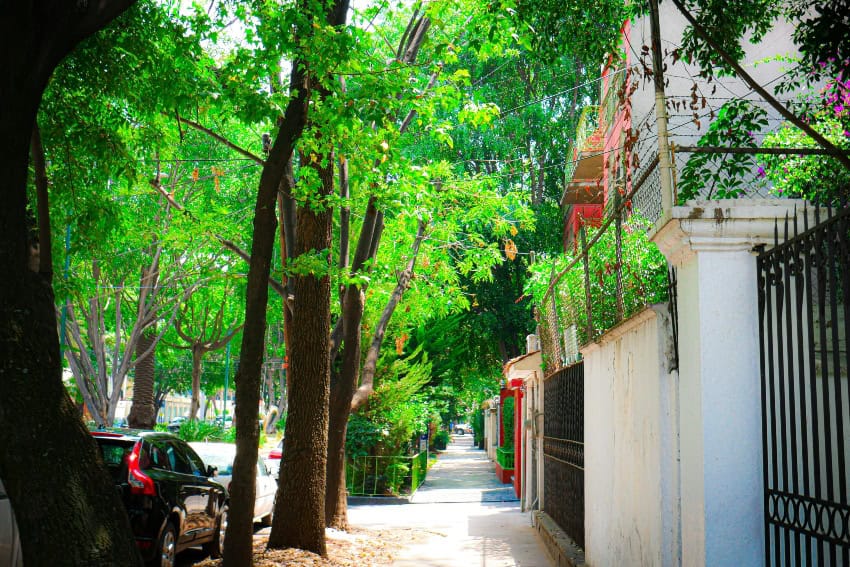
Mexico City issues protective orders for 10 trees
Mexico City’s Environment Ministry issued nine decrees on Sept. 28, formally protecting 10 trees across six boroughs and recognizing their environmental and symbolic importance.
The decrees include special protections that limit development in the immediate vicinity of the trees, such as infrastructure work, excavations and installations, or anything else that could threaten their trunks, roots, crowns or branches.
The trees, located in Benito Juárez, Coyoacán, La Magdalena Contreras, Azcapotzalco, Xochimilco and Tlalpan, include seven Montezuma cypress trees, one white cedar, one olive tree and one oak tree.
These trees are so important, both ecologically and symbolically, that some of them even have names:
- “Ahuehuetlán” in Parque de las Américas
- “Atlahuitl” in Coyoacán
- “Cedro de Padierna” in La Magdalena Contreras
- “Los Gemelos de San Álvaro” in Azcapotzalco
- “Molotla,” “Teuhtli,” “San Cristóbal Xallan,” and “Tlalnahuac” in Xochimilco
- “Diamante Tepeximilpa,” a roughly 400-year-old oak tree in Tlalpan
“Beyond their physical characteristics, some of these trees are linked to ancient settlements, agricultural traditions, and territorial landmarks that have given identity to neighborhoods and Indigenous communities,” the Environment Ministry noted in a news release. “Their continued existence allows the connection between these communities and the natural environment that has accompanied them throughout history to remain alive.”
Corn producers also receive protections
It’s not just trees that are being protected. Mexico City Mayor Clara Brugada recently announced 10 actions to protect the region’s corn producers, as well as the crop’s diversity and availability.
“These ten actions form a single public policy for the defense of corn,” Brugada said Sept. 29 during the opening day of a corn festival in Mexico City’s Historic Center. “We support those who plant it, we protect the seed, we care for its diversity, we bring producers closer to consumers, and we take native corn from the milpa to the tortilla and from the tortilla to the table.”
Brugada added, “Defending corn is defending a chain of life: the seed, the land, the producer, our food, our sovereignty, our culture.”
‘Operation Limpieza’ spells game over for some CDMX vendors
Authorities in Mexico City recovered more than 470 counterfeit products from three shopping centers that cater to gamers and other fandoms, totaling more than 1.2 million pesos (roughly US $70,000).
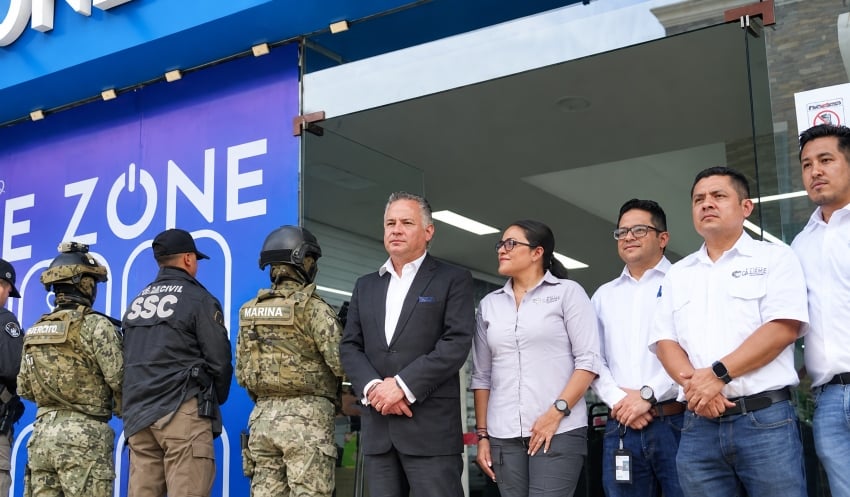
Authorities raided Friki Plaza, Fan Center and Plaza Meave, all located in the Historic Center and serving the capital’s gaming, anime and manga communities, on Sept. 29 in a sting known as “Operación Limpieza.”
Mexico City removes all street vendors from its Historic Center — for now
According to El Universal, the enforcement action targeted 15 stores across the three plazas and netted 477 products valued at more than 1.2 million pesos, including video games, consoles, accessories and collectible figures.
The operation was carried out by the Naval Ministry (SEMAR), the Citizen Security Ministry (SSC) and the Mexican Institute of Industrial Property (IMPI).
Aside from the obvious copyright infringement and intellectual property rights issues, authorities warned that some counterfeit products could carry health and safety risks, since they don’t undergo the same quality assurance processes as commercial products.
“The commercialization of counterfeit products can affect those who develop and produce original goods, distort competitive conditions, and create risks for consumers, who may purchase products without guarantees of origin, quality or safety,” IMPI said in a statement. “Therefore, monitoring and verification actions are part of the institutional work to promote respect for intellectual property rights and contribute to a legal commercial environment.”
Operation Limpieza is something of a catch-all term for the Mexican government’s attempts at combating counterfeit goods and piracy. A similar operation was carried out in Coahuila in December 2024, while several more targeted Mexico City and the state of México in May 2025.
Drew Pittock serves as Mexico News Daily’s features director. He is based in Mexico City. Have an idea for a feature story or unique event in CDMX? Send an email to drew.pittock@mexiconewsdaily.com.
