


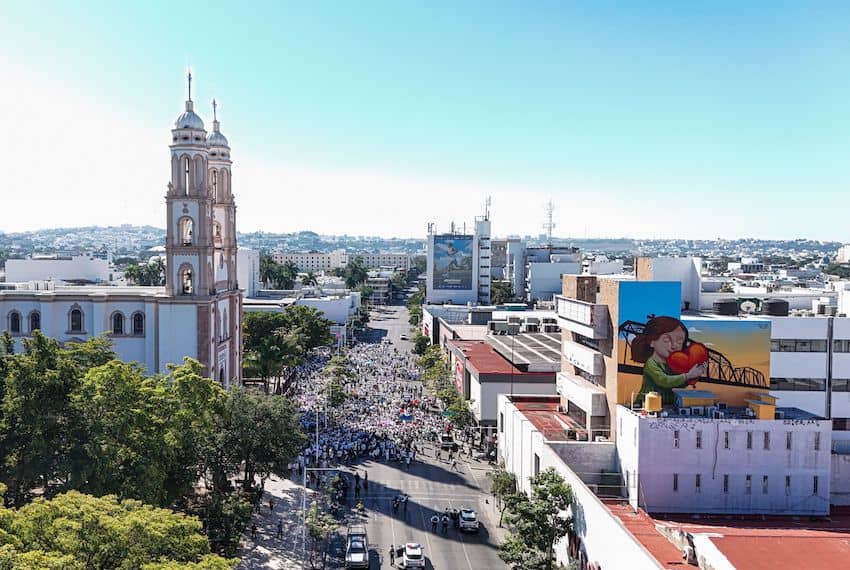
Insecurity and adverse weather conditions have wrought havoc on the economy of Sinaloa, a state where rival factions of the Sinaloa Cartel have been engaged in a bloody battle since 2024.
The economy of the northern state contracted 4.5% on a quarter-over-quarter basis in the first three months of 2026, the national statistics agency INEGI reported last week.
Among Mexico’s 32 federal entities, 20 recorded sequential contractions in the first quarter of the year, but Sinaloa’s economic result was easily the worst. On an annual basis, the northern state’s economy contracted 1.2% in the first three months of 2026, Sinaloa’s worst first quarter result since 2021.
Adriana García, economic analysis coordinator at the Mexico City-based think tank México ¿cómo vamos?, told the newspaper El Universal that the poor economic results in Sinaloa are mainly due to insecurity. Violence has dampened investment in the state and stifled the opening of new businesses, she said.
“Insecurity hinders economic activity,” García told El Universal.
Cristina Ibarra, president of the Mexican Federation of Collegiate Economists, also said that Sinaloa’s poor economic performance is linked to insecurity.
“The economic recovery strategy in Sinaloa simply hasn’t worked. Companies look for the best way to remain open, but there are a lot of disruptions caused by insecurity,” Ibarra told Espejo, a magazine based in state capital Culiacán, a city considered unsafe by more than 90% of residents, according to a recent INEGI survey.
The main cause of insecurity in Sinaloa is the ongoing feud between Los Chapitos and Los Mayos, rival factions of the Sinaloa Cartel, the largest and most powerful drug trafficking organization in the Western Hemisphere, according to Insight Crime.
A long-running battle between the two factions intensified in 2024 after Ismael “El Mayo” Zambada was kidnapped by Joaquín Guzmán López, forced onto a private plane and flown to the United States, where both Zambada and Guzmán were arrested.
Zambada was the leader of Los Mayos, while Guzmán López, a son of convicted drug lord and Sinaloa Cartel founder Joaquín “El Chapo” Guzmán Loera, was a leader of Los Chapitos along with three of his brothers.
The “war” between Los Mayos and Los Chapitos has claimed well over 2,000 lives and caused the disappearance of thousands more people since September 2024.
In addition to causing the Sinaloa economy to tank in the first quarter of this year, data shows that the cartel-related violence has affected employment in the northern state. Sinaloa shed almost 27,000 formal sector positions in the first half of 2026, the biggest loss of jobs among the 32 federal entities. As a result, the state’s informal economy has been growing rapidly.
“Establishments are closing or reducing their operational personnel due to insecurity,” García told El Universal.
“… Better security results are needed so that sinaloenses can return to their normal activities,” she said.
In the first six months of 2026, Sinaloa ranked as the fourth most violent state in Mexico in terms of total homicides, with 633, even as murders declined 28.3% annually in the state.
In early May, Sinaloa Governor Rubén Rocha Moya decided to go on leave after he and various other officials were formally accused of drug trafficking by U.S. prosecutors. Three months later, Rocha hasn’t returned to the job.
Sinaloa primary sector contracts 16.6% annually
INEGI’s data shows that the primary sector in Sinaloa contracted 16.6% in annual terms in the first quarter of 2026. The secondary sector grew 5.2% while the tertiary sector expanded 0.8%.
“There was a lot less production in the state due to weather-related issues [including drought],” Jesús Rojo, president of the Sinaloa Confederation of Agricultural Associations, told the Espejo magazine.
“Not just in corn,” Rojo said. “In the mango sector, the orchards didn’t bloom sufficiently.”
While drought conditions have recently eased in Sinaloa, around one-quarter of the state’s territory remains abnormally dry, according to the National Water Commission.
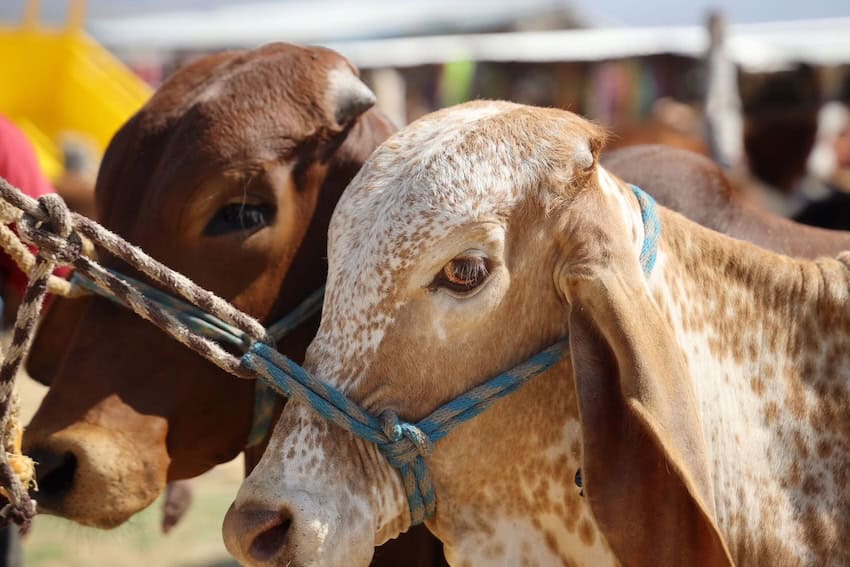
Jesús Márquez Rojas, a research economist and assistant vice president with Banamex, told El Universal that beef production in Sinaloa is also down. In addition, high prices for tomatoes in early 2026 had an adverse impact on producers in Sinaloa, he said.
A decline in agricultural production levels in Sinaloa — nicknamed el granero de México, or Mexico’s breadbasket — affects other parts of the state’s economy, including the transport and packing industries.
How are other state economies performing?
Only 12 of Mexico’s 32 federal entities grew in the first quarter of 2026 compared to the final three-month period of 2025.
They were:
- Colima: +3%
- Michoacán: +1.7%
- Baja California Sur: +1.6%
- Durango: +1.2%
- Tlaxcala: +1%
- Guanajuato: +0.9% (Guanajuato is Mexico’s most violent state in terms of total homicides)
- Chiapas: +0.7%
- México state: +0.7%
- Hidalgo: +0.5%
- Puebla: +0.5%
- Yucatán: +0.4%
- Tamaulipas: +0.3%
The 20 entities that recorded quarter-over-quarter contractions in the first three months of 2026 were:
- Sinaloa: -4.5%
- Oaxaca: -3.1%
- Mexico City: -2.9%
- Zacatecas: -2.4%
- Tabasco: -2.1%
- Nayarit: -2%
- Quintana Roo: -1.9%
- Chihuahua: -1.8%
- San Luis Potosí: -1.4%
- Nuevo León: -1.3%
- Coahuila: -1.2%
- Jalisco: -0.8%
- Morelos: -0.8%
- Veracruz: -0.7%
- Guerrero: -0.7%
- Querétaro: -0.6%
- Campeche: -0.6%
- Baja California: -0.5%
- Aguascalientes: -0.2%
- Sonora: -0.1%
The Mexican economy as a whole contracted 0.6% in the first quarter of the year compared to the October-December period of 2025. The economy grew 1.5% sequentially in the second quarter and 2.1% on an annual basis.
On an annual basis, Hidalgo was Mexico’s fastest-growing state in the first quarter of 2026, its economy expanding 7.4% in the period. Tamaulipas ranked second (+5.4%), followed by Colima (+4%), Tabasco (+3.3%) and Puebla (+2.7%).
The state that recorded the worst economic result in annual terms in the first quarter was Campeche, where GDP fell 5.2%. The next worst results were in Coahuila (-4.7%), Morelos (-3.1%), Quintana Roo (-2.9%) and Oaxaca (-2.8%).
With reports from El Universal and Revista Espejo
