


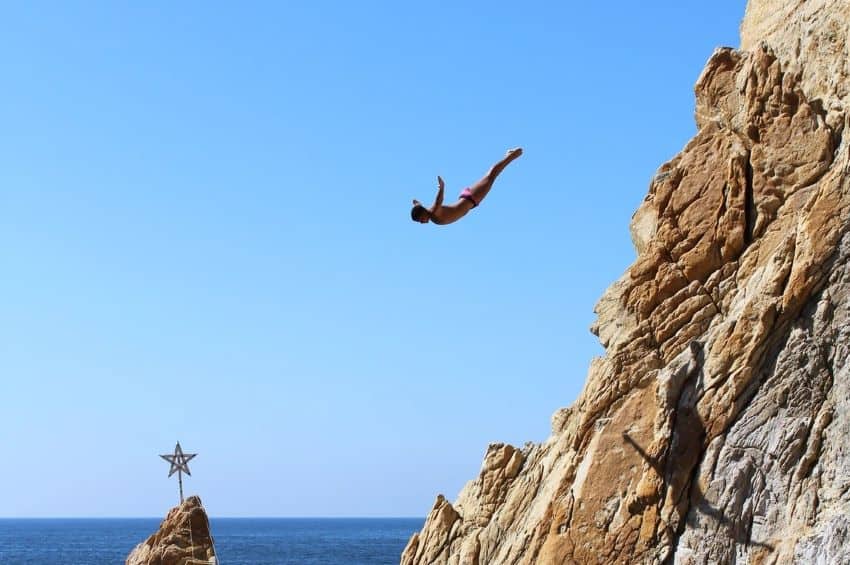
There was a time when Acapulco was better known abroad than Mexico itself.
After the 1959 Cuban Revolution, the world’s playboys made the city their party home. Everyone who was anyone wanted to be there. Frank Sinatra, Cary Grant and Johnny “Tarzan” Weissmuller were among the stars who bought homes in the city, with sparkling views over the golden beaches of a picture-perfect horseshoe bay.
Even in otherwise closed-off countries like China and the Soviet Union, people knew of Acapulco, largely thanks to a film, Paramount’s “Fun in Acapulco,” starring Elvis Presley and released in 1963.
However, behind the glitz and glamour of the global glitterati, something more humble and, quite literally, down-to-earth was making waves in Acapulco.
The arched diver of Acapulco
The symbol of Acapulco was, and still is, the silhouette of an arched figure diving from a cliff, pictured on everything from the city’s buses to its street signs.
It’s a dive from the towering cliff of La Quebrada, just a 10-minute walk from Acapulco’s cathedral, that provides the grand finale of the Elvis musical. Moisés García Flores, who died four years ago at the age of 88, served as the rock and roll legend’s double, performing a spectacular swan dive into the narrow, shallow channel of water.
That’s how millions of my generation, especially in Europe, came to know Mexico. The only rival image came from Hollywood westerns, where Mexico was the place to escape to, equal parts lawlessness and romance.
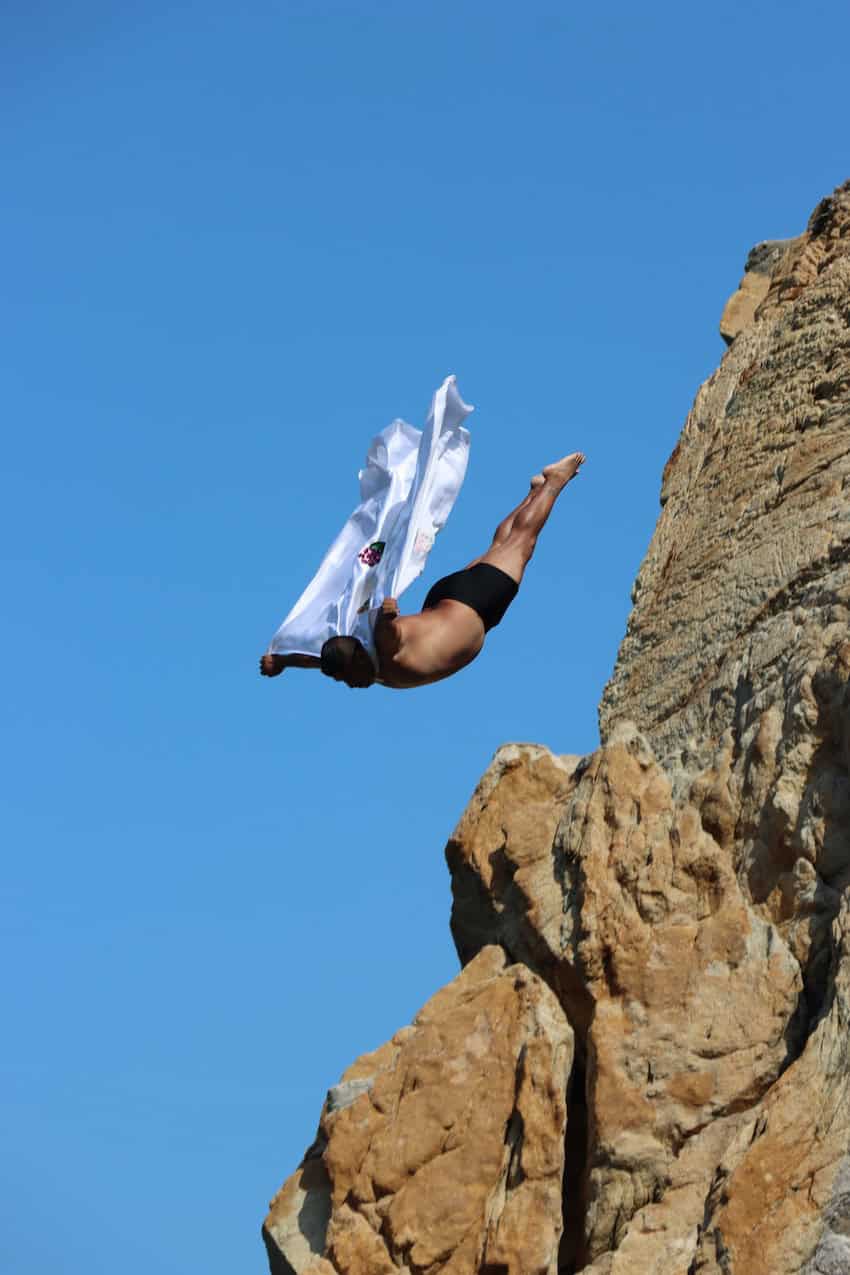
This was Acapulco’s golden age, celebrated again and again on the silver screen.
For decades the saying went that you hadn’t even been to Acapulco unless you’d seen the cliff divers, or clavadistas, of La Quebrada — they were that integral to the resort’s allure.
Everyone wanted to catch a glimpse, from Elizabeth Taylor and the Shah of Iran to the Apollo 11 astronauts, who were photographed shaking hands with the “world-famous Acapulco cliff divers” shortly after their historic moon landing.
Acapulco cliff divers receive Guinness World Record for completing 5 million head-first dives
Capturing the human story behind the spectacle
Now, for the first time, a new documentary captures the cliff divers as they see and understand themselves. In just 23 minutes, it captures with grace and honesty their inner lives, their struggles, their prayers, fears and hopes.
Co-directed by Víctor Rejón and Irving Serrano, “Las Voces del Despeñadero” (“Voices from the Abyss”) is an extraordinary work about life, death, courage, legacy and the human condition — with not a single tourist in sight.
It achieves on film much of what I attempted in my book, “Heroes of the Pacific: Entering the World of the Clavadistas of Acapulco.” That is, shifting the focus to the stars of the renowned spectacle, and to relay the individual voices and opinions of brave and remarkable people whom nobody had cared to listen to before.
“Las Voces del Despeñadero” has already racked up several accolades, including Best Documentary Short at Los Angeles’ HollyShorts festival last year. Perhaps more importantly, it won Mejor Cortometraje Documental at the 68th Ariel Awards — Mexico’s Oscars — held in Mexico City on Oct. 3.
‘¡Me aviento!’
The film begins with nothing more than sound. But it’s the sound the divers hear all their lives, the elemental roar of the Pacific Ocean. According to Rejón, the sound design is layered with the sonic texture of volcanoes, earthquakes and wind “to create an effect of respect and fear.”
From there, the opening shot forces the viewer to stare down a chasm, into the heaving waters of La Quebrada’s channel. This is what the clavadistas see as they risk their lives five times a day for the enjoyment of tourists.
It’s even more frightening than we might imagine, because the dive is far from vertical, impeded by large, looming rocks.
Then comes the human element — a bare foot perched on the edge of the cliff, naked and vulnerable, followed by voices:
“El cuerpo contra el viento.
El azote en aspaviento.
“Me quedo sin aliento
cuando el abismo enfrento.
“¡Me aviento!”
(The body against the wind, / The onslaught, in a flurry, / I am left breathless / when I confront the abyss, / I throw myself!)
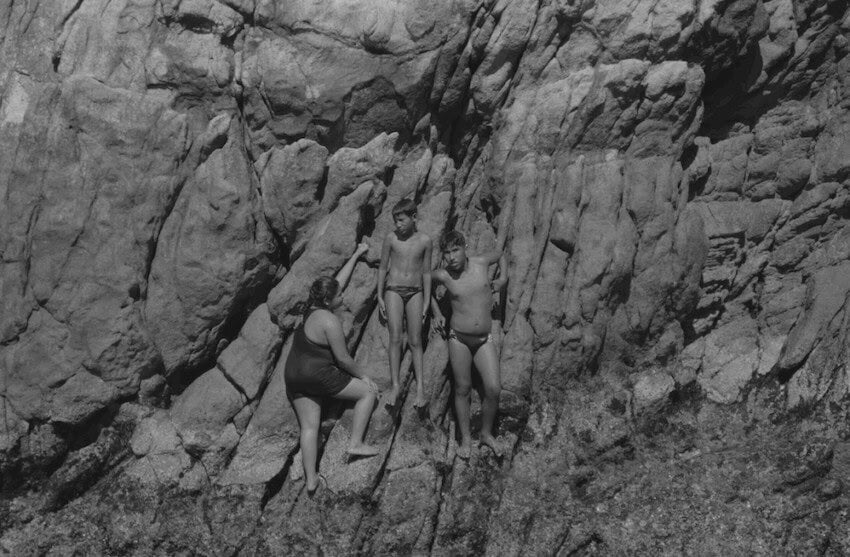
The lines, recited in turn by at least 10 different clavadistas — including a girl — with their recognizable costeño (coastal) accents, come from a poem by Bernardo Fuentes, which gives the film its title.
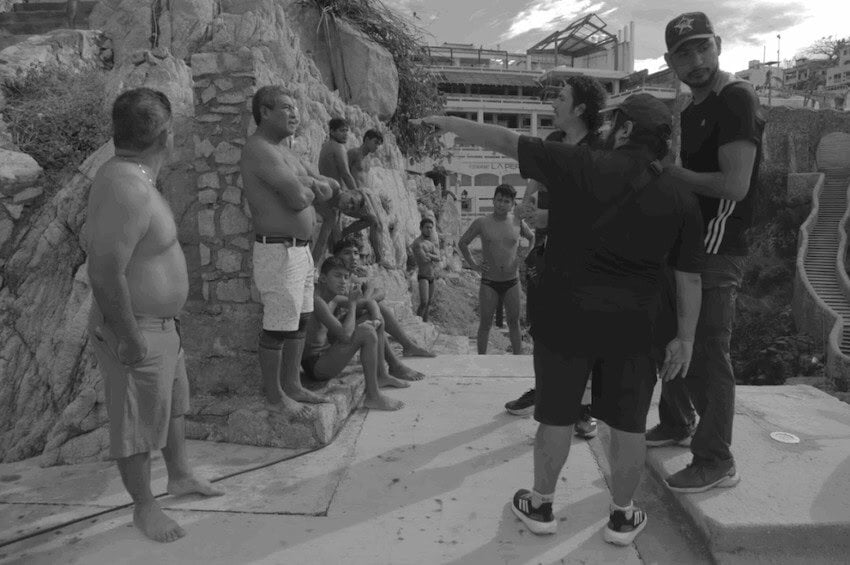
The next scene takes us into the shadows of the clavadistas’ changing room — another place outsiders never enter — where the divers describe how they came to join this dangerous and poorly paid profession.
Without sentimentality or grandiosity, we hear snippets about their family lives and the injuries they have suffered: Germán, who went deaf and could not afford hearing aids for nearly three years; Gustavo, who almost lost his life when the impact of a dive twisted his intestines so badly that he needed multiple surgeries.
We learn how they have struggled to recover, or were forced to adapt to the consequences.
It was hearing about such injuries — perforated eardrums, detached retinas and blindness, internal organs damaged when elbows are driven inwards by the impact — from veteran cliff diver Ignacio Sánchez in November 2004 that punctured my image of the sport’s Hollywood glamour.
It set me on a path of chronicling the long history — 92 years this month — of this rare community, while seeing their city, their country and the world through their eyes.
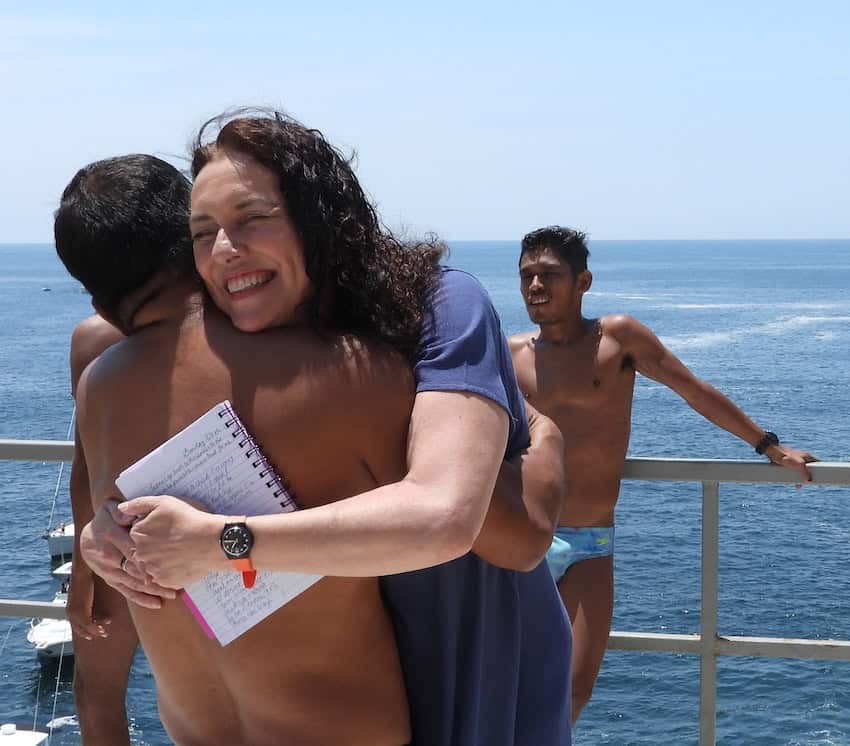
At that time, the show was something everyone knew of. However, nobody knew anything about the divers themselves.
The paradox of being simultaneously visible and invisible runs deep. Some of the well-heeled in Acapulco were shocked that I went to the veterans’ homes, and that my children played with their grandchildren.
One prominent restaurant owner grumbled to me that “the clavadistas don’t deserve your book.”
This was when the cliff divers were protesting, I’m happy to say, effectively, over their earnings from the show. I learned then how isolated they were, and it motivated me all the more.
“Personally, I believe in documentary as a model of social intervention,” Rejón told me.
He and Serrano, whose family is from Guerrero, are proud that the cliff divers feel represented by the film.
“For us it was fundamental that they take ownership of their history.”
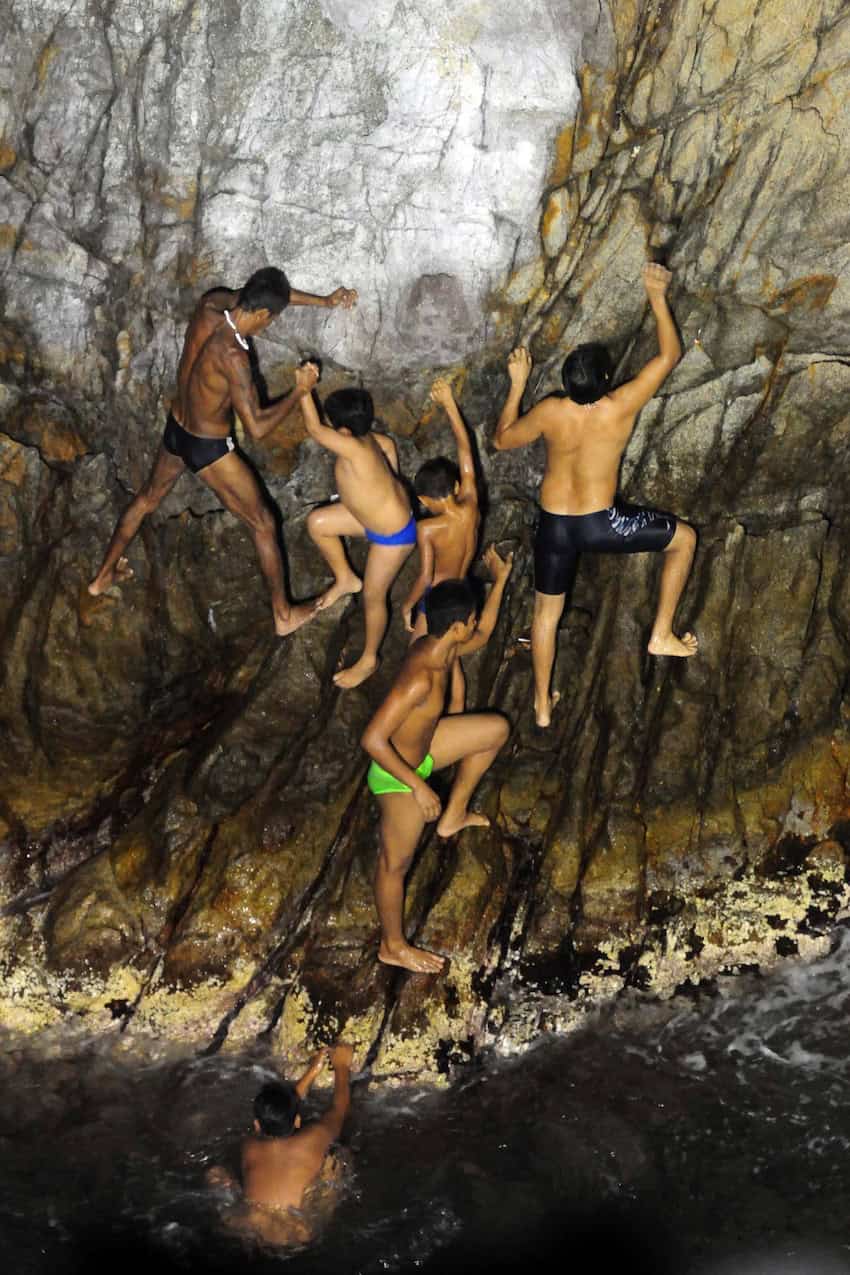
Leaving behind something heroic
Rejón told me he wanted the film to be a place “where the community can see itself reflected and rethink its own history.”
Perhaps more importantly, however, he wanted it to spark young people’s interest “so that this tradition would not be lost.”
It’s that sentiment that makes up the end of the film.
Tadeo, one of the child divers, says he wants to leave behind “something heroic… the courage I once had.”
Likewise, Gustavo Gatica Goroztieta, president of the Asociación de Clavadistas Profesionales de La Quebrada, describes the younger cliff divers as “the seed we are leaving in the ocean” and his “inspiration.”

However, independent of their continued efforts, there have been moments when the tradition was nearly lost to time.
In the aftermath of 2023’s Hurricane Otis, the chronic precarity of the divers’ lives was pushed to the limit when tourists, on whom they depend, could no longer visit the devastated resort.
This followed roughly 20 years in which Acapulco had been branded too dangerous to visit, through repeated U.S. government warnings and countless documentaries about drug cartels.
‘Don’t expect sanity’
Fuentes’ poem closes with the line “No le exijas cordura a quien ha escuchado las voces del despeñadero,” or “Don’t expect sanity from those who have heard the voices of the abyss.”
I asked Gustavo what it meant to him, and he echoed Don Peque, the veteran champion who told me years ago that only the insane face reality.
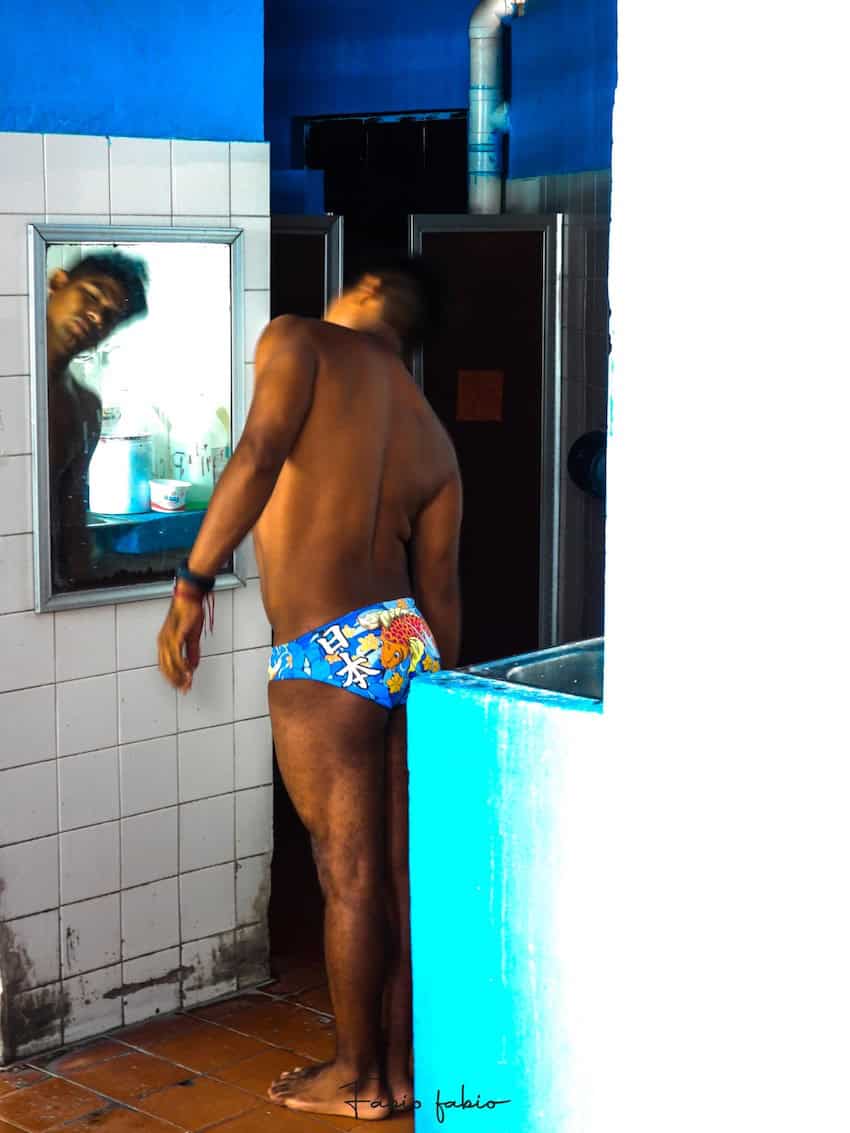
“Loco y valiente,” Gustavo said – crazy and brave.
“You have to be a bit of both to face the sea.” To know the consequences and dive anyway, he said, is itself a kind of madness.
Perforated eardrums, he added, are “the least of it,” and the challenges “will never end.”
And yet, the children keep climbing the rock, proud to follow in their forebears’ footsteps: heroes, in their turn, of a city that still needs them.
Barbara Kastelein has been a travel writer since 1997 when she began her first column “Travel Talk” for the Mexico City Times. She now divides her time between England and Mexico. Her audiobook, “Heroes of the Pacific: Entering the World of the Clavadistas of Acapulco,” is available to download for free.
