


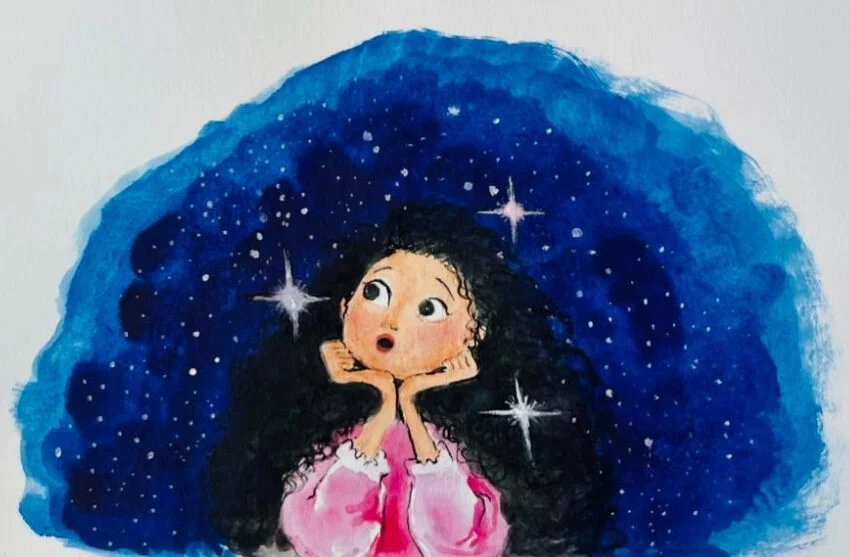
A couple of decades ago, I became fascinated by the concept of the “third place,” which Howard Schultz, then CEO of Starbucks, helped make popular. The idea came from sociologist Ray Oldenburg: a gathering place outside home and work. Maybe it was all marketing, but Starbucks wanted to define its cafés as neutral ground — a place to meet a friend, study or socialize without the usual expectations of home or work. Starbucks was never quite that place for me, but I remained fascinated by the concept. At the time, I interpreted it as a judgment-free space. As I grew older, the term stuck with me but I began to discover another meaning for myself — less about a place to go and more about the freedom to simply be. That is a feeling I have come to call “my third space.” Let me explain what I mean.
In the last few years, I’ve been thinking a lot about the concept in the context of belonging. I’ve always felt fortunate to have lived and worked in multiple countries, because it let me cherry-pick the best aspects and values from different cultures — and do so in a uniquely American way. Individuality is a value I’ve fiercely cherished, yet that same fierceness has made me feel more alone in recent years.
As the political divide has grown in the U.S., I felt I had to pick a political side to satisfy a psychological need to belong with a group of friends or family. As time passed, my identity became tethered to a party rather than to the values it claimed to represent. Social media compounded this, sorting everyone into ever-narrower boxes: age bracket, income bracket, zip code, follower count, which side of a hashtag someone landed on, or generational labels — Gen Alpha, Gen Z, millennials, Gen X, baby boomers, and I’m sure I’ve missed a few. It felt increasingly claustrophobic. Instead of feeling free to choose the values and characteristics that would nurture my own identity as a good human first — regardless of any other labels — I felt I had to fit into someone else’s box, under a category they had defined. Add geopolitical craziness and the current noise around artificial intelligence (AI), including claims that there is a 10% chance that AI will “kill all humans,” and I started feeling not only alone but increasingly anxious and hopeless!
So, I started reading books and listening to podcasts to figure out the root cause of this feeling and how to remedy it. I was already dedicating quality time to pursuing art but increasingly, I also found myself drawn to ancient history — Roman, Egyptian, Indian, Mesoamerican, just to start with. I noticed that exploring stories about ancient civilizations made me feel less alone. It felt soothing. Whether I was reading history or the myths woven through it, I was searching for common themes, a connection, a sense of belonging. There’s a timeless quality to such stories that reminds us of our own mortality and, paradoxically, makes us feel less alone in facing it.
Slowly, I found myself weaving these stories into my art through the use of icons, symbols and allegory. I started visualizing and composing art in my mind — integrating these concepts with my love and knowledge of art history and modern art, my reverence for the ancient craft of handwoven textiles, and my deep interest in astronomy and life sciences.
I have to admit that my current environment is what made all of this possible. Living in Mexico gave me the space I needed: regardless of nationality, identity, or age, I could simply live and let live. Maybe it helps to be geographically so close to the country I truly love and yet not feel so boxed in. Slowly, I began to understand that I wasn’t looking for a place where I could fit in. I was looking for the freedom to belong to something purposeful as I continue to grow as a person — my Indian heritage, my American values, and my old soul that keeps drawing me towards unfamiliar, ancient worlds — and perhaps to the wisdom and spirituality within them. Living in Mexico gave me the freedom to explore those connections, and painting became a medium to express that.
Allow me to show you what I mean, figuratively.
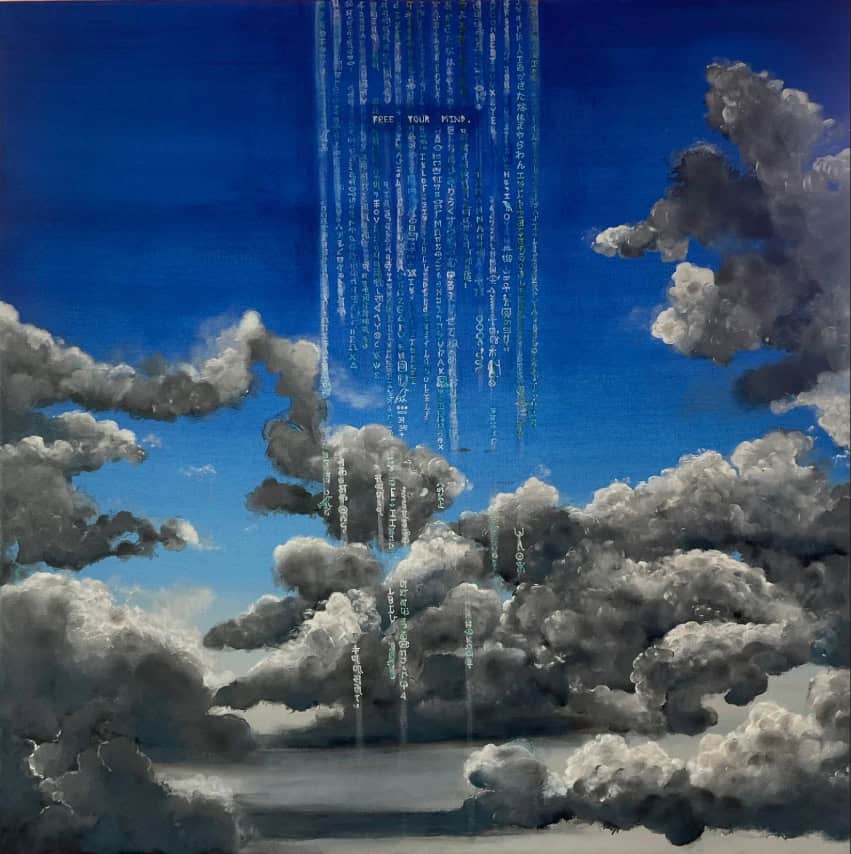
To create is human
Through trial and error, I have discovered that the antidote to my anxiety is not a massage or a spa day or a beach vacation (though they help from time to time) — it is creativity. Creating art in this way — finding connections between ancient cultures — has made me feel whole again, like I am part of something bigger. The more I paint, the more I realize how central creativity is to being human. That’s what my art is really about. There’s a narrative, a thought, a meaning behind every piece — observations, symbolic connections, and questions drawn from books and podcasts on history, archaeology, anthropology and astronomy. There are no political messages. Just a personal journey, trying to make sense of the world I live in today. Creativity is a process, not an outcome: It is a place where I lose my sense of time, immerse myself fully, get stumped, get frustrated, and still come out energized, rooted, grounded. In that space, I stop performing for others and follow my own curiosity.
Maybe that is why creativity makes me feel whole. I don’t have to settle into a single version of my identity. Pueblo life in Mexico, my American individuality, and the ancient civilizations that shape us all can coexist instead of competing. I can keep growing, changing, transforming — staying a “work in progress.” Creativity grants me that permission when society won’t. And while each painting begins with my own vision, it is also an invitation for the viewer to make it their own. You don’t have to see what I see or arrive at the same answers. That is the freedom I have found in my third space: I can be rooted in who I am and still have room to become someone new. Today, I am enough but I am not yet done growing.
A third space you can visit
That sense of wholeness — maybe even greatness — is exactly what I hope visitors feel walking through my upcoming show. If this speaks to you, please come see it in person: I have a collaborative exhibition with Mexican artist Miguel Cuauhtémoc called “A Pilgrimage Across Cultures,” running Nov. 1-15 at Galería Torres del Reloj in Polanco, Mexico City. Miguel grew up immersed in the symbols and rituals of ancient Mexico, and I grew up surrounded by the colors and deities of India. Separately, we both kept arriving at the same recurring image, the third eye, which we each use to explore higher consciousness. Neither of us knew the other was painting it until we saw each other’s work. That discovery felt like another kind of belonging — a connection we had painted before we had even spoken about it.
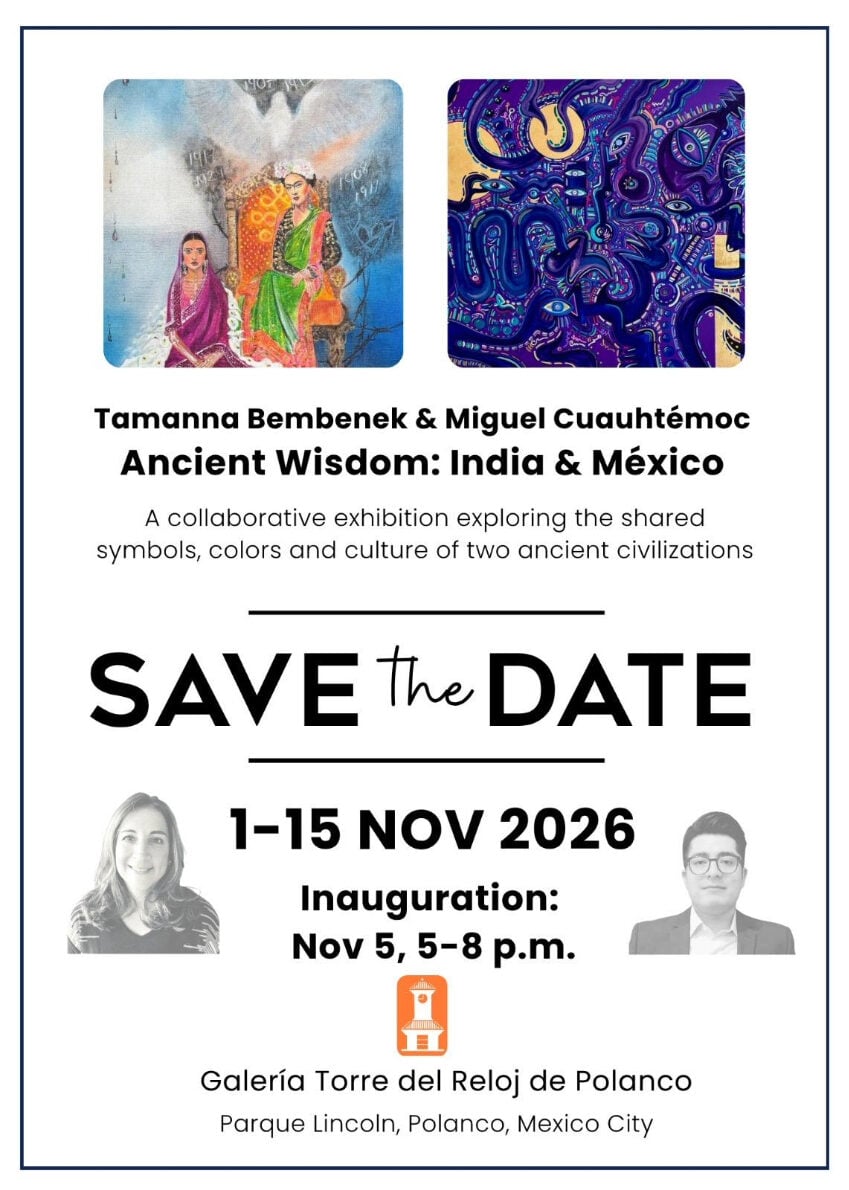
If you’re in town, please stop by and say hello. And if you’d like to browse the fuller portfolio first, here’s the link: www.tamannabembenek.com.
I’ve written about my personal journey at length elsewhere, if you want to read more:
Tamanna Bembenek was born in India, studied and worked in the U.S. and now lives in Mexico with her husband, Travis. They are the co-owners of Mexico News Daily.
