


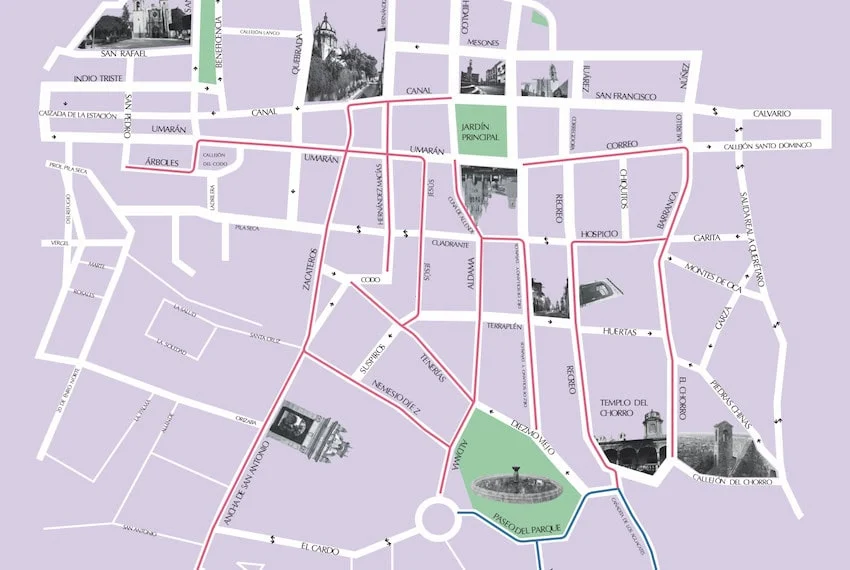
When Mexico News Daily recently asked how San Miguel de Allende can remain the “Best City in the World,” one recommendation stood out: improve the buses. That is an excellent, perhaps obvious, place to start — but it should not be the city’s only transportation priority. San Miguel’s larger challenge is deciding what kind of city it wants to become over the next decade and beyond, as well as what kind of transportation system will support that vision.
Transportation decisions shape far more than how quickly people travel. They affect air quality, noise, safety, neighborhood vitality, economic opportunity, public health and the simple pleasure of walking the streets. The most successful historic cities understand that transportation is not primarily about moving vehicles. It is about helping people reach the places they need or want to go to, while preserving the qualities that make a city worth living in and visiting.
If San Miguel is going to stay the ‘best city in the world,’ it has to up its game: A perspective from our CEO
San Miguel has already achieved something extraordinary. Residents and visitors enjoy walking its streets, lingering in its plazas, gathering in cafés and experiencing a vibrant public life. As the city grows, transportation investments should strengthen those qualities — not gradually erode them. That requires a different way of thinking. The question should not simply be, “How do we move more cars or buses?” It should be, “How do we help more people reach more places more easily, while making the city quieter, healthier, safer and more enjoyable?”
The city’s buses remain the backbone of mobility for thousands of residents and handfuls of visitors, connecting neighborhoods with schools, workplaces, markets, hospitals, churches and Centro. But today’s network reflects decades of incremental change rather than deliberate planning. Neighborhoods have expanded, employment centers have shifted and travel patterns have evolved. Tourists have grown in number and diversified in the variety of places they want to visit. Route redesign should begin with understanding how San Miguelenses, expatriates and visitors actually travel today. Rider surveys, passenger counts, GPS data, employer input and travel analysis could identify where people are going, when they travel and where the current system fails them. Bus service should reflect current travel patterns while avoiding unintended consequences — such as increased noise, congestion or safety concerns — that could diminish quality of life on particular streets or in specific neighborhoods.
The city should also consider whether a system focused primarily on Centro still reflects current demand. Direct cross-town routes connecting residential neighborhoods with employment centers, hospitals, schools and shopping areas could shorten trips without necessarily adding more buses. Frequent service on key corridors, coordinated transfers and reliable schedules may serve riders better than infrequent service spread across too many streets.
But better bus routes are not enough; the experience of using transit must also improve. Replacing aging diesel buses with quieter, cleaner electric or low-emission vehicles would reduce noise, improve air quality and make transit more attractive to everyone — not only residents who depend upon it, but also expatriates and visitors who often choose to drive because the system seems unfamiliar, unattractive or unsafe.
Making transit easy to understand is equally important. Clear route branding, well-designed stops, digital maps, QR codes, real-time arrival information and integration with Google Maps can transform uncertainty into confidence. The goal should be simple: riding a bus should feel as intuitive as taking a taxi.
As transit improves, the city has an opportunity to rethink its streets. Historic cities around the world have adopted Complete Streets — streets designed to accommodate pedestrians, transit riders, people with disabilities, deliveries and automobiles rather than prioritizing cars alone. Wider sidewalks, safer crossings, accessible design, better bus stops and carefully managed loading areas can allow transportation and public life to reinforce one another. Cities such as Copenhagen, Curitiba, Pontevedra and San Antonio have shown that giving more space to people can support local businesses, improve safety, reduce pollution and create more vibrant public places.
San Miguel already has examples of its own. Calle San Francisco near the Jardín illustrates how reducing automobile traffic can transform a street from a transportation corridor into a destination. As public transportation improves, the city should identify additional streets where pedestrian activity already exceeds automobile demand. This should lead to identifying opportunities to expand pedestrian-priority corridors while maintaining access for residents, deliveries and emergency services.
Parking should also be part of the discussion. Building more parking rarely solves congestion and often encourages more driving. A better strategy would be to develop mobility hubs at strategic locations outside the most constrained parts of the city. These facilities could combine parking with frequent transit, bicycle parking, taxi services, visitor information and public restrooms. Commuters into and visitors to the city could leave their cars once and continue their journey without adding traffic to the historic center.
Over time, the hubs might also connect with low-speed, electric, autonomous circulators. Pilot programs around the world are testing autonomous shuttles that connect transit stops, pedestrian districts, shopping areas and major destinations. They would not replace buses, but they could eventually provide another option for reducing automobile dependence while preserving San Miguel’s pedestrian character.
None of these ideas requires overnight implementation. The city could begin with demonstration projects: one redesigned bus corridor, a small fleet of cleaner vehicles, improved passenger information, a mobility hub, a temporary pedestrian-priority street or others. Pilot projects allow residents, visitors, businesses, existing transportation providers and public officials to see what works, identify unintended consequences and make adjustments before committing to larger investments.
How can progress — and ultimately success — be measured? Traditionally, this begins with a baseline needs assessment, followed by continuous monitoring as initiatives are implemented. Success can then be evaluated by whether workers can reach jobs more easily, children can travel to school more safely, neighborhoods become quieter and more livable, businesses become more vibrant and more people choose to walk, use public transit or spend time in the city’s public spaces.
San Miguel’s transportation decisions over the next decade will determine whether it becomes more congested — or more livable. Cleaner buses, smarter routes, Complete Streets, expanded pedestrian districts and mobility hubs are not separate projects. They are pieces of a single vision for preserving what makes San Miguel extraordinary. The world’s most admired historic cities are not remembered because they accommodated the most automobiles. They are remembered because they created places where people want to live, work, visit, and resettle.
San Miguel is already one of those cities. Now it has the opportunity to build a transportation system worthy of that distinction.
Johanna Zmud and her husband, Carlos, owned a transportation research consultancy in the U.S. They now live in San Miguel de Allende, where they own and manage a boutique hotel. Johanna continues transportation consulting.
