


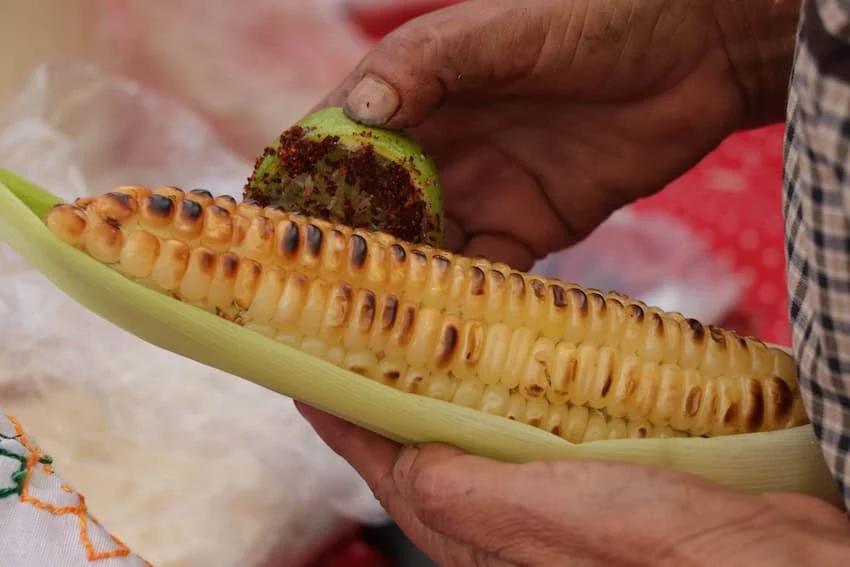
For roughly four decades, Don Pedro’s alarm has gone off at 3 a.m., Monday through Friday.
Aiming to leave his home in Atlacomulco, in northwestern México State, by 4:30 a.m., that’s just enough time for the 54-year-old elote vendor to get ready and pack up his car before making the three-hour commute to Central de Abasto in Mexico City’s southern Iztapalapa borough.
Here, Don Pedro stocks up on everything he needs to operate his traditional elote cart for the day: mayo, grated cheese and ground chili peppers — both hot and mild.
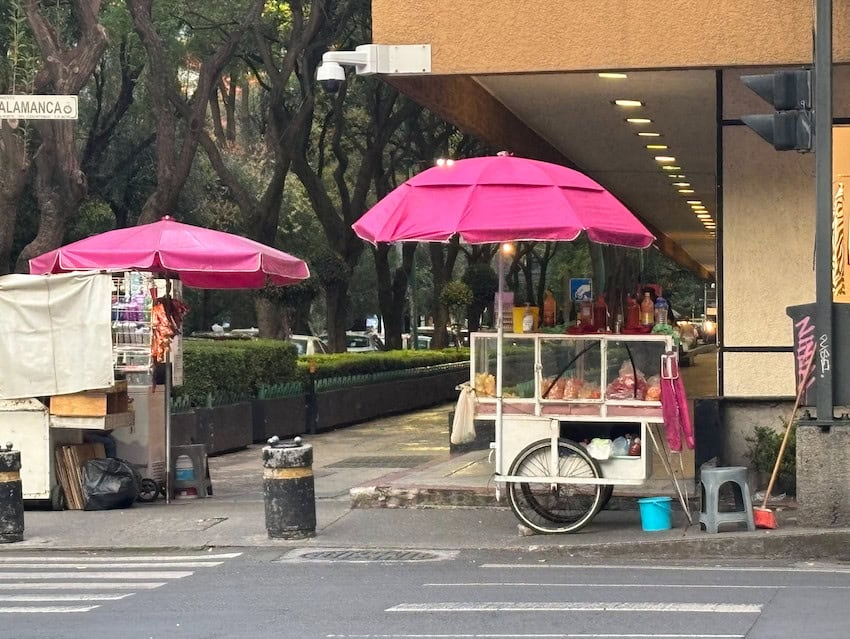
With his ingredients in tow, Don Pedro drives another three hours to the corner of Avenida Ámsterdam and Avenida Michoacán in Mexico City’s well-to-do Condesa neighborhood, the same corner he’s operated on for 40 years.
A family business
Don Pedro always knew he wanted to be an elotero, a traditional corn vendor in Mexico City. Like his father before him, he wanted to be an entrepreneur — specifically in the Condesa neighborhood, back before it was trendy.
“I arrived here at age 13 to help my dad, and now, the business is mine,” Don Pedro tells me.
Together with his nephew, Jorge, the second-generation elotero spends about three hours cooking the day’s corn, setting up his stall and chopping limes, all the while watching passersby stroll along the sidewalk.
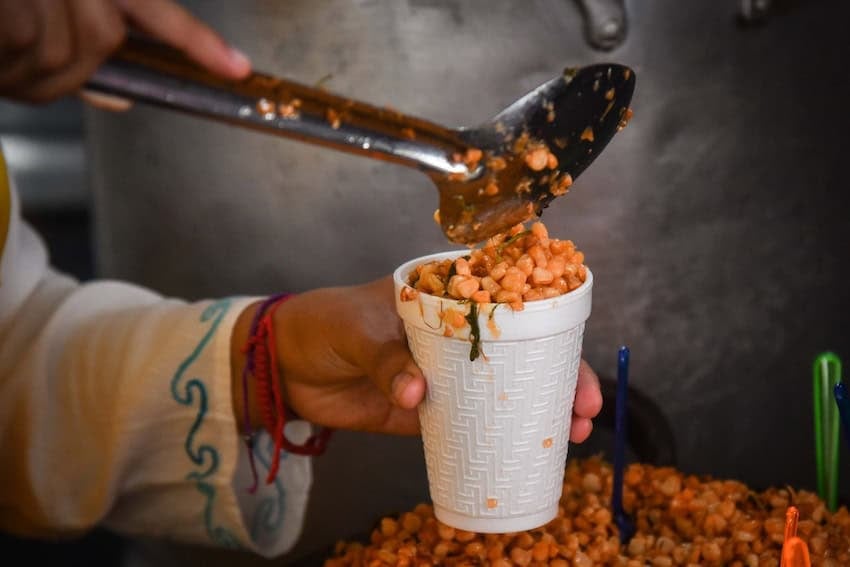
Sometimes, José, his only son, comes along. Just as Don Pedro inherited the corn-selling business from his father, he hopes José will similarly follow in his entrepreneurial footsteps.
For now, the family wants for nothing. Since Condesa became fashionable, the business “has grown a lot,” Don Pedro says proudly. When asked exactly how much, he laughs, avoiding specifics with a simple, “We’re doing very well.”
Condesa has long been considered the “darling” of Mexico City’s Cuauhtémoc borough. Even so, it’s vastly different from when Don Pedro started selling on his corner in 1985.
“It used to be pretty quiet,” he explains. “Now, I always have customers.” He pauses for a moment to sell a cigarette to a woman. She pays him 10 pesos and leaves.
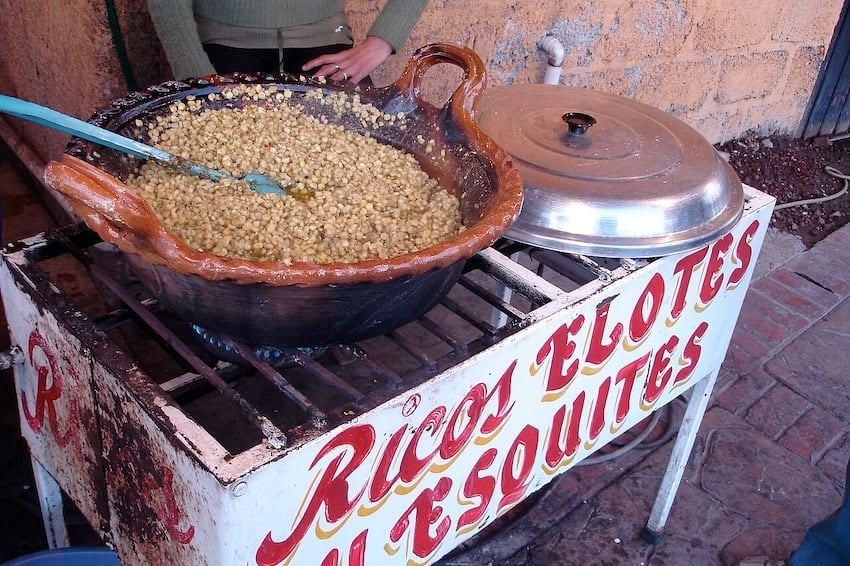
On a good day, a steady stream of customers waits to buy prepared corn, esquites and his fantastic Dorilokos — the perfect blend of various Doritos flavors, mayo, spicy sauce and corn kernels.
Although Don Pedro has his regulars, the crowds visiting Parque México just a few blocks from his stand constantly bring new faces. Even foreign customers try hard to make themselves understood, usually in the universal language of gestures and pointing.
“They even ask for the spicy chili,” Don Pedro says with a laugh.
Two economies inextricably linked
Don Pedro is just one of thousands of other street vendors who make the daily, round-trip six-hour commute from México State into Mexico City for work.
Together, they make up what’s called the “informal economy,” a hodgepodge of businesses and sectors that operate on the periphery of Mexico’s formal economy.
The International Labour Organization (ILO) recently defined the informal economy as “part of the market economy because it produces (legal) goods and services to be sold or for which another form of remuneration is received.”
But the organization added an important caveat: “They are not recognized or protected by legal and regulatory frameworks.”
The distinction has led some critics to accuse vendors like Don Pedro of evading taxes and state regulations, largely because they operate cash-only enterprises.
However, that glosses over a much larger issue.
According to an economic census produced by INEGI, Mexico’s national statistics agency, informal retail businesses in Mexico City account for 62.7% of commercial establishments, which in turn made up roughly 25% of the country’s national GDP last year. Likewise, more than 55% of Mexico’s entire workforce is employed in the informal sector.
“The informal and formal economies are part of the same mechanism,” says Dr. Yerko Castro, coordinator of the graduate program in social anthropology at the Universidad Iberoamericana (CDMX).
Put another way, they are not strictly separated, despite what Mexico’s tax system might suggest. Rather, “one feeds the other,” as Castro describes it.
The murky legality of the informal sector
It’s true that Don Pedro, like so many others in his industry, doesn’t accept bank transfers or card payments, meaning he doesn’t pay income or value-added taxes.
But that doesn’t necessarily mean it’s illegal.
According to the Federal Consumer Prosecutor’s Office (PROFECO), businesses may choose not to accept card payments or bank transfers. The office states that it is illegal to charge an additional percentage for transactions made via payment platforms, primarily because the “provider is required to clearly and visibly disclose the final price of the goods, products, or services offered to consumers.”
Viewed this way, operating a cash-only enterprise like Don Pedro’s is a strategy to save a percentage of sales that would otherwise be lost entirely.
What’s more, Don Pedro needs cash.
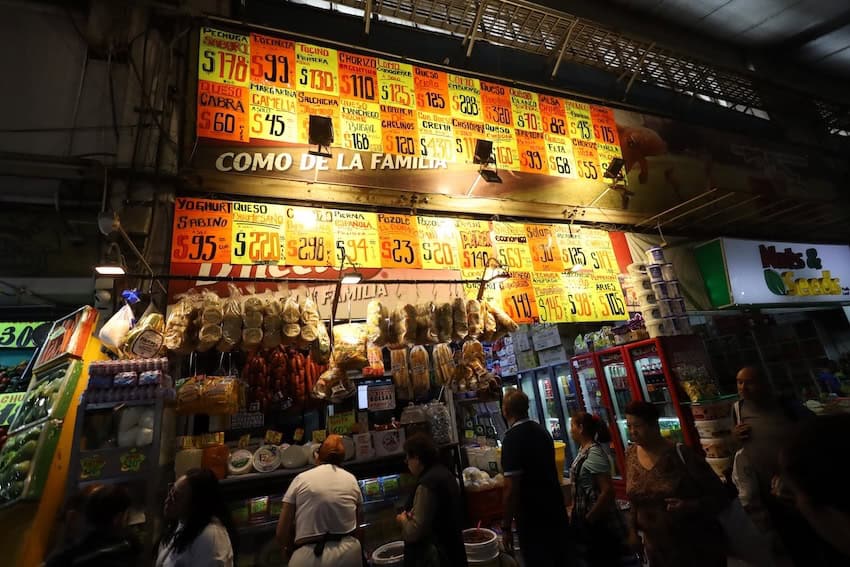
At the Central de Abasto, his suppliers don’t accept card payments or bank transfers, either. Consequently, he needs cash to purchase his supplies early in the morning.
This, despite the fact that Central de Abasto is one of the largest wholesale markets in Latin America — and certainly one of the most important in the capital — handling a daily volume of roughly US $24.6 million, according to Deutsche Welle.
It’s a self-perpetuating cash-only cycle that runs Mexico City.
More broadly, PROFECO does not classify the country’s informal economy as illegal in the strictest sense.
After all, street vendors like Don Pedro — or entrepreneurs selling clothing and other goods at street markets — are not selling illegal products. Serving food, offering cleaning or repair services, and not accepting bank transfers or card payments are practices permitted by Mexican authorities.
All told, it may constitute an administrative or tax violation, but does not rise to the level of a criminal offense.
At the same time, the worker does not enjoy any of the legal protections that would come with operating a formal business. To combat irregularities and provide some security for workers, the Mexico City government doles out permits for conducting business on public streets.
In practice, though, the application process, which moves through the authorities in each individual borough, is often restricted, subject to availability and a patchwork of regulations depending on location.
Between the system’s complex bureaucracy, the murky legal ground, and frankly, minimal knowledge that such permits even exist, many informal economy vendors continue to operate without one.
‘Ya nos la sabemos’
While carrying cash is becoming increasingly less common, people are willing to withdraw money to buy elotes and other Mexican street antojitos. That’s because the informal economy is stitched into the fabric of Mexican culture and everyday life.
“Ya nos la sabemos,” as we locals like to say. “We know the drill by now.”
Born and raised in Mexico City, I can confidently say that few pleasures compare to heading out just after nightfall to buy esquites for dinner. In fact, it is a quintessential experience for anyone living in the Mexican capital.
Mexico posts best jobs growth of 2026, but informal sector drives the gain
If it isn’t esquites, it’s tamales, pan de dulce de canasta, prepared potato chips from a street cart, or the countless other treats that make up the city’s informal food sector.
These are the experiences that carry significant emotional weight and form core memories, and the impact of businesses like Don Pedro’s cannot be overstated.
Aside from propping up the wider economy, as evidenced by the INEGI survey, these vendors are the glue that holds entire communities together. Come rain, thunder, lightning or wind, Mexico City’s informal retail trade supports a vast number of Mexican families, whether they be vendors or customers.
Simply put, these businesses are an integral part of the capital’s soundscape and cultural fabric, regardless of the moralizing debate over their formality.
Andrea Fischer contributes to the features desk at Mexico News Daily. She has edited and written for National Geographic en Español and Muy Interesante México, and continues to be an advocate for anything that screams science. Or yoga. Or both.
