


Stay informed with free updates
Simply sign up to the Oil myFT Digest — delivered directly to your inbox.
A worldwide shortage of motor oil is becoming more acute, with prices of the car engine lubricant reaching new highs, oil-change shops running dry and a US retail group rationing sales to do-it-yourself customers.
The surge in the cost of base oil used for the full synthetic motor oil required for many newer cars far outpaces steep price rises for crude oil, petrol and diesel. The US price of so-called Group III base oil has almost quadrupled since February to a record $12.45 a gallon on Friday, according to Argus Media.
Retail chain Costco Wholesale raised the price for 10 quarts of one type of full synthetic motor oil to $57.99 and is now capping purchases at one per customer, according to its website. The brand was selling for about $30 last year.
Walmart’s website this week reported low stocks for several brands. “We work closely with our suppliers to keep products available at the low prices our customers expect,” Walmart said.
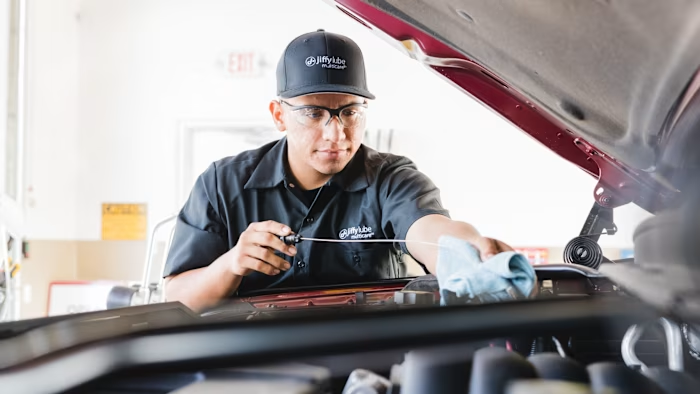
“There will be some spot outages that we have to just deal with,” said Mauricio Quezada, chief executive of Jiffy Lube, a US oil-change and auto-repair chain. Jiffy Lube was part of Shell until its $1.3bn sale to a private equity firm in July and still received most motor oil from Shell’s Pennzoil business, Quezada said.
Motor oil sells in small volumes but serves a critical function greasing the insides of internal combustion engines. Global lubricant base oil exports are typically only about 350,000 barrels a day, a fraction of the more than 100mn b/d world oil market.
Base oil supplies were first disrupted after an Iranian strike in March damaged a huge Shell gas-to-liquids plant in Qatar in retaliation for the US and Israel’s war against the Islamic republic. The plant is a leading producer of Group III base oil.
The military stand-off in the Strait of Hormuz has also hindered tanker shipments of crude oil from the Gulf to the world’s other major producers of base oils in South Korea.
The price rise comes as consumers bemoan a cost of living crunch driven by energy, food and housing.
New York-listed retail oil-change chain Valvoline, whose principal motor oil supplier is Saudi Aramco, said there had been no shortages at its almost 2,500 stores, but it has raised the price of an oil change by $5 to $7 to offset a 60 per cent increase in lubricant costs since March.
Asked at a Goldman Sachs retail conference this week where prices were headed, Valvoline chief executive Lori Flees said “higher”.
“You’re looking at four to six months once the strait is fully open for Group III base oils to be back flowing in the way that they were pre-conflict,” she said.
The situation is more difficult for independent shops and blending companies that lack long-term supply agreements with major oil companies.
Mike Tailor, the owner of Rapid Lube in the US state of New Jersey, said customers shook their heads when they saw the higher oil-change prices he had taped to the wall of his waiting room.
“It’s never been like this before. Not even when gas went to $5,” he said, referring to when US petrol prices hit a record $5 a gallon in 2022. He said obtaining his bulk supplies of full synthetic motor oil was “hit or miss”.

Greg Schmidt, the owner of a garage in New Jersey, pointed to an oil specification called Dexos that is required for newer General Motors vehicles. “It’s very hard to get right now,” he said.
“We’re closely monitoring the situation and working with suppliers and dealers to help ensure continued supply,” GM said.
For the blenders that buy Group III base oil, “if they have a contract with a supplier, in a lot of cases they are being placed on allocation, which means they don’t get the full amount”, said Holly Alfano, chief executive of the Independent Lubricant Manufacturers Association.
“And for those who don’t have a contract, they are struggling to get supply. They are calling around trying to find Group III and they are having a hard time finding it,” she added.
Carmakers have been attempting to turn to new blends of motor oil and lubricants in an attempt to ease the supply shortage. The American Petroleum Institute, which sets standards for the oil industry, said it had invoked emergency provisional licensing for vendors seeking to pivot to other base oil supplies.
But motor oil blenders have been unable to make the switch because of strict formulation and testing requirements for full synthetic oils, said John Dietrich, head of US base oils pricing at Argus Media.
Quezada said that despite scattered shortages, the product was at present available at all of Jiffy Lube’s almost 2,100 locations, most of which are owned by franchisees. “Customers can’t wait. They need to get their car serviced,” he said.
