


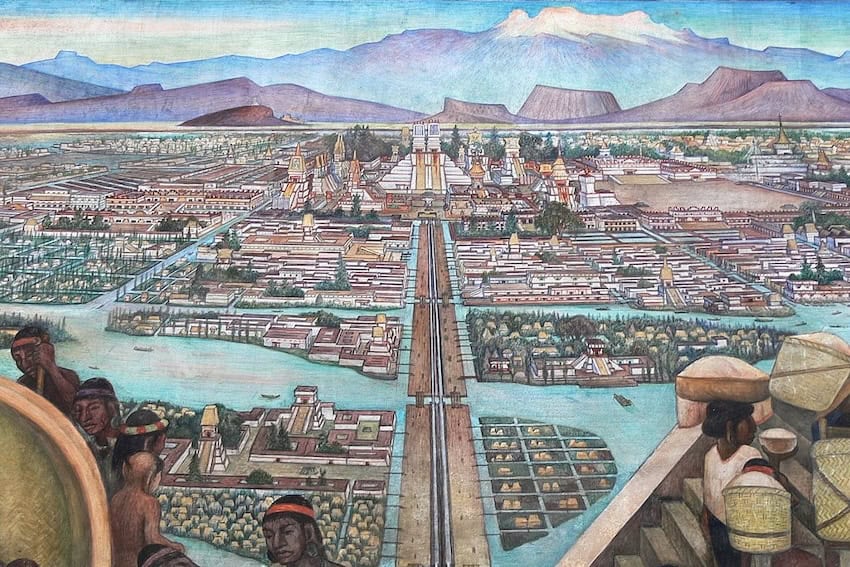
Discovering archaeological ruins along the Anillo Periférico ring road, seemingly out of the blue, is a quintessential Mexico City experience. These ruins make up Cuicuilco, a powerful ancient city that was destroyed by the volcano Xitle around AD 315.
Ancient ruins also pepper Mexico City’s Metro system. The Pino Suárez station is famous for the Pyramid of Ehécatl, which was built in honor of the Mexica (Aztec) god of the winds and sits in the middle of the station.
Cuicuilco, the Pyramid of Ehécatl, Templo Mayor, the most important religious and political center of the ancient Mexica city of Tenochtitlán, and countless other sites are a testament to how our pre-Columbian past has not abandoned us, despite the efforts of European invaders to eradicate our ancient roots.
However, it’s not all ancient ruins and significant archeological sites that harken back to those early days. Denizens of the capital continue to keep Mexica customs alive in surprisingly ordinary ways. These are some of the most iconic.
Grocery shopping at a traditional market
The joy of grocery shopping at a traditional Mexican market comes from embodying a living, centuries-old Mesoamerican tradition. Mesoamerica’s largest market was built in Tlatelolco, near the present-day Historic Center in Mexico City, around 1337. This became the main market that supplied the population of Tenochtitlán with all the products that could be imagined at that time, as documented by the Institute of Historical Research of the National Autonomous University of Mexico (UNAM).
Today, over 600 years later, markets and tianguis continue to be a form of social cohesion, where reminiscences of that Mexica past still resonate with the voices of the merchants.
Training your palate for Mexican spice
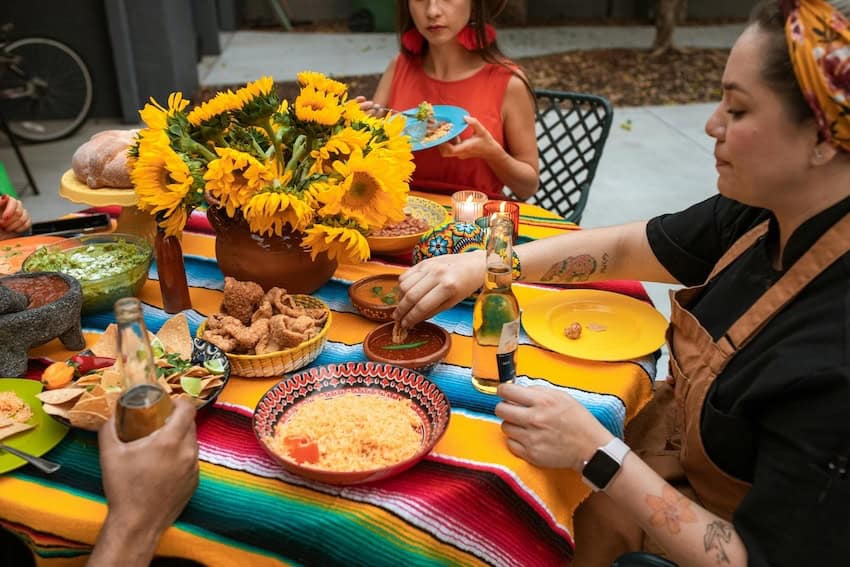
Every time a foreign customer orders non-spicy salsa at a taquería, the great Mexica goddess Tlatlauhqui Cihuatl Ichilzintli, the Respectable Lady of Chilis, cries in desperation. But she finds solace when those of us who have established a home in this country bathe our daily meals with anything spicy.

Hot peppers were a central part of Mexica cuisine and medicine and were even used to discipline unruly children. Whether it be a bowl of salsa verde at the table or sprinkling chile en polvo on freshly cut fruit, adding a spicy touch to whatever we eat is undeniably Mexica heritage, which we have kept alive in our eating habits.
Eating bugs, mushrooms and flowers
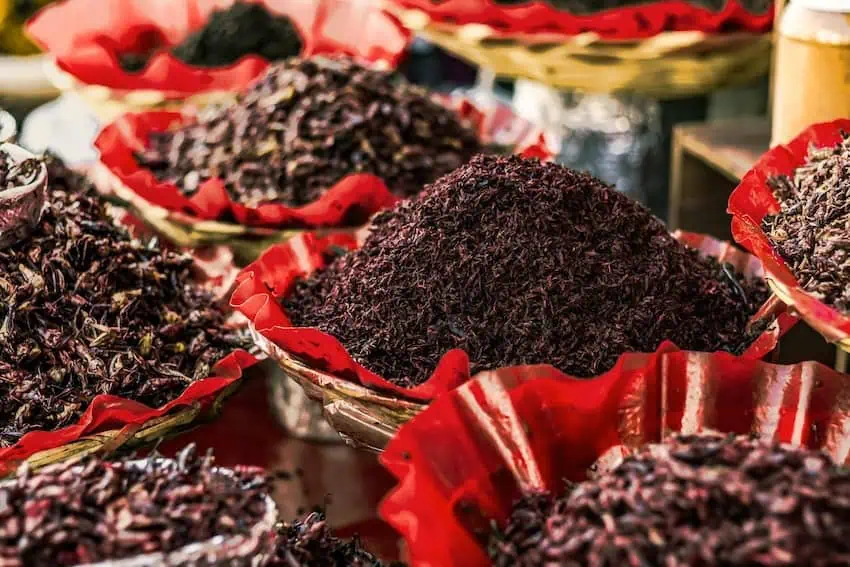
Chapulines? Escamoles? Gusanos de maguey? Yes! Crickets, ant eggs and worms were at the center of Mexica tables — and if you’ve ever had lunch at a tianguis, a taquero may have offered you one of these delicacies.
Before the arrival of the Spaniards, as documented by the Agriculture and Rural Development Ministry, more than 96 insect species were a fundamental part of Mexica cuisine. Today, even the most upscale restaurants in Polanco offer these delights.
However, you don’t have to eat anything previously alive to embody a living Mexica tradition. You can go veggie, as well! For example, eating mushroom quesadillas is a must at any mercado de antojitos. And of course, if you haven’t tried pumpkin flower tamales at Xochimilco, you’re absolutely missing out.
Including native corn in your daily diet
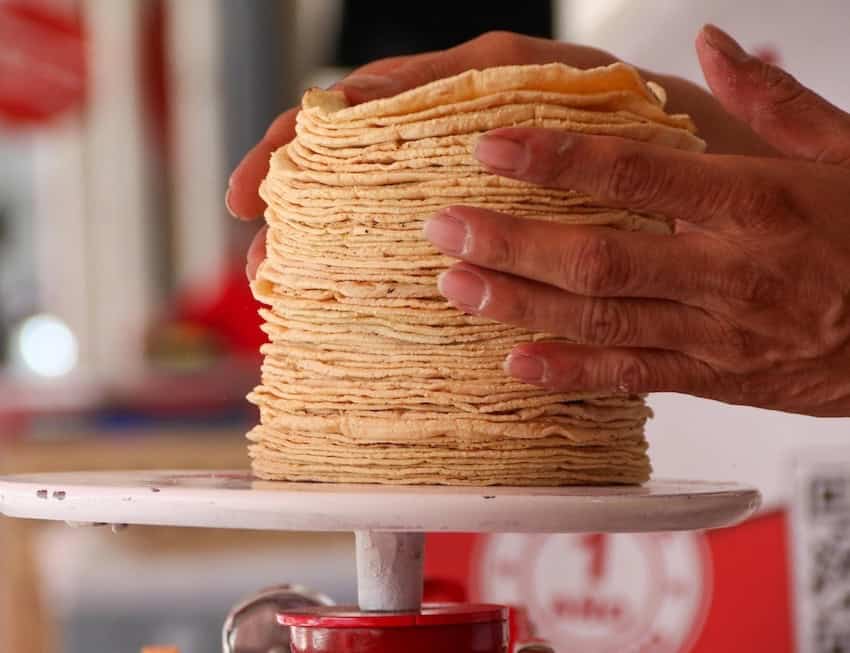
I can’t fathom a Mexican table without tortillas, which serve both as sustenance and cutlery. They are a key ingredient for main Mexican courses, with per capita consumption sitting at roughly 331 kilograms per year, according to the Agriculture and Rural Development Ministry’s 2018 figures.
And how could we not eat that many tortillas? Our land has nurtured some 67 different species of corn for over 10,000 years. Tortillas — “tlaxcalli” in Nahuatl — were a staple food as important for the Mexica and other ancient Mesoamerican cultures as they are for modern-day Mexicans.
Using a molcajete to pound grains, spices and veggies
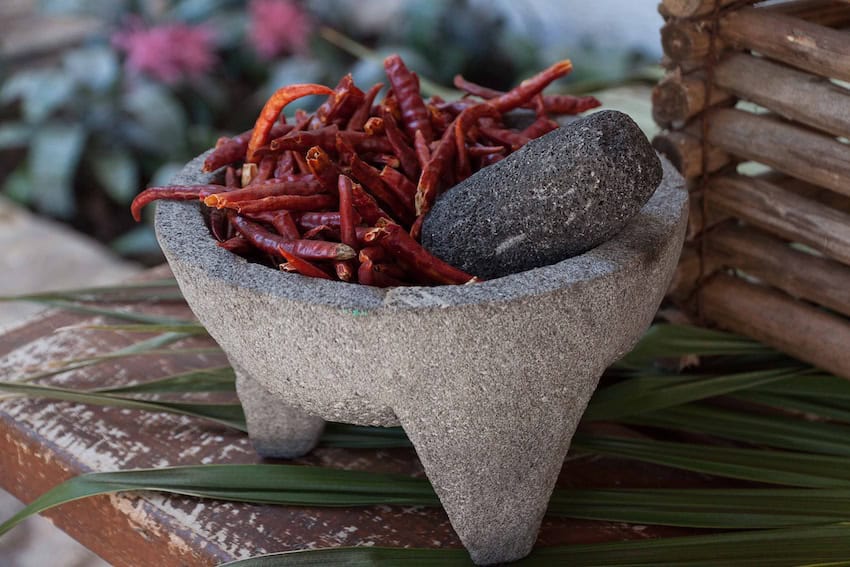
If you ever go to a fonda serving comida corrida, an establishment where you can have a three-course meal for less than 100 pesos, you’ll probably see the cook making their own salsa in a molcajete. The term comes from Nahuatl words “molli,” which means sauce, and “caxtli,” or bowl. “Mollicaxtli” therefore means the sauce bowl, as documented by the Ministry of Foreign Affairs (SRE). It’s often made of volcanic rock, and traditionally has the face of an animal — usually a pig — carved in the front.
If you live in Mexico and love to cook, a molcajete is a must-have kitchen item, especially if you’re into making your own spicy salsas. There is no bigger joy than smashing chilis and tomatoes against the pig’s volcanic back, and using the mortar to get the best of their juices.
That, too, is a Mexica tradition that Mexican households have kept alive — and will probably persist through the passage of time.
Andrea Fischer contributes to the features desk at Mexico News Daily. She has edited and written for National Geographic en Español and Muy Interesante México, and continues to be an advocate for anything that screams science. Or yoga. Or both.
