


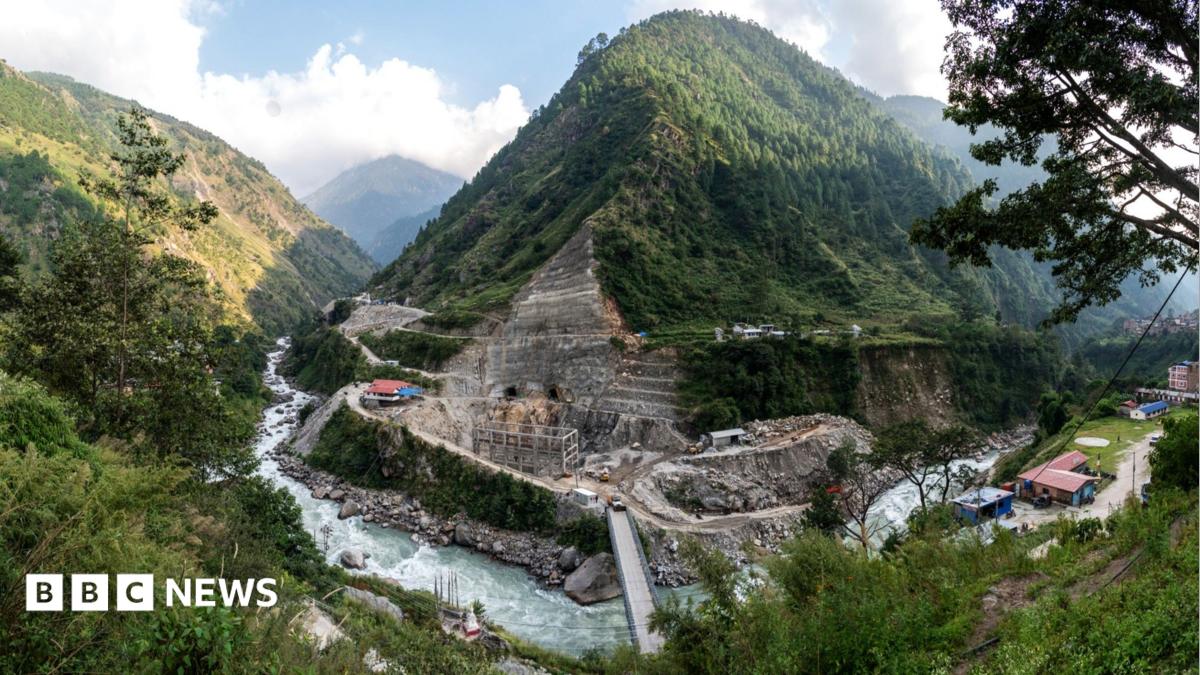
Hydropower continues to dominate large-scale investments in Nepal, and some climate activists say the funding has continued despite known disaster risks.
The Upper Trishuli-1 project, which has been all but destroyed after last week’s floods, was one of Nepal’s largest foreign direct investment ventures, valued at about $647m. Its backers include the Asian Development Bank (ADB) and the International Finance Corporation (IFC).
The Upper Trishuli 3A, which has also been severely hit, was funded by China’s Export-Import Bank.
Himanshu Thakkar, coordinator of the South Asia Network on Dams, Rivers & People, says international lenders were “acutely aware of the extreme danger to which they were exposing thousands of labourers, officials, residents, rivers, infrastructure and landscape”.
“Their own reports repeatedly highlighted it. But they did not take any preventive steps, did not demand stringent checks and balances, nor were they prepared for a calamity they knew could occur,” he says.
The ADB and IFC told the BBC the project design of Upper Trishuli-1 “reflected findings from independent technical assessments that looked at the risks of flooding and landslides affecting the project site, using studies of the glaciers and glacial lakes and historical evidence available at the time”.
The project’s early warning system was strengthened following a flood in 2024, they said, and further work to assess risks was taken out after another flood in 2025.
“The precise causes of the August 2026 disaster, the extent of the damage, the performance of the Project’s design, and protective measures including the early warning system, is being gathered and remains to be verified as well as assessed.”
The BBC has contacted the China’s Export-Import Bank for comment.
History has already shown the Trishuli River basin to be volatile, Thakkar says, pointing to how it had been hit by floods in the last two years. In September 2024, an unprecedented cloudburst over the Trishuli and Bhote Koshi river basins sparked flash floods in Rasuwa, Nuwakot and Dhading – settlements by the river that are also among the hardest hit from last week’s floods.
Then in July 2025, a glacial lake in Tibet’s Gyirong county burst and swept down this very same stretch of river into Nepal, killing at least 11 people. That flood damaged critical infrastructure and halted trade along the busy Nepal-China corridor. The border crossing was shut for nearly six months and had only reopened on 1 January this year.
Dhakal from the Nepal Electricity Authority admits that even if climate risk assessments were carried out correctly, “the designing of the plants may not have been done accordingly”.
“Clearly we will need to improve in the way we build and operate our hydropower plants,” he adds.
Private operators are already feeling the financial impact. Insurers have paid out around $40m for flood-related damage to more than 20 privately owned plants over the past three years, according to Uttam Bhlon Lama from the Independent Power Producers’ Association of Nepal.
He warns insurance premiums are rising significantly and making the cost of doing business “unfeasible”.
