


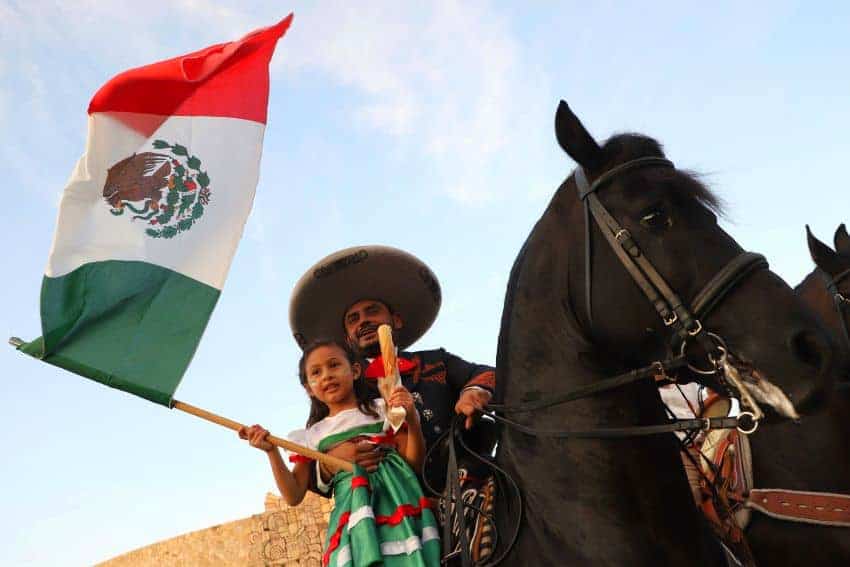
Charrería, Mexico’s national sport, is a unique competitive equestrian tradition deeply associated with Mexican identity. Mexico was home to the first cowboys, and the charro suit, since adopted by mariachis, remains one of the most iconic symbols by which Mexico is recognized around the globe.
Unlike popular traditions like Day of the Dead, which have deep roots in Indigenous heritage, charrería is a product of cultural syncretism. It emerged from the combination of European influences and native traditions. However, it also blended European fashion, ranching practices and local ingenuity, creating something distinctly Mexican.
Of all these influences, two stand out. The fashion preferences of Emperor Maximilian of Habsburg and the strong fibers of a plant known as henequén. While seemingly unrelated, these two elements shaped the ranching lifestyle of charrería and the competitive spirit that followed, producing a lasting legacy.
Let’s explore how a plant and an Emperor influenced one of Mexico’s most cherished traditions.
Henequén in Yucatán
“Perhaps the most important single local contribution to charrería is the henequén rope,” Chuy Mora, a third-generation charro in Guadalajara and founder of Entre Charros cultural experiences, told me. “Without henequén ropes, we wouldn’t have charrería as we have it today.”
Henequén is a strong, natural fiber extracted from the leaves of an agave plant native to the Yucatán Peninsula. Known as “ki” in the Mayan language, the native communities used henequén fibers to produce ropes and twine, among other goods.
The ropes used by the natives were stronger and lighter than those traditionally used in Europe, which were mostly made from local plant fibers like hemp and flax. While strong and flexible, they would break easily.

“Although rope had always existed, the materials were very weak, and the result was a weak and thin rope which was very difficult to wield,” Mora said.
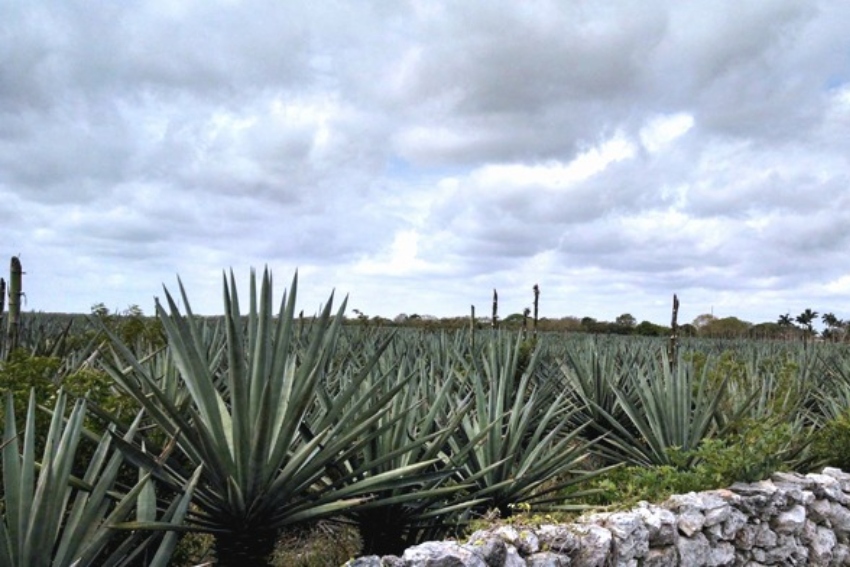
When the Spanish conquistadores arrived in Mexico and discovered the benefits of henequén, they established a large agro-industry around it. During the 19th and 20th centuries, it was exported in large quantities from Yucatán to the United States and Europe, to support commercial goods like sacks, bags and rugs — in addition to cords and ropes.
The effect of henequén on cattle ranching
Just as henequén ropes held ships steady on the high seas and tied down crops in the fields, they also supported the evolution of charrería. The cattle sector, in particular, not only benefited from henequén ropes but changed dramatically because of them.
“Henequén revolutionized cattle management because the rope wouldn’t break when roping an animal,” Mora pointed out. “It also revolutionized the saddle. From being made of straw or leather, they had to add a wooden frame that could withstand the rope tie. It revolutionized livestock farming worldwide.”
The suertes (“chances” or “luck”) charros perform in today’s charrería competitions, which replicate the techniques ranchers traditionally use to manage their cattle, were made possible by henequén. Without it, the skills charros use today to wield ropes wouldn’t exist.
“Thanks to henequén, ranchers developed new skills in handling the rope that were not possible before,” Mora said.
The popularity of henequén eventually decreased after synthetic fibers were invented in the 20th century. But its long-lasting impacts cannot be overstated.
Maximilian’s influence on the charro suit
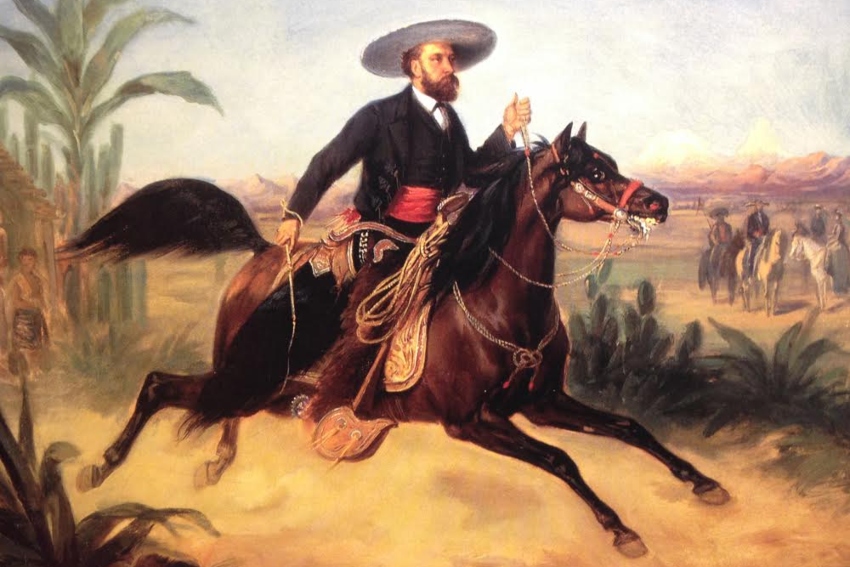
Over a century and a half ago, Mexico was ruled by Austrian Archduke Maximilian of Habsburg and his wife Carlota, during a period known as the Second Mexican Empire. Although they reigned for only a short period of time (1864-1867), Maximilian and Carlota left a lasting impact on Mexico’s culture. One of these influences was the charro outfit, significantly shaped by Maximilian’s fashion preferences.
“Maximilian didn’t want to impose European fashion in Mexico,” Mora said. “Rather, he wanted to reach out to the people and project an image of a popular emperor.”
Instead of wearing rigid European uniforms when he toured the country, Maximilian adopted and promoted the dress of Mexican hacendados (landowners), which blended Spanish and local elements.
Until then, the charro attire was practical and more closely tied to the countryside and ranch life. It was the dress workers would wear during fieldwork. Under Maximilian and Carlota, the suit became a prestigious fashion item. So much so that the upper classes began wearing it, too. Thus it soon acquired an air of aristocratic elegance at receptions, parties and parades.
Nearly a century later, during Mexico’s Golden Age of Cinema, the image of the charro was deeply cemented in the collective imagination through legendary figures like Jorge Negrete and Pedro Infante. Their performances, often wearing the charro dress inspired by Maximilian, turned charros into a cultural icon. These movie stars embodied a proud, romantic, and distinctly masculine ideal of Mexican identity.
The cultural legacy of mariachis
This ideal traveled the world thanks to the mariachi, who adopted the charro suit early in the 20th century.
“The mariachi of Justo Villa, made up of four musicians, was originally from Cocula, Jalisco. When Porfirio Díaz visited the hacienda of La Sauceda, he heard them play and took them with him to Mexico City,” Mora explained. “From there, they were sent to a fair in Chicago, and they sent them dressed in charro suits. This was the beginning of their international fame.”
The charro suit remains Mexico’s most emblematic dress. It is made up of a short jacket, fitted trousers with silver buttons, a white cotton shirt, a bow tie, a wide-brimmed sombrero and ankle boots. Depending on the occasion, a charro can choose from three versions. There’s the work suit, the half-gala suit, and the gala suit. However, mariachis always wear the gala suit.
Gabriela Solis is a Mexican lawyer turned full-time writer. She was born and raised in Guadalajara and covers business, culture, lifestyle and travel for Mexico News Daily. You can follow her lifestyle blog Dunas y Palmeras.
