


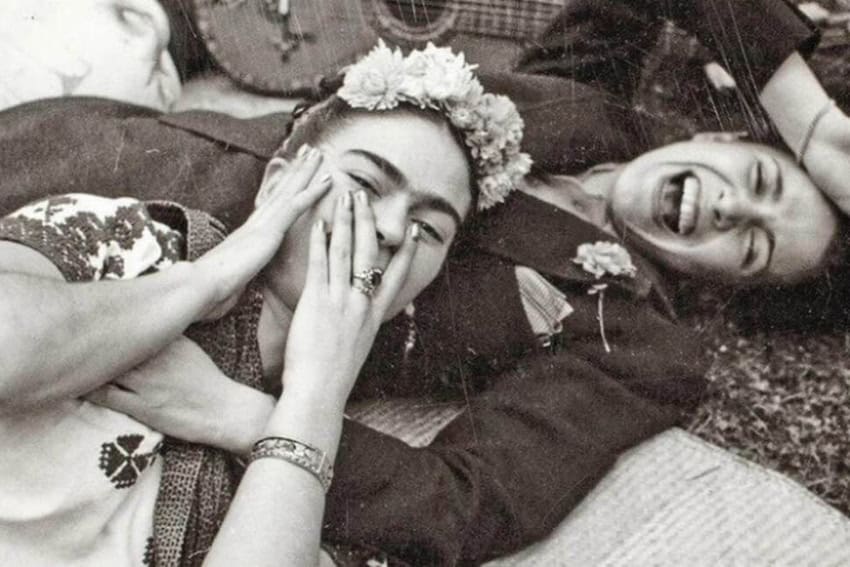
Chavela Vargas never hid her lesbianism. On the contrary, the night she met Frida Kahlo in the 1940s, she didn’t hesitate to let her know she was interested. Connected by a mutual friend, the two women were at different points in their artistic and professional development. Kahlo was already a leading figure in the art world alongside her husband, Diego Rivera, while Vargas was still a decade or more from the release of her first record.
Even before her later professional successes, Chavela Vargas knew she wanted something with Frida Kahlo. A painter friend invited her to Casa Azul, to one of the many parties Rivera hosted in Coyoacán. That was the day the ranchera singer found “a swallow taking flight” in Kahlo’s distinctive unibrow. What followed was the passionate story of two fiery women.
‘Quédate esta noche’
“It was dazzling to see her face, her eyes,” Vargas recounted decades later about her first encounter with Kahlo. In the 2017 documentary that bears her name, “Chavela,” she asserted that the painter “was someone out of this world.”
“Her unibrow was like a swallow in full flight. Without yet possessing the maturity of a woman, as I was very young, I sensed that I could love this being with the most devoted love in the world, the most boundless love in the world.”
A longtime lover of tequila and mezcal, Vargas took advantage of her popularity with the guests to pick up a guitar and begin singing. To the tune of “Quédate esta noche” (“Stay Tonight”), Kahlo understood that there was no escape: It would be virtually impossible to flee the energy of a woman in full eruption.
And indeed, Vargas and Kahlo spent the night together. Even with Rivera at home, Vargas visited her new lover frequently. There was a time, as documented by national media, when the painter asked Vargas to live with her at Casa Azul, located in Mexico City’s Coyoacán neighborhood.
By then, it was well known that she had an open relationship with her husband — who had a particular fondness for other women — and he, moreover, encouraged her encounters with people of the same gender.

The frequent visits turned into longer stays. Between sex, coffee and private concerts in Coyoacán, their relationship became close and affectionate. Vargas recounted that, from her studio at Casa Azul, she sang to Kahlo every day — even when her illness worsened, and she could no longer walk.
A disputed letter
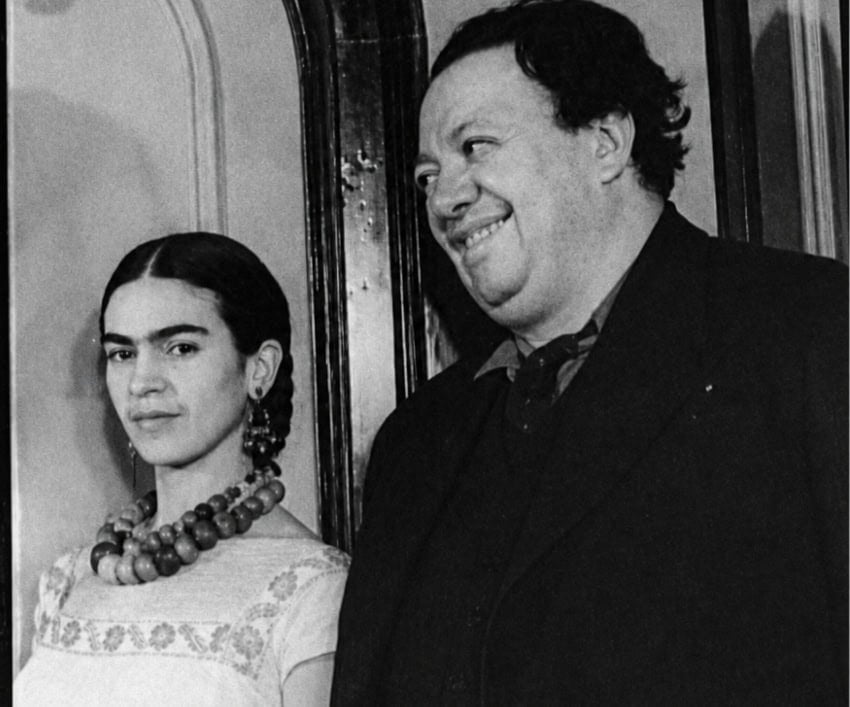
The fragment of the letter that Frida Kahlo sent to a friend about Chavela Vargas is well known — although its authenticity is disputed by many scholars, including representatives from Casa Azul, now the Frida Kahlo Museum. Here is what it said:
“Today I met Chavela Vargas. An extraordinary woman, a lesbian; what’s more, I found her erotically appealing. I don’t know if she felt what I felt, but I think she’s a liberal enough woman that if she asked me, I wouldn’t hesitate for a second to undress in front of her. How many times haven’t you just wanted a quick fling? I repeat, she’s erotic. Is she a gift sent to me from heaven?”
With that same passionate impulse, Frida Kahlo tried to get Chavela Vargas to stay at her house longer than the singer could. Eventually, Vargas’ alcoholism, bad temper and frank need to explore other horizons led her to take flight — while the swallow that Kahlo carried between her eyebrows couldn’t take off.
The final goodbye
By then, Kahlo was already suffering severe consequences from the accident she had when she was young. Sometimes she had to use crutches; other times, a wheelchair. According to Chavela Vargas’s recollection, these were Frida Kahlo’s words when they said their final goodbye:
“I know. It’s impossible to tie you to anyone’s life. I can’t tie you to my crutches or my bed. Go.”
And she didn’t return. And they didn’t get back together.
Chavela Vargas didn’t look back, because she was determined to “die on stage” when her time came, which she nearly did in Madrid in 2012 before finally passing away in Mexico weeks later at age 93. Frida Kahlo died a few years after the affair ended in 1954, of a pulmonary embolism at age 47. After her volatile and chaotic relationship with Diego Rivera and dozens of spinal surgeries and bone grafts, it was a release from chronic pain.
There is no record of Vargas attending Kahlo’s funeral.
Andrea Fischer contributes to the features desk at Mexico News Daily. She has edited and written for National Geographic en Español and Muy Interesante México, and continues to be an advocate for anything that screams science. Or yoga. Or both.
