


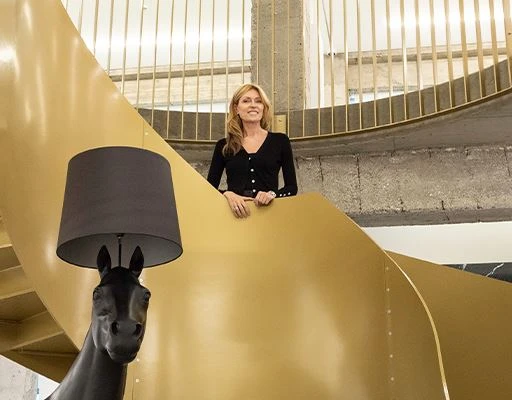
Photo Credit: Francesco Salvetti, courtesy of Umberta Gnutti Beretta
Umberta Gnutti Beretta had a packed Saturday. She was in Margate to visit the residents of a Tracey Emin residency – not for the first time – and yet she sat down, unhurried, and gave the morning her full attention. That, it turns out, is very much her style. There was an elegance to how she moved through the room, considered and unforced, that felt of a piece with everything else about her.
She grew up around her father Giorgio Gnutti’s love of art, and has spent two decades building something that goes far beyond collecting – presidencies, boards, residencies, foundations. Ten years at the helm of Milan’s Poldi Pezzoli Restoration Club. Eight years on the governing council of Fondazione Brescia Musei. And now, having just started, she holds a seat on the board of the Pinacoteca di Brera – one of Italy’s great museums, at a particularly ambitious moment in its history. Beyond the art world, her giving extends to cancer research, children’s healthcare, and women’s rights, earning her the Montblanc de la Culture Arts Patronage Award in 2015. In 2016 the Beretta family’s private island on Lake Iseo became the site for Christo’s The Floating Piers. At Spazio Almag, the space she opened inside her family’s factory near Brescia, around 200 works from her collection are on permanent view – accessible to anyone who asks.
She is, above all, someone who shows up in person. At Palazzo Monti, at Sendb00ks, at Tracey Emin residencies on hot Saturday mornings in Margate.
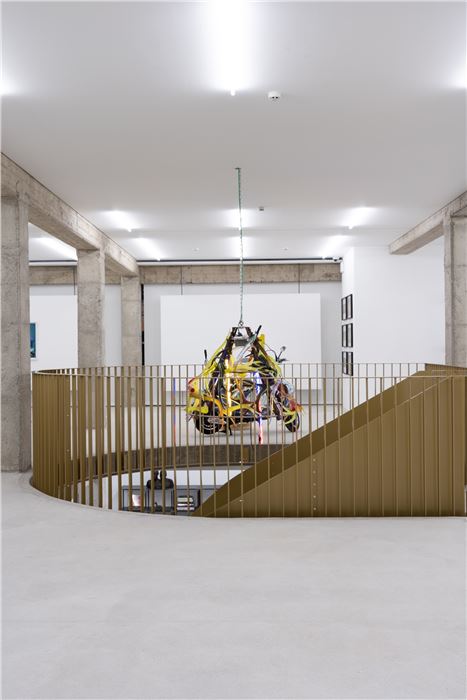
Spazio Almag — courtesy of Umberta Gnutti Beretta
The Conversation
You’ve described your collection as something that “doesn’t stop.” What’s the actual goal behind it – is it building a legacy, a map of everything that has moved you, or something else entirely?
I honestly don’t have a single or clearly defined goal. I started building a collection because I love art and my life feels richer when I am surrounded by it. I collect young artists because I like the idea of supporting them at the beginning of their journey when it is needed, and I also acquire more established artists because I admire and follow their work. Lately my collecting has also been driven by the desire to share art with others. Through Spazio Almag, I want to create opportunities for people to discover, engage with, and appreciate contemporary art.
Where did the instinct to give so broadly come from – art, medicine, women’s causes? Was there a moment that opened all of it up, or has it always just been who you are?
I have always felt the need to give back, even as a young girl. I have always felt bad for people who have problems and been very aware of how privileged I have been to be born in my country and from a family with means. This awareness and this tendency to care have been part of my personality for a long time and they have been the drive to try and help. My parents and my grandparents have also given me a great example.
Which artist are you watching most closely right now – someone whose work you think people will be talking about in five years?
I am an optimist and I tend to think that all the artists I am watching will be artists that people will be talking about in a few years.
