


MILWAUKEE — In the 1940s, a small band of Midwest artists dubbed the “Magic Realists” began making work that tapped into the freedoms of Surrealism without being swayed by stylistic tendencies. They took their own path, achieving recognition during their heyday, but drew scant attention from the larger art world in later years. In the last decade, two exhibitions have generated renewed interest: a 2018 show of one of the six primary members, Gertrude Abercrombie, at Karma Gallery in New York, and a recent retrospective of the artist that traveled from the Carnegie Museum of Art in Pittsburgh to the Colby College Museum of Art in Waterville, Maine, and is currently on view at the Milwaukee Art Museum. At least, they generated renewed interest in Abercrombie. Auction prices for the late Chicago-based artist’s small-scale paintings have skyrocketed. In November 2025, the painting “Message for Mercy” (1950) sold for over $1 million at Sotheby’s, surpassing her previous auction record of $864,000.
The touring exhibition focuses solely on Abercrombie, presenting about 80 paintings. The Milwaukee iteration, however, has commendably added a small parallel exhibition, Gertrude and Friends: The Wisconsin Magic Realists, for which curator of American Art Thomas Busciglio-Ritter assembled work from the museum’s permanent collection by the artists closest to Abercrombie: John Wilde, Karl Priebe, Dudley Huppler, and Marshall Glasier, though Sylvia Fein is notably absent. The exhibition underscores the mutual support, comradeship, and spirit of rebellion shared by this cohort and other less-involved colleagues, presenting Abercrombie not as an isolated maker, but as part of a protective and inspirational community.
Indeed, the art world traditionally credits artists’ success to individual mettle and superior skill — the creative genius model. But it was friendships that grew movements. The Abstract Expressionists congregated at New York City’s Cedar Tavern, the Impressionists gathered at Café Guerbois in Paris, and the Surrealists at Café de Flore in the same city. Stylistic changes evolved over communion and beer. Yet when a Picasso, Rodin, or Pollock moves through art history, the story prioritizes individual achievement.
The Magic Realists (a term awkwardly coined by Alfred Barr, director of the Museum of Modern Art, distinct from the Magic Realism of German post-expressionist painting and Latin American literature) banded together to brew their own versions of Surrealism within industrial cities in Wisconsin and Illinois, connected by farmlands — flyover zones in the general cultural imagination, not to mention in art history. Even more significant is that the group was centered by a woman, a distinction few historic “-isms” can claim. It is not incidental that Abercrombie met the ultimate model of the doyenne, Gertrude Stein, in Chicago in 1935.
“Queen Gertrude,” as Abercrombie was known, was an artist, host, and convener. Counting Priebe in Milwaukee; Huppler, Wilde, and Fein in Madison; and the itinerant Glasier, the group included two gay men, two women, an art professor, and two students from the University of Wisconsin-Madison. They regarded themselves as outcasts, yet found refuge in the community Abercrombie helmed.
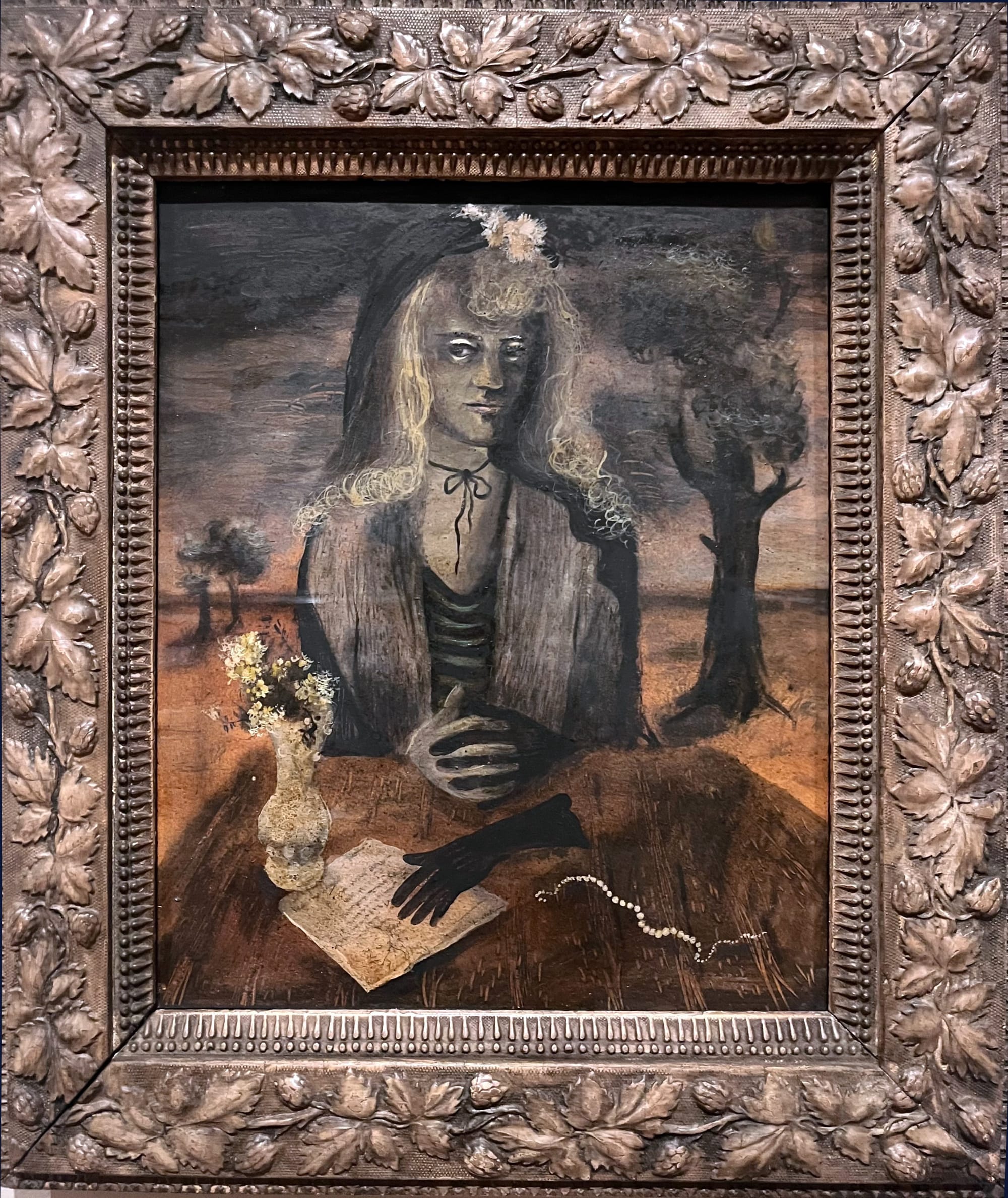
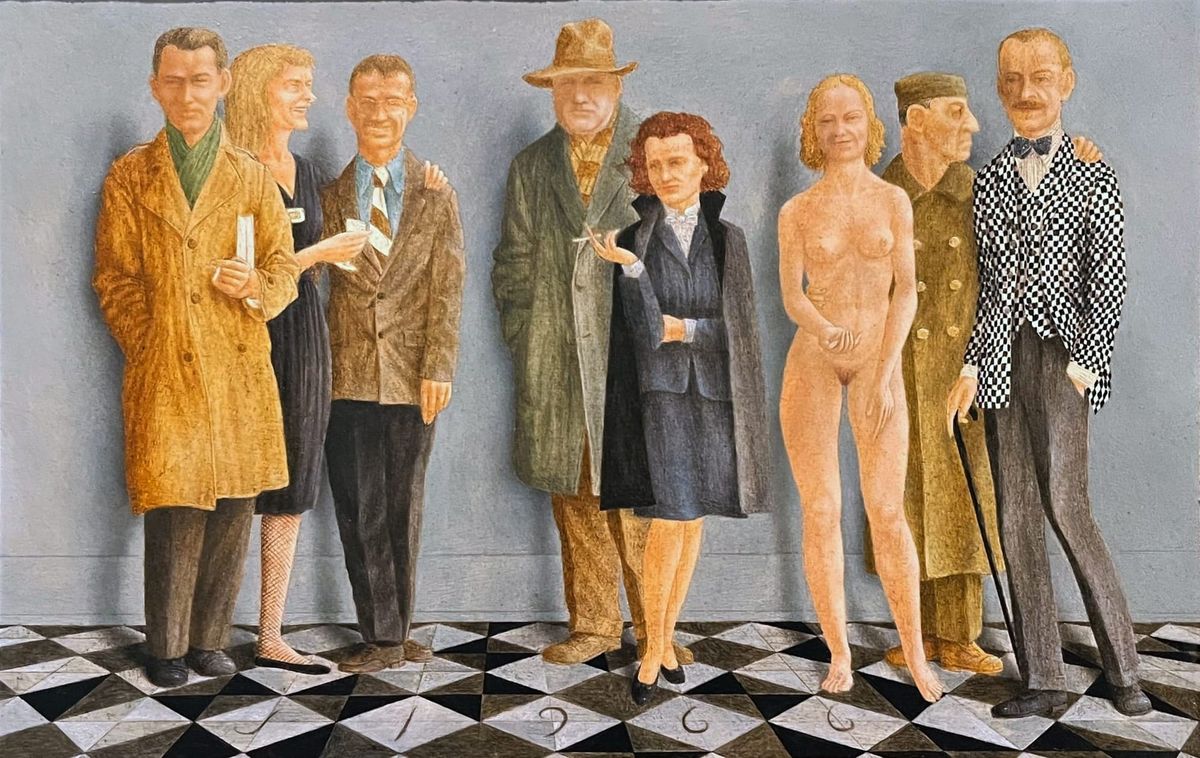
See, for instance, Priebe’s hauntingly beautiful “Portrait of Gertrude Abercrombie” (1952), which renders Abercrombie in gray tones, with flowing hair capped by a scarf and flowers. A stray black glove rests on a letter addressed “Dear Gertrude,” a document of the almost daily letters the artists exchanged for decades. In the foreground, a broken string of pearls appears serpent-like, perhaps symbolizing her rejection of the postwar expectations of proper domesticity. Another painting, Wilde’s 1966 group portrait, shows the entire cohort lined up on a checkered floor like a Greek frieze. Jocular exchanges of gestures, smiles, and embraces reveal the affection that bound them together.
A still life painting by Abercrombie herself in the main exhibition, “Letter from Karl” (1940), displays an unopened letter from Priebe beside a vase of five white carnations, with one bloom lying separate on the table. The flowers seem to symbolize the cohort itself, with Gertrude as the one prostrate in front. A tiny full moon beams from a painting-within-a-painting, also by Abercrombie, illuminating these singular relationships in suspended time. The painting is part altar, part dream — a fragile tribute to their small but important moment in American art when the bond of friendship provided refuge for difference. It was as if the artists wrote their own history for those willing to decode the painted clues.
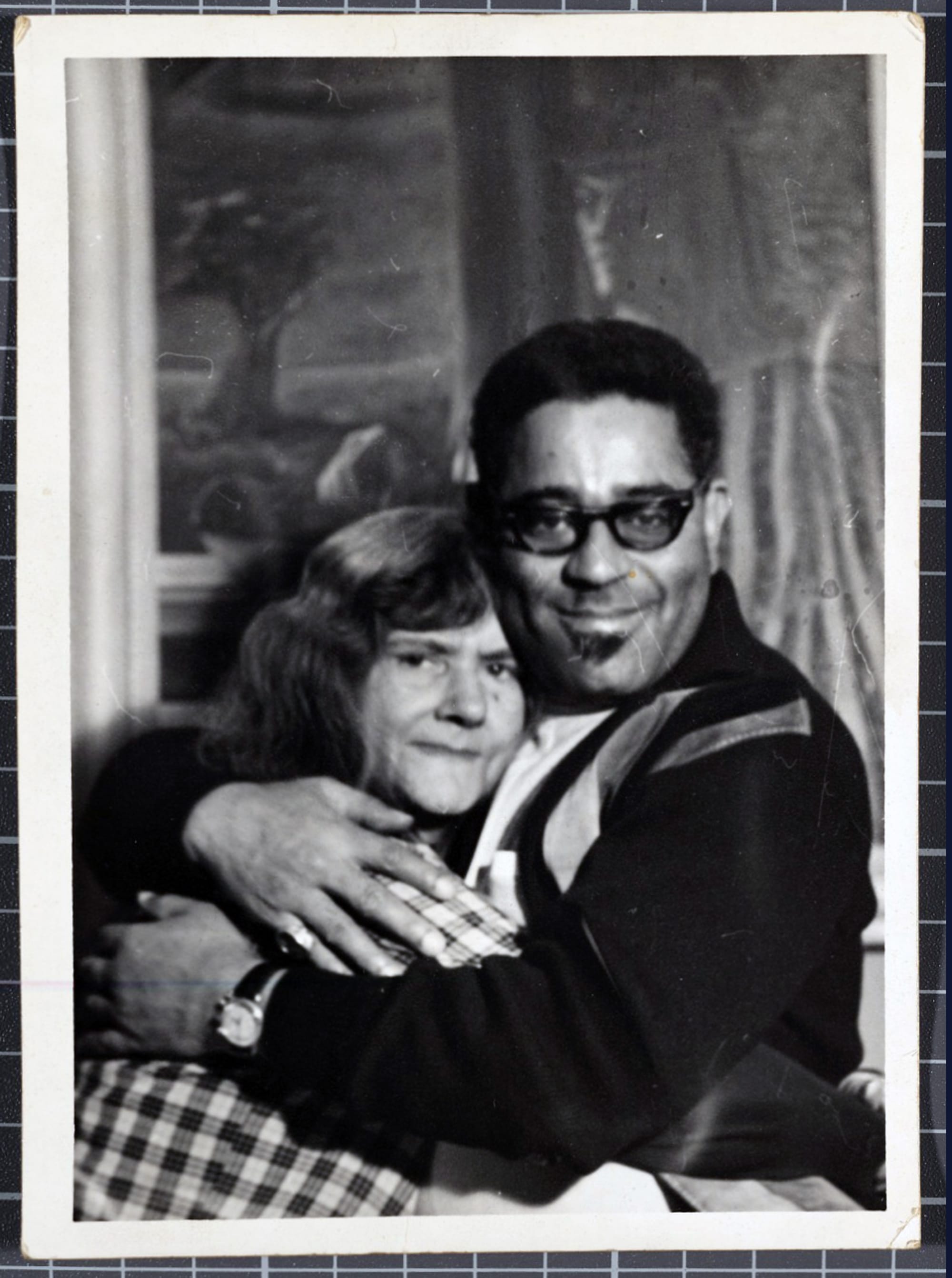
Abercrombie was the planet that held the others in orbit. Tall and self-conscious, she wore flowing gowns, black-and-white striped shirts, leopard prints, and intentionally witchy hats. She befriended avant-garde bebop musicians such as Dizzy Gillespie, Sarah Vaughan, Miles Davis, Sonny Rollins, Billie Holiday, and Max Roach, and provided lodging for them in her large Victorian home when Black artists were refused hotel accommodations in a racially divided Chicago. Abercrombie’s open arms came with boozy parties and lively discussions.
The air must have been thick with smoke and electricity. Both groups — the artists and musicians — were charting experimental artistic territory: The musicians rejected the feel-good swing music of the era, and the artists turned away from the folksier Midwestern American Regionalist art movement (and later Abstract Expressionism). The musicians explored improvisation and virtuosity; the artists leaned into figuration and the uncanny. Both invested in cultivating freedoms of flight from conservative moral strictures.
In a published interview, Wilde described the group as sharing “a faith in caprice, fantasy, the odd — a kind of lightheartedness even when fully aware of the somber and tragic.” Yet each artist approached their work differently. Wilde painted tiny naked figures flying through time and space. Abercrombie’s solitary women stand transfixed within moonlit dreamscapes. Priebe irradiated the night with glowing faces or vivid bird plumage. What distinguished this group from European surrealism was an earthiness grounded in everyday life. Influences from Medieval and Renaissance painting, Surrealism, or other modernist styles remained tethered to domestic still lives, horizon lines, dusky skies, and moods of playful introspection. Plein air excursions in the Wisconsin countryside led by Wilde inspired rural landscapes as stages for narratives.
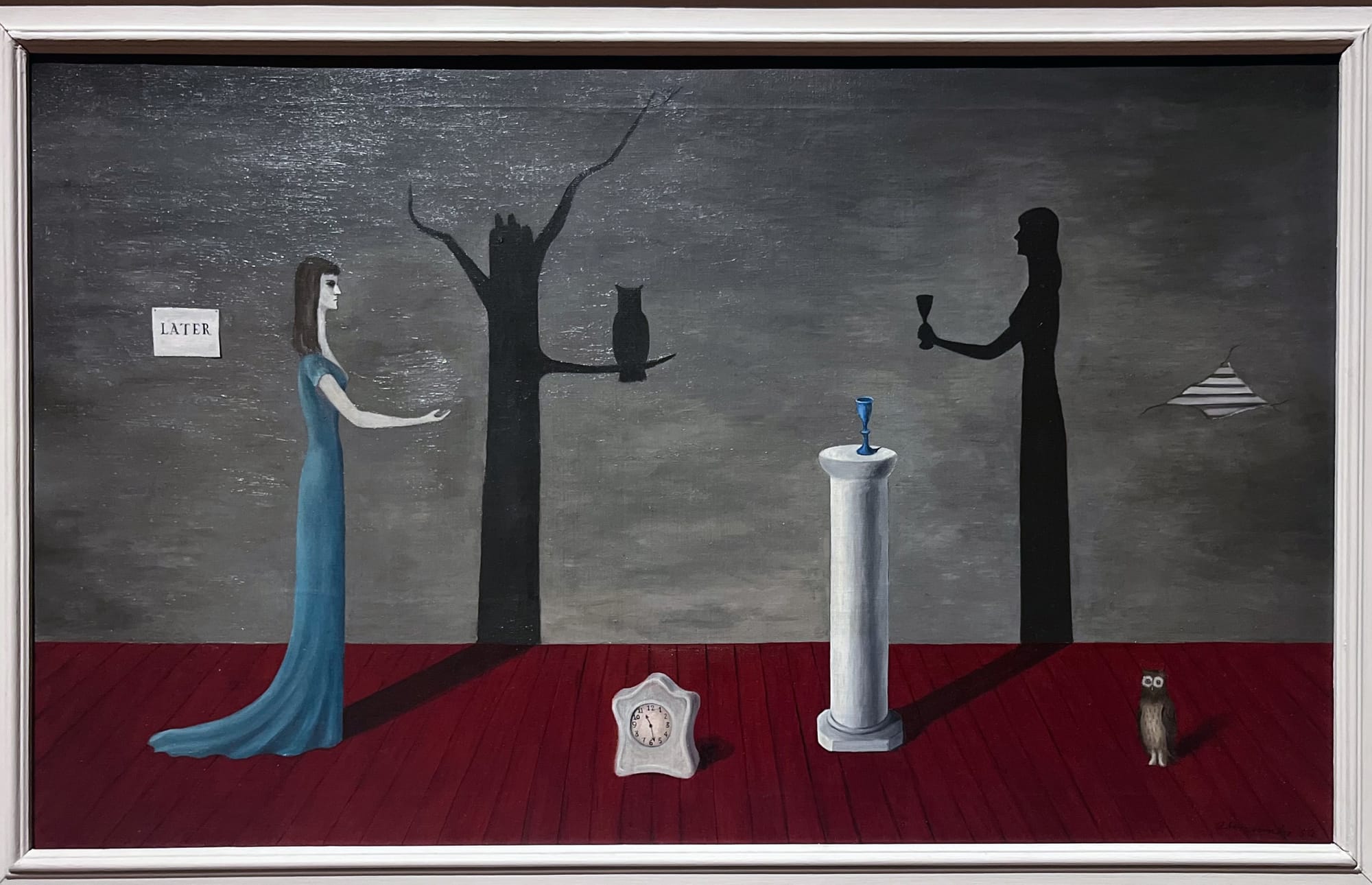
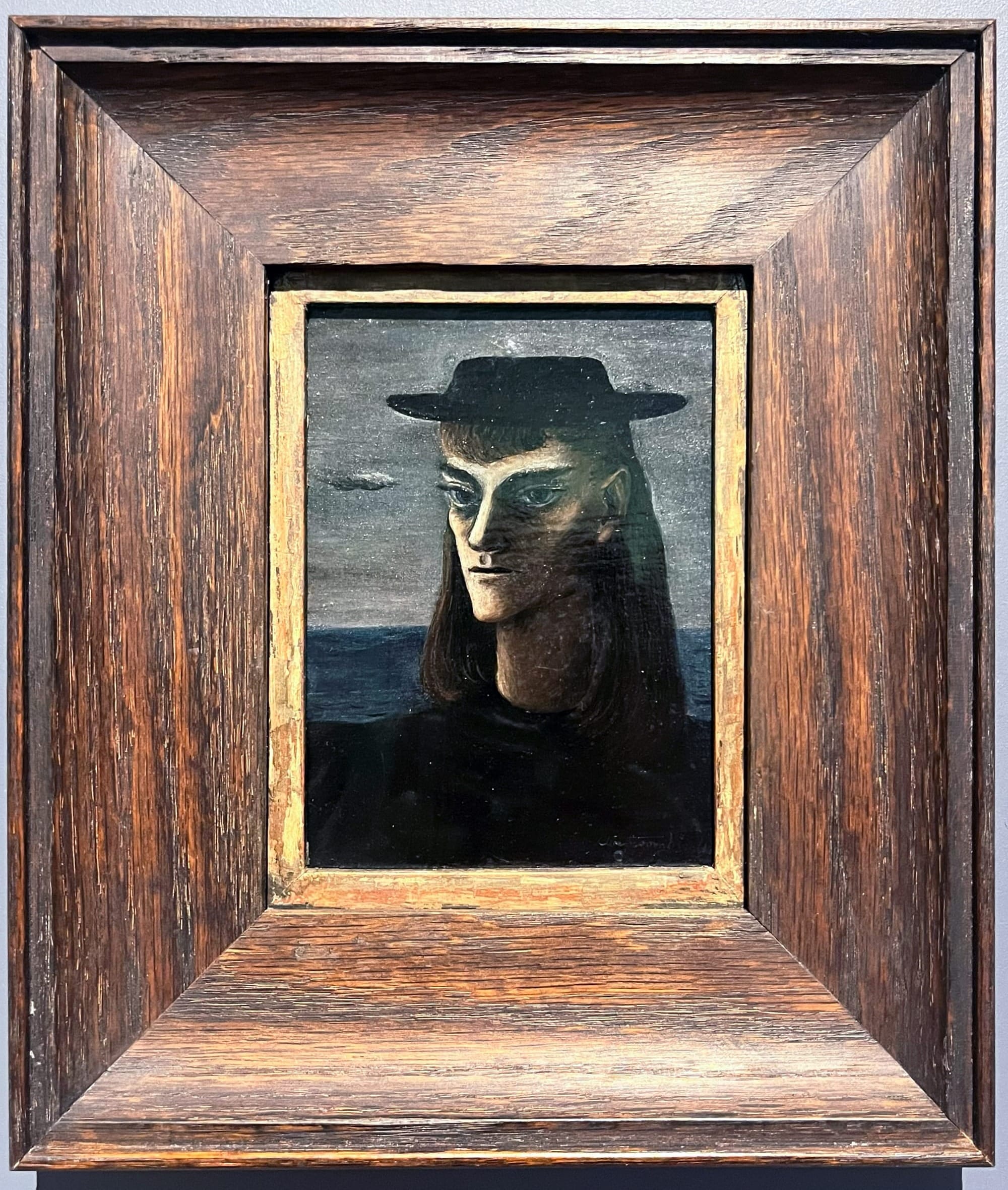
Abercrombie depicts herself in much of her work — central, and often alone. She stands in sparse rooms with closed doors or under night skies with barren tree silhouettes. She appears as magician, mourner, bride, an elegant mistress on a velvet divan, a tiny figure in a vast landscape walking an infinite path. But in life, she prioritized her art career and friendships, which took a toll on her two marriages, her role as mother, and her health.
Indeed, independent curator Robert Cozzolino, who has written several books about this group, expresses caution as Abercrombie’s reputation grows. Hungry for underrecognized, deceased women artists, especially Surrealists, the surging art market may simply reaffirm the solitary genius narrative, which in capitalist culture devalues collectivity. Yet community provides safety, strength, and support for those who choose difference. No art movement and few artists exist without the bonds of friendship.
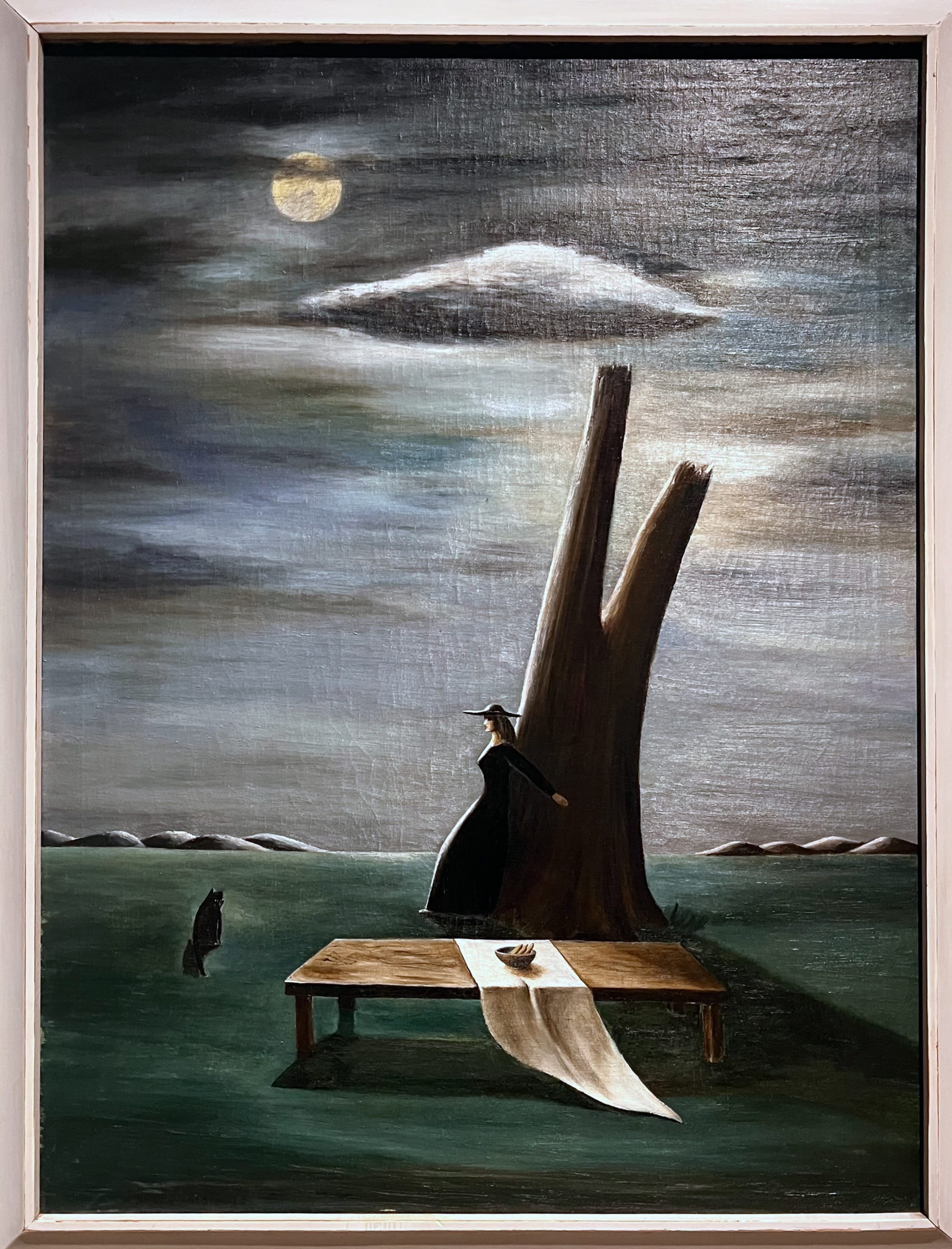
Gertrude Abercrombie, “Tree, Table, and Cat” (1937)
Gertrude Abercrombie: The Whole World is a Mystery continues at the Milwaukee Art Museum (700 North Art Museum Drive, Milwaukee, Wisconsin) through July 19. The exhibition was curated by Eric Crosby and Sarah Humphreville with Cynthia Stucki and co-organized by the Carnegie Museum of Art and Colby College Museum of Art.
Gertrude and Friends: The Wisconsin Magic Realists continues at the Milwaukee Art Museum through October 25. It was curated by Milwaukee Art Museum curator of American Art, Thomas Busciglio-Ritter.
