


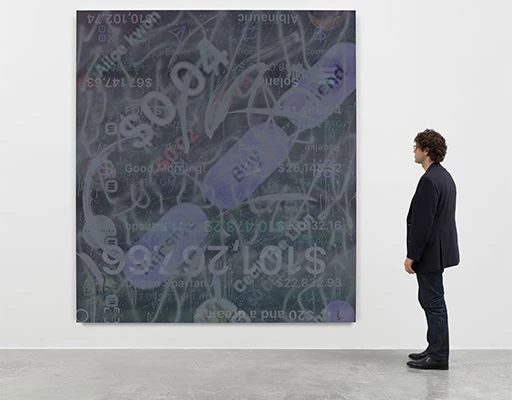
Long regarded as a foundational powerhouse of the global art market, Art Basel now operates within an increasingly competitive international landscape, including competition from within its own network of fairs, with Art Basel Paris gaining considerable momentum. Nevertheless, this year’s edition opens against the backdrop of a resilient Swiss art market. According to the Art Basel & UBS Art Market Report, Switzerland recorded a 13% year-on-year increase in art market sales in 2025, placing the country among the world’s strongest-performing markets. The fair can further draw confidence from the recent Swiss referendum rejecting measures to cap population growth, a result widely interpreted as reaffirming the country’s openness to international exchange.
It is also breaking with the status quo through the launch of “Basel Exclusive”, a new initiative encouraging galleries to reserve certain works exclusively for the fair until its opening, as well as the European debut of Zero10, a new section dedicated to art of the digital era, following its first iterations in Miami and Hong Kong.
Maike Cruse, Director, Art Basel in Basel. Photo by Pati Grabowicz
Scaling Global Operations and VIP Networks
With 290 galleries participating, Art Basel remains the largest fair within the Art Basel portfolio, ahead of its editions in Miami Beach, Hong Kong, Paris, and Qatar. It also matches or exceeds the scale of other leading international events such as TEFAF Maastricht, The Armory Show in New York, and Frieze London. In parallel, the fair continues to reinforce its status as the art market’s premier gathering place, supported by an unrivalled VIP program and an influential network of collectors, coordinated through 25 in-house VIP representatives across the globe. While Art Basel is arguably one of the most international art fairs, with exhibitors from 43 countries and territories, its geographic distribution still reflects a market largely dominated by Europe and North America. Galleries from Asia account for around 10% of exhibitors, with the proportion rising to just over 15% when other non-Western countries from the Global South are included. However, both local relevance and logistical sustainability also help explain this distribution.
In the following interview, Maike Cruse discusses the fair’s positioning within an evolving competitive landscape, as well as the strategic role Basel continues to play within the global art market and the broader Art Basel network, drawing on her prior experience as Communications Manager for the fair from 2008 to 2011.
Maike Cruse on Market Resilience
Rémy Jarry: What was the genesis of “Basel Exclusive”?
Maike Cruse: Basel Exclusive came through extensive conversations and dialogue with our galleries, over the course of many months. Some of our exhibitors have already been doing something similar in practice for years. We wanted to underline Art Basel in Basel’s reputation for discovering amazing works and double down on the moment of first discovery that can happen at a fair – in person, at the booths. It is also a reflection to the market: so much is in circulation prior to the kickoff the fair, this will restore a sense of anticipation and give yet another reason for collectors to make sure they stop by booths in person to discover something new.
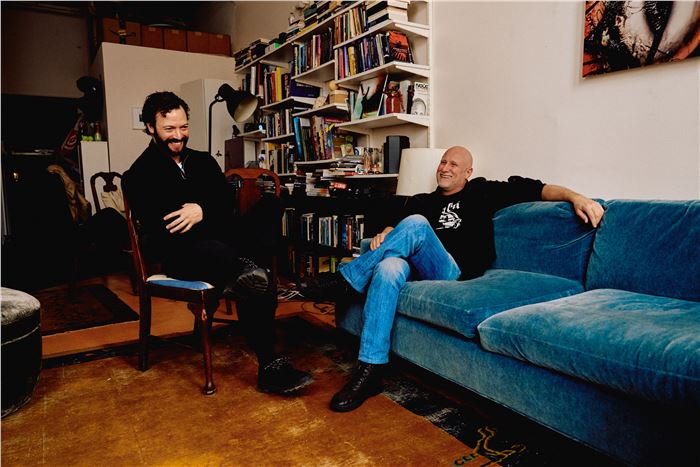 Eli Scheinman & Trevor Paglen, Co-curators, Zero 10, Basel 2026. Photo by Caroline Tompkins. Courtesy of Art Basel
RJ: Could you share your insights into the launch of Zero10 in Basel?
MC: We’re incredibly excited about the European debut of Zero10 in Basel. This edition is also unique as we have artist Trevor Paglen as co-curator alongside Eli Scheinman, and they have the theme of “The Condition”, which looks at the past 50 years of digital and computational work. It fits perfectly to have this historical focus at our original and longest-running fair, where we also get the most historical artworks in our halls. With that curatorial angle, there is a stronger presence of major galleries, such as Hauser & Wirth, Sprüth Magers, and Esther Schipper, but they are still in dialogue with notable digitally focused galleries like Fellowship and bitforms.
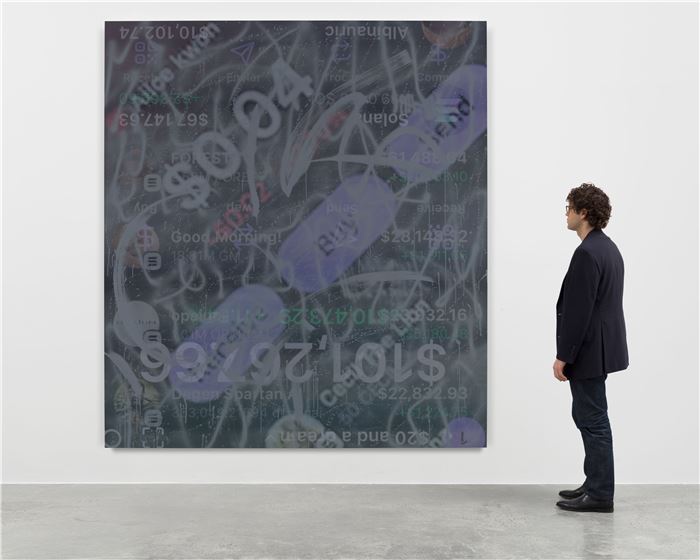 Avery Singer, Hauser & Wirth, Shit Coin Maxi, 2025. Copyright by Avery Singer. Photo by Lance Brewer. Courtesy the artist and Hauser & Wirth.
