


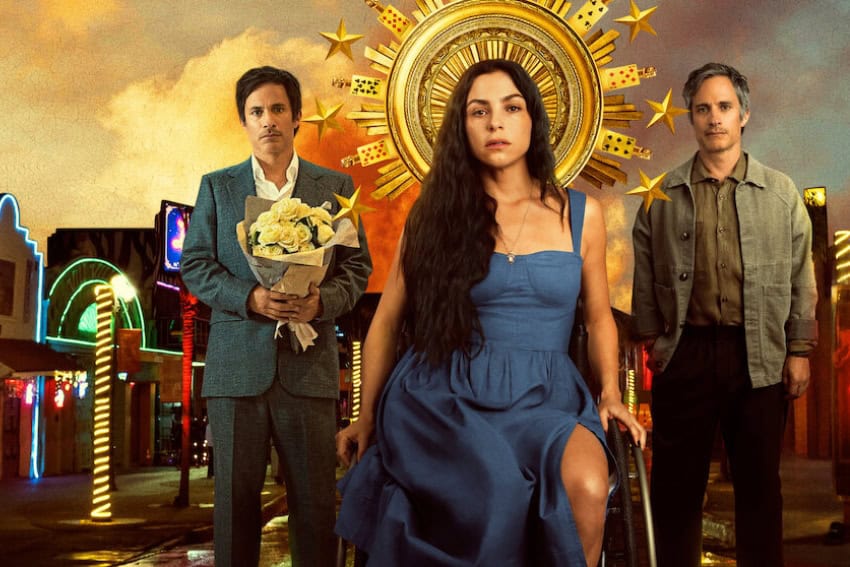
Some series are made for quick consumption and serve as a way to pass the time, while others refuse to let you be the same person once the credits roll. “Santita,” Netflix’s ambitious new Mexican production, definitely belongs to the latter group. Created and written by Luis Cámara and Gabrielle Galanter, and directed by Emmy nominee Rodrigo García Barcha, this seven-episode series challenges our views on autonomy, sexual pleasure and the right of people with disabilities to be masters of their own destiny.
The first thing to know about “Santita” (“Little Saint”) is that its title draws on Latin American irony and idiosyncrasy. It serves as a direct provocation: it sets us up for a martyr, but instead presents us with a hopeless rebel. At the heart of this dramatic comedy is María José Cano (Paulina Dávila), better known as “Santita,” a young woman deeply in love who, after an accident that limits her mobility to a wheelchair, makes the difficult decision to break up with her fiancé, Alejandro (Gael García Bernal), and radically reinvent herself.
How an accident changes the way Santita navigates her life
Those who spent their youth with Santita remember her as a demure young woman who strictly followed the rules. However, since that incident, she has navigated the world without asking for permission or forgiveness. When we meet her in the present, she works as a gynecologist while leading an intense and irreverent life: she drinks excessively, bets on cockfights, dominates the poker tables and maintains a strained relationship with her family. Far from being a damsel in distress or embodying the stereotype of the helpless victim, María José is a woman in charge who faces her reality with great fortitude and acts with total autonomy. Her true battle, however, is fought in private: as a result of her spinal cord injury, she has been unable to reach orgasm, which has driven her on a daring sexual crusade that sometimes exposes her to high-risk situations.
Her daily routine is thrown into disarray when her ex-fiancé’s wife walks into her office as a patient. As might be expected, running into each other again isn’t easy. The encounter reopens the wounds of that interrupted wedding and forces them to confront a past riddled with painful memories and repressed resentments. The tension reaches a breaking point when Alejandro, cornered by a medical condition, asks María José for an ethically complex favor that forces her to rethink the limits of love and personal autonomy.
From media condescension to human complexity
The second thing to know about “Santita” is that this is not a saccharine “overcoming adversity” melodrama or a conventional romance. This Netflix production is a highly exciting and necessary addition to the representation of functional diversity on the small screen. In a media landscape that often relegates this community to limiting stereotypes — such as victims, angelic beings, eternal children or family burdens — the series actively challenges the industry’s sentimentality and biases. By portraying its protagonist in all her human complexity and endowing her with dreams, contradictions and common flaws, the script commits to a respectful and authentic approach.
Sharpened by dark, biting humor, the series successfully breaks down taboos surrounding sexuality and disability and explores, with unusual boldness, the challenges of inhabiting a body with new sensory boundaries. While traditional narratives persist in desexualizing people with limited mobility, the series chooses to bring the camera into the bedroom and film desire from a first-person perspective. In this way, nearly every episode details Santita’s fearless determination to reconnect with her body and with pleasure.
With razor-sharp wit, the screenwriters manage to make María José’s sexual crusade function as a broader social commentary. The series exposes uncomfortable realities ranging from everyday prejudices and a lack of urban accessibility to institutional barriers and the violence that affects this community.
An acting master class
Another pillar of this Mexican dramedy is the magnetism of its cast. In the lead role, Dávila avoids clichés and crafts a provocative anti-heroine who moves effortlessly between chaos, humor, pain and exasperation. There is so much humanity in her performance that it’s impossible not to root for her as we watch her stumble and try again. This on-screen authenticity is the result of close collaboration between the actress and Mexican activist Maryangel García Ramos, whose direct guidance imbued the character with realism.
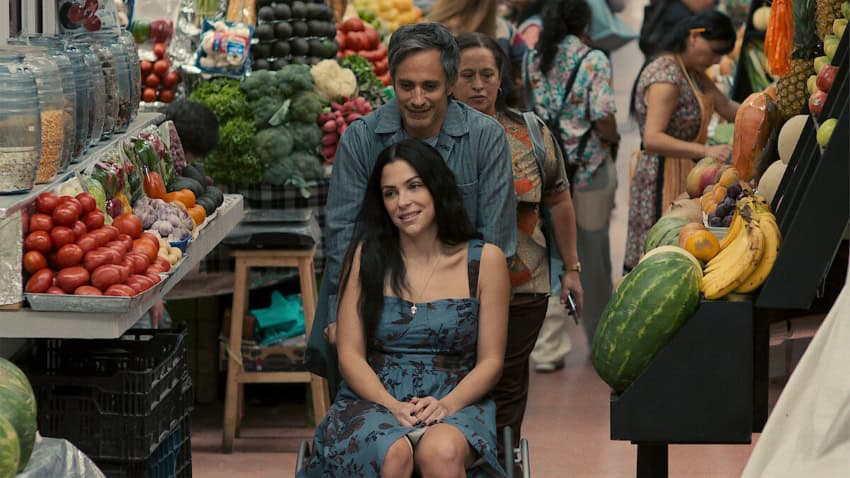
For his part, García Bernal brings a poignant fragility to Alejandro, a character caught between the melancholy of the past and an extreme physical urgency. Overall, the honest chemistry between the leads is a true delight and reliably carries the full emotional weight of the story. This dramatic pulse is bolstered by a committed supporting cast: Erik Hayser and Ilse Salas inject the depth and layers of tension that the series demands.
With complete confidence in his actors, director Rodrigo García Barcha avoids rushing the scenes. Instead, he keeps the camera on their faces long enough for the emotional cracks and small joys to come through on screen. This unhurried, introspective approach brings out the best in the cast and ensures that the most devastating moments pack a powerful punch.
A mature artistic statement
“Santita” is much more than just fleeting entertainment; it’s a bold step toward a more mature, courageous and necessary Latin American television. By breaking down taboos surrounding disability, Rodrigo García Barcha and his team deliver an unmissable gem that challenges, entertains and, above all, transforms. If you have a soft spot for those dramatic comedies that leave your heart in your throat, you can’t miss this one.
The series more than captivates thanks to the magnetic chemistry between its leads, the emotional depth of its moral dilemmas, and its sharp social commentary. Fortunately, the season ends with an open ending that leaves the stage completely set for a sequel. Fingers crossed.
Carolina Alvarado is a Venezuelan journalist and has devoted much of her career to creative writing, university teaching and social work. She has been published in Lady Science, Latina Media, Global Comment, Psiquide, Cinetopic, Get me Giddy and Reader’s Digest, among others.
