


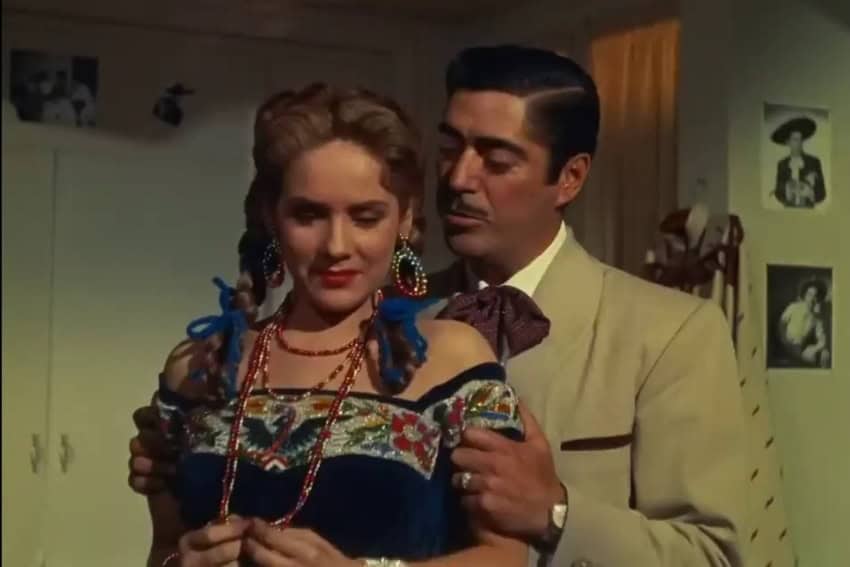
Picture this: a man walks through the street at night, followed by musicians. He looks at a house’s door, then lifts his eyes to the balcony and starts singing. A light comes on. The balcony door opens to reveal a woman’s face behind the curtain. Surprised but not unpleased, she has just fallen for the one who brought the music. As its name suggests, it occurs in the intimacy of night (the word “serenata” comes from the Latin serenus, meaning the humid environment after dusk).
The tradition of dedicating a song to your significant other dates back centuries. During the Middle Ages, people drew inspiration from troubadour songs and lyrics to create a particular romantic ritual that would travel with Spanish colonizers to the Americas. Once established in our continent, this tradition quickly took root, eventually incorporating Indigenous elements. These influences shaped the way serenatas are played, with mariachi groups becoming their perfect, eclectic performers, ultimately creating the distinct type of serenade we know today.
Nowhere is the emotional power of these serenades more evident than in the movies of Cine de Oro Mexicano (the “Golden Age” of Mexican cinema), one of the greatest periods of the nation’s film history, running from 1936 to 1956. Whenever our main character (usually a man) did or said something wrong, he would come to apologize with a love song. Sticking with revolutionary and post-revolutionary gender standards, serenades became more than just songs — they represented rare spaces where a macho man could show vulnerability. This window of liberation and the romantic lyrics turned serenades into some of the most acclaimed scenes in Mexican cinema, a legacy that persists today.
‘Dos Tipos de Cuidado’
This all-time favorite follows two main characters, embodied by the most popular male stars of Cine de Oro: Pedro Infante and Jorge Negrete. Pedro is Pedro Malo, Jorge is Jorge Bueno. The tangled love story becomes a love square rather than a love triangle. Pedro and Jorge, once best friends, become each other’s deadliest enemies. Malo married Bueno’s girlfriend, so the second one tries to get revenge. As the story develops, we get clues about what actually happened between them.
When Pedro and Jorge decide it’s time to open their hearts to the women they love, they simultaneously fill their balconies with music, in an involuntary duet that is a delightful scene for anyone watching “Dos Tipos de Cuidado.”
‘Enamorada’
“Enamorada” portrays Revolutionary Mexico, set in Cholula, Puebla. General José Juan Reyes arrives with his troops from Emiliano Zapata’s army to take over the city, confiscating land from the wealthy to redistribute to the peasants. The course of events shifts with the appearance of Beatriz Peñafiel, a member of the local elite. The general, never before in love, is captivated by her. After a series of uneasy encounters, he decides one evening to bring a serenade to Beatriz’s home.
The movie’s cast is no accident. The general is played by Pedro Armendáriz, who embodied the ideal revolutionary in Cine de Oro’s films. Beatriz is played by María Félix, celebrated for her beauty and strong character. They create a tension on set that surpasses sweetness. Their scenes feel more like a romantic confrontation — an intimate representation of the war they immerse themselves in.
The film’s magnetic serenade scene is so appealing because María Félix delivers a great performance with her eyes alone. Through them, Beatriz shows she is emotionally conflicted but also gains power over him. She decides not to show up and leaves Reyes waiting for her on her doorstep.
‘El Rey del Barrio’
Almost all Cine de Oro movies feature more than one classic Mexican star. “El Rey del Barrio” is no exception. Silvia Pinal joins Tin Tan (Germán Valdés) in this 1950 film. Like a comic-book Robin Hood, Valdes’ character, Tin Tan, has a double life. By day, he works as a railwayman. He also makes rich women fall in love with him, scams them and gives their wealth to the poor. Pinal’s character, Carmelita, babysits Tin Tan’s son, slowly growing fond of “El Rey del Barrio.” After some drinks, Tin Tan confesses his sketchy occupation. When Carmelita shows no alarm, the serenade begins, suggesting she may be the one.
Away from the canon of the mariachi serenades, Tin Tan’s drunkard serenata in a vecindad (an old building turned into multifamily dwellings) is yet another of the twists the comedian used to perform on popular culture. Carmelita will become not only his accomplice but also his greatest motivation to change his life.
To stand the test of time
Although a heteronormative tradition, serenatas have transcended the barrier of time, gender and language, with the genre evolving to feature movies like “Say Anything,” with John Cusack opting for a boombox instead of a guitar — but still waiting for his loved one to see him from her window. Even though it’s not very common, lovers still hire mariachi bands to express their feelings on special occasions. Serenades are, then, an undeniable way to express love (or regret) whenever things get difficult. And, not to spoil the films, but it works almost every time.
Any serenade scenes you think we should have mentioned? Let us know in the comments!
Lydia Leija is a linguist, journalist and visual storyteller. She has directed three feature films, and her audiovisual work has been featured in national and international media. She’s been part of National Geographic, Muy Interesante and Cosmopolitan.
