

Art Review
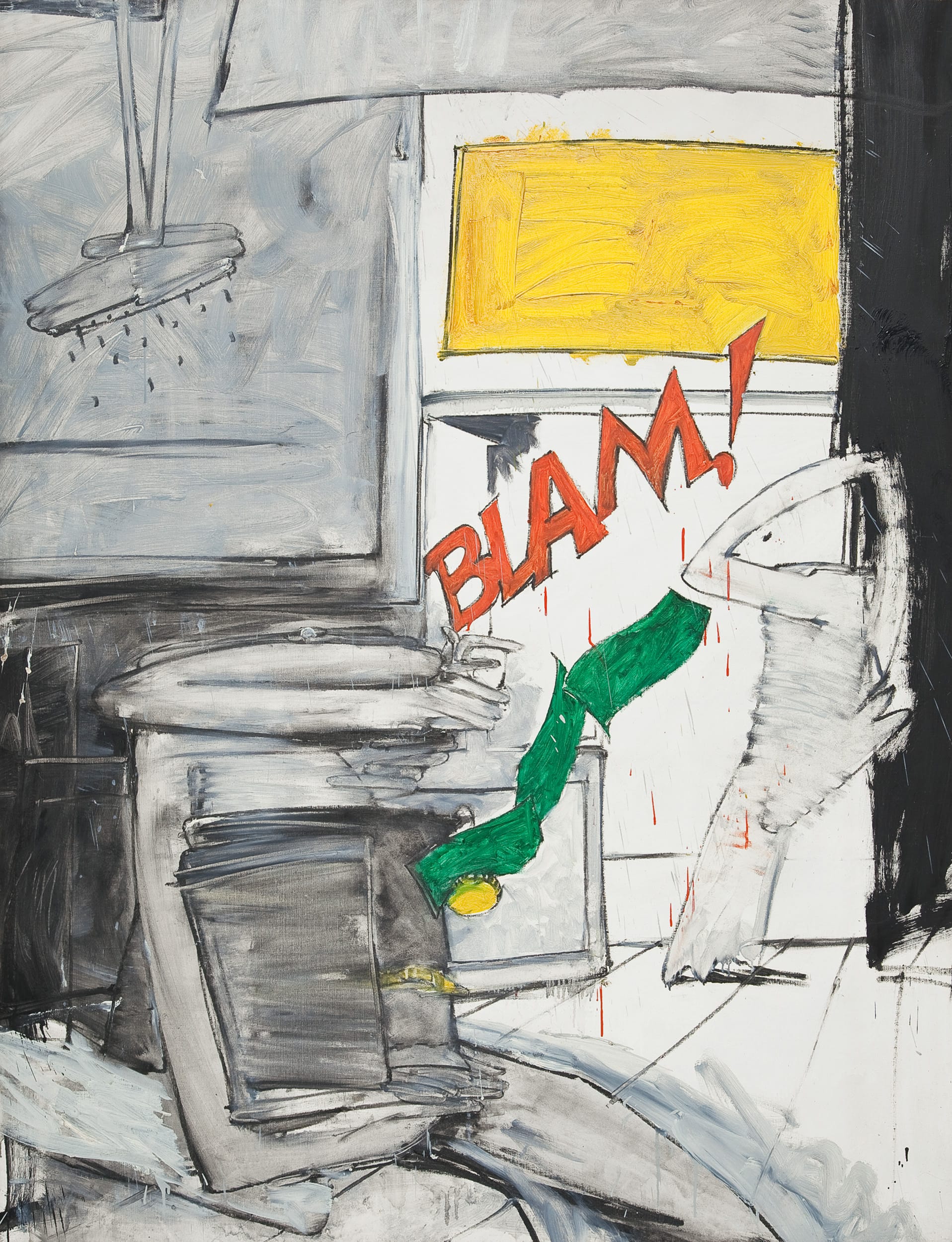
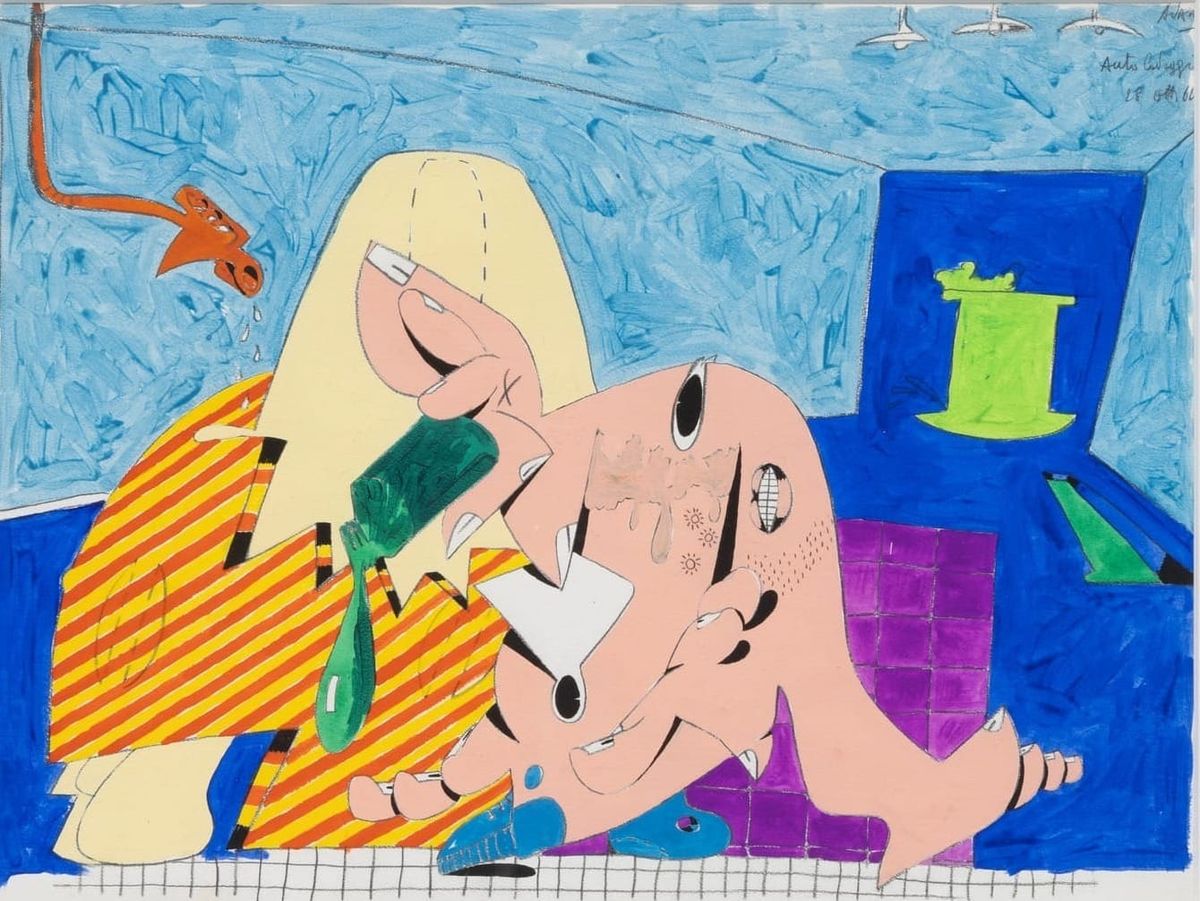
His syncretic style melds Pop Art’s cool, outlined forms with expressionism’s figural distortions, resulting in a perturbing ambiguity.
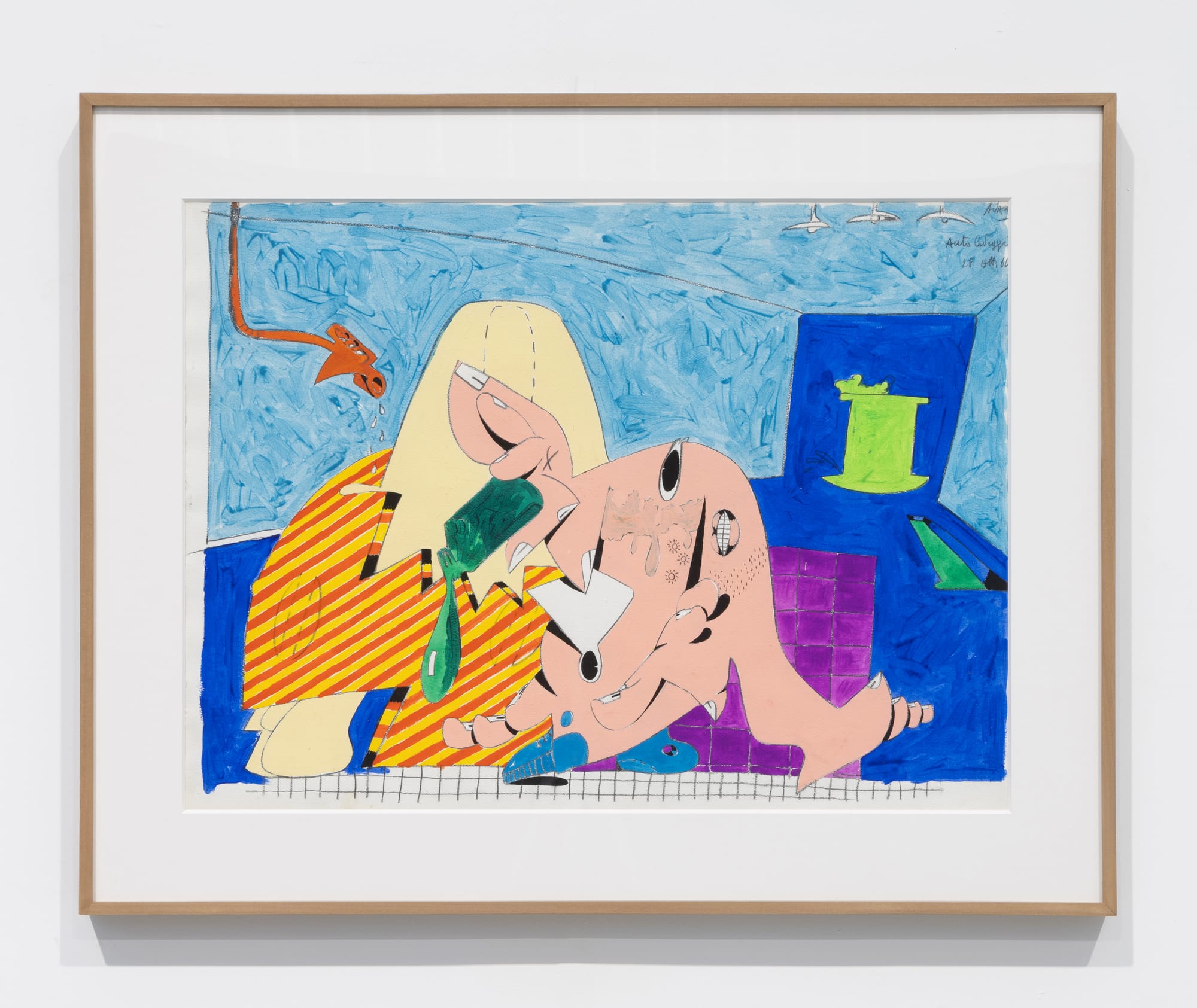
The Italian artist Valerio Adami, who was born in Bologna in 1935, is not as well known in America as Giorgio Morandi, Alberto Burri, and Francesco Clemente, but he should be. His exhibition Alice in the Land of Violence at David Nolan Gallery, which inaugurates the gallery’s new spacious Tribeca digs, is his first in New York in more than 20 years. All but one of the 16 paintings and 15 drawings are dated between 1962 and 1967. The exception is “Hotel Pulitzer,” which the artist completed this year at age 91, and which shows no loss of acuity.
The exhibition focuses on a body of powerful, visually innovative work done during a turbulent period when art was changing globally. In 1955, after graduating from art school in Milan and moving to Paris, Adami met Roberto Matta and Wifredo Lam. By the late ’50s, he was traveling regularly and spending time in London and New York, as well as South America and India, befriending artists, philosophers, and writers such as Richard Hamilton, Jim Dine, Oskar Kokoschka, Jacques Derrida, Édouard Glissant, and Octavio Paz.
Even though Adami’s work of the ‘60s has been associated with Pop Art, his range of inspirations and artistic dialogues extends beyond that connection and includes surrealism (Matta’s fragmented machinery and fantastical architecture and Lam’s hybrid combinations of animal and human), expressionism (Francis Bacon and Kokoschka’s distorted bodies), and Pop Art (flat saturated colors and black outlines). Rather than being overwhelmed by these diverse styles, Adami’s syncretic approach early in his career enabled him to absorb and transform these possibilities into something all his own. In contrast to his American counterparts and their love of onomatopoeia, Adami’s paintings are full of ambiguous shapes and words that resist any reductive reading.