


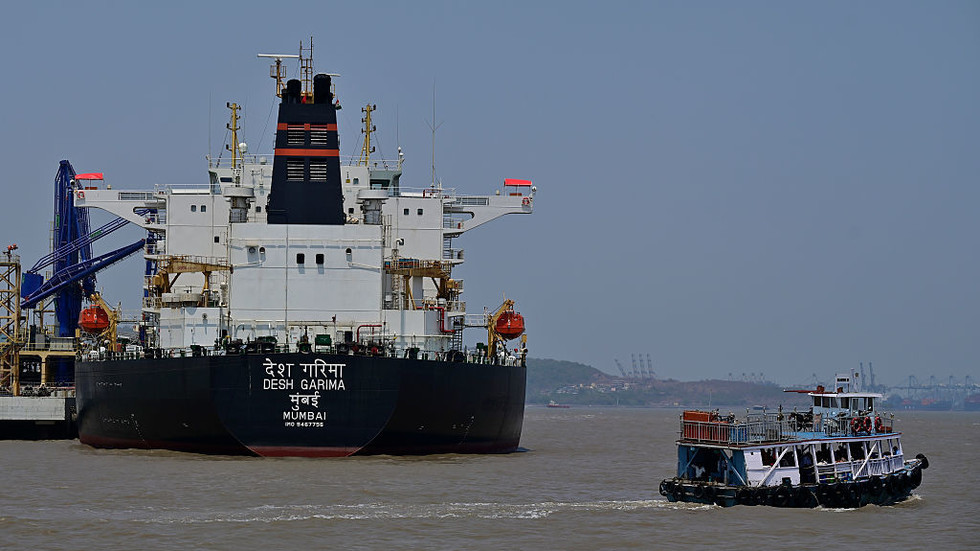
More than 4,500 seafarers from the South Asian nation are aboard commercial vessels in the Persian Gulf as attacks on regional shipping continue
More than 4,500 Indian seafarers are aboard commercial vessels operating in the Persian Gulf amid repeated attacks on regional shipping, New Delhi has said. The Indian government is monitoring their safety after one sailor from the country was killed and another went missing this month.
Six India-flagged commercial ships and six foreign-flagged vessels carrying cargo to India are currently in the Gulf west of the Strait of Hormuz, with around 163 Indian seafarers aboard them. The more than 4,500 Indians are serving on other commercial vessels operating in the area, Foreign Ministry spokesperson Randhir Jaiswal said on Tuesday.
An Indian sailor was killed when the Antigua and Barbuda-flagged bulk carrier MV Cape Dao was attacked in the Gulf of Oman on September 23. Ten days earlier, an Indian crew member went missing after the Panama-flagged tanker El Gaia was struck while passing through the Strait of Hormuz.
At least 85 shipping incidents had been recorded in and around the Strait of Hormuz and the wider Middle East by September 24, the International Maritime Organization (IMO) confirmed, highlighting the growing risk to commercial vessels operating in the region.
India has tightened precautions in response. Shipowners and managers have been advised since July to avoid deploying Indian seafarers on voyages through the Strait of Hormuz until further orders. A 24-hour control room and real-time monitoring system are also tracking vessels and crews in coordination with the Indian Navy and other agencies.
The safety push has also moved to the diplomatic level. India and Liberia launched a new Group of Friends on Safety and Security of Shipping and Seafarers at the United Nations last week, bringing together around two dozen countries with major roles in shipping, vessel registration and supplying crews.

India is now the world’s second-largest supplier of seafarers, with 311,936 maritime professionals accounting for 12.16% of the global workforce, according to the 2026 BIMCO-ICS Seafarer Workforce Report cited by the Shipping Ministry.
The targeting of commercial ships and crews in international waterways is “simply unacceptable,” Foreign Minister S. Jaishankar told the UN General Assembly on Saturday, calling for restraint, de-escalation, and uninterrupted flows of energy and commerce.
Traffic through Hormuz remains well below pre-conflict levels. Ten commodity vessels crossed the strait on September 23, compared with a ten-day average of about 17. Before the US-Israeli war on Iran began in February, around 125 large commercial vessels typically used the route each day.
You can share this story on social media:


