


Guanajuato is expanding its footprint in the digital economy with a portfolio of data centers that has drawn a combined investment of US $630 million and the creation of 200 jobs, as reported in a state government statement.
The Bajío state has currently two operational facilities and another in development, two of which belong to ODATA, a member of the Aligned Data Centers group located in San Miguel de Allende and Apaseo el Grande.
Centros de datos impulsan inversión y empleo tecnológico estatal
Guanajuato reporta 2 centros de datos en operación y uno en desarrollo, con inversión conjunta de 630 mdd y 200 empleos directos. Proyectos exigen energía, conectividad, seguridad y talento especializado.… pic.twitter.com/mCxUopjYFZ— Red Popular (@RedPopularMx) September 21, 2026
The third project is still under construction, also in San Miguel de Allende.
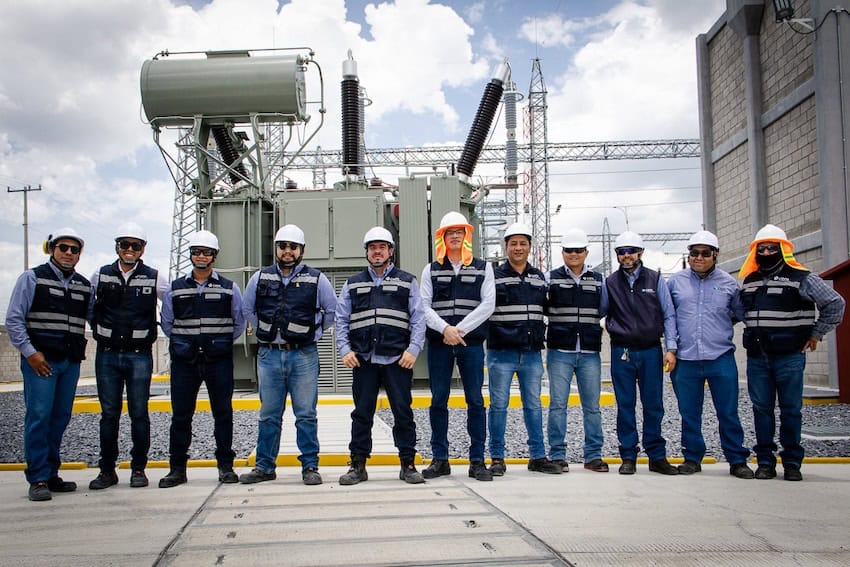
The development of these projects required a new substation at the San Miguel de Allende Business Park (PESMA)—featuring a 60 MVA capacity and an investment exceeding US $45 million— to ensure sufficient and reliable energy for new technological and industrial operations.
This electrical infrastructure is complemented by the Bajío region’s central location and by new investments in fiber-optic connectivity.
According to authorities, the data centers established in Guanajuato incorporate energy and water-efficiency technologies, including state-of-the-art cooling systems and reuse of treated water.
State Economy Minister Cristina Villaseñor explained that the inclusion of information technologies — including data centers, artificial intelligence, and semiconductors — is one of the strategic sectors within the Guanajuato Suma strategy, whose central objective is to evolve the economy from a traditional industrial base into a technological powerhouse.
According to the state government, Guanajuato has drawn over US $6.5 billion in investment — equivalent to 81.9% of the six-year target of $8 billion — across various sectors, including digital infrastructure and data centers.
Villaseñor explained that this strategy responds to changes in the global economy driven by the reconfiguration of supply chains and the adoption of artificial intelligence (AI). In this context, the state’s vision is to boost digital infrastructure growth while protecting the region’s natural resources.
This vision dovetails with President Claudia Sheinbaum’s policy y regarding the technology industry.
Although she has said that Mexico needs data centers to develop AI and modernize its technological capabilities, she has warned that the country must not become a global hub for data storage and processing to meet external demand, given the high energy and water consumption involved.
Mexico News Daily
