


In an increasingly complex and interconnected global market, digital tools and collaborative frameworks continue to transform how art dealers, gallerists, and advisors build sustainable businesses. Operating an independent art enterprise requires navigating dynamic inventory management, shifting collector demographics, international logistics, and rapidly evolving secondary market channels. Supporting female art entrepreneurs in mastering these operational demands is the central mission of the Association of Women Art Dealers, an international trade network dedicated to expanding commercial pathways, peer mentorship, and educational resources for women and women-identifying art business owners across the globe.
Founded in 2009 by sector-supporting entrepreneur Susan J. Mumford, the non-profit organization serves art dealers, gallerists, secondary market specialists, and art advisors at every stage of their career journeys. The origin of the organization traces back to the structural shifts that reshaped the international art market following the 2008 economic downturn. Operating a physical gallery space in London at the time, Susan J. Mumford recognized a critical gap in professional infrastructure for independent women in the trade. To address the need for open dialogue, shared knowledge, and business development among female peers, she established the organization as a dedicated forum for professional exchange.
A Global Network Built on Collaboration and Ethical Standards
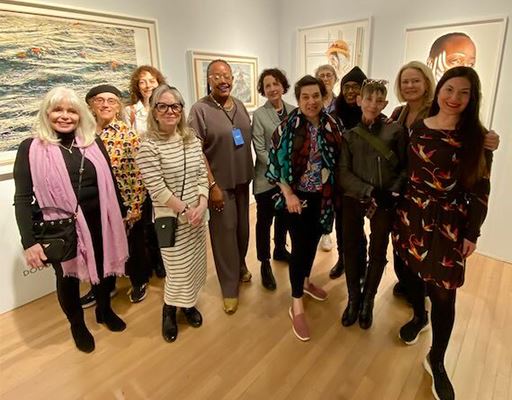
Members of the Association of Women Art Dealers at Collect art fair in London, featuring AWAD Founder & CEO Susan J. Mumford alongside UK Chapter members Thandeka Tlou of 3152 Gallery and Cynthia Corbett of Cynthia Corbett Gallery. Courtesy of the Association of Women Art Dealers (AWAD).
Over the past decade and a half, the network has grown into a vital international community. Operating under a strict code of conduct, the non-profit organization prioritizes transparency, ethical trading practices, peer-to-peer collaboration, and lifelong learning. The community brings together forward-thinking professionals who recognize that collective intelligence and strategic resource-sharing yield significant individual commercial advantages. Members regularly work together on joint business transactions, shared gallery and pop-up exhibition spaces, collaborative art fair booths, and consolidated shipping logistics – demonstrating how strategic cooperation directly improves business margins and operational efficiency.
The organizational architecture of the network is designed around continuous professional development and global connection. Members participate in a rich schedule of monthly activities, including closed-door peer-to-peer roundtable discussions where participants share candid insights on market trends, client development, and operational challenges. The association also hosts regular masterclasses led by industry experts, providing technical guidance on legal compliance, anti-money laundering regulations, digital marketing strategies, and financial management. While online programming ensures accessibility for members across continents, the organization maintains active physical hubs in major art capitals including New York and London, alongside regional events in Miami, Los Angeles, and beyond, bridging the gap between digital community-building and face-to-face networking.
